
The Plearnprai Three Elements Series · Book 10
FOOD BY THE ELEMENTS
Everyday Meals for Our Individual Needs
First English Edition · 2026
A COMPANION TO EVERYDAY CARE
FOOD BY THE ELEMENTS
Everyday Meals for Our Individual Needs
The Plearnprai Three Elements Series · Book 10
Plearnprai · English editorial adaptation
13 October 2026 · First English Edition
This edition follows the chapter route of the Thai source, retaining its practical examples, reflections and original illustrations. It uses the agreed concise type names and the inclusive voice “we”.
Traditional interpretations, Plearnprai's current framework and clinical information are distinguished where needed. Constitution and current state are treated as distinct concepts.
Published in the Plearnprai Library · 13 October 2026.
Contents
Introduction — Food by the Elements41 · Why Food and the Elements Matter in Thai Life72 · Food Qualities, Six Tastes and Ways of Cooking103 · Reading the Food in Front of Us144 · Meals through the Wind Portrait195 · Meals through the Fire Portrait236 · Meals through the Water Portrait277 · Twenty-Five Familiar Thai Menu Entries318 · Thai Vegetables and Culinary Herbs379 · Fruit across the Seasons4210 · Sweets, Coffee, Tea and Herbal Drinks4711 · Restaurants and Street Food5312 · Convenience Shops: Care within Limited Choices5713 · One Table, Different Needs6214 · Food through the Stages of Life6615 · Bala: Eating with the Capacity We Have Today7116 · Meal Timing and Contemporary Life77Closing — The Care We Bring to Every Meal81Appendix — Sources, Further Reading and a Safety Index84FOOD BY THE ELEMENTS
Introduction — Food by the Elements
Why this book?
A day holds several meals; a year holds roughly a thousand. Over a lifetime, the number becomes immense. Chicken rice, a plate of som tam, noodles from a convenience shop or a bowl beside a canal: each meal brings something into our day as well as our body.
Food supplies energy and nutrients. It also has texture, temperature, fragrance and meaning. Traditional systems describe another set of qualities—warming and cooling, dry and moist, light and heavy. This book explores that vocabulary alongside the practical question of choosing and arranging meals.
Our setting is everyday Thai life. The intention is to make a familiar meal easier to understand, while keeping a clear distinction between a traditional interpretation and a clinical explanation. An elemental description does not establish a food's medical effects or determine what every person of a particular type should eat.
Two bridges into everyday life
An Ayurvedic discussion may mention ghee, paneer, dal or basmati rice. A Western food article may recommend quinoa, kale or avocado. These foods can have a place, but we need not buy expensive or unfamiliar ingredients to care for ourselves.
The first bridge connects elemental ideas with Thai ingredients: what we find at a wet market, a street stall or a convenience shop. The second connects those ideas with the day we actually have: a hurried breakfast, lunch at work and dinner shared with family.
The purpose is not to produce a longer list of forbidden foods. We want to understand a dish, consider its preparation and choose a workable adjustment. When choice is limited, an adequate, available meal remains an act of care.
Who may find it useful?
We may cook at home and want to choose ingredients for ourselves and the people we live with. We may buy most meals and need a way to approach an unfamiliar menu. Some days the only practical stop is a convenience shop.
We may be feeding a household whose members have different preferences and needs. We may care for a child, an older parent or someone recovering from illness. Age and illness can change nutritional needs; they do not change an enduring constitution within Plearnprai's framework.
Our schedule may also bear little resemblance to a traditional timetable. Schoolchildren, parents of new babies, office workers, executives, drivers and travellers need arrangements that fit their circumstances. A plan that cannot survive an ordinary working day is unlikely to help for long.
A little background
The series uses Wind, Fire and Water as three principal constitutional portraits. Wind Type, Fire Type and Water Type introduce them; Mixed Type explores combinations. The comparison volume discusses their relationship with other traditions.
Plearnprai's framework draws comparisons with Ayurvedic Vata, Pitta and Kapha, but these are not interchangeable with Thai traditional medicine's four elements. Earth remains part of the Thai tradition. The simplified Plearnprai map is a framework for reflection and care, not a biomedical classification.
Within this map, constitution is enduring, while our present condition changes. Meals should respond to actual needs, tolerance, resources and medical advice, rather than a type label alone.
Reading the opening chapters of the individual books may help us understand the vocabulary. We can also begin here without confidently identifying a type. Chapter 3 offers observation prompts, not a diagnostic test. We do not need to settle our identity before eating a nourishing meal.
The route through the book
Part One, Chapters 1–3, introduces the reasons for this approach, the language of food qualities and six tastes, and four questions for reading a meal.
Part Two, Chapters 4–6, considers food through the Wind, Fire and Water portraits, with ingredients, Thai dishes and sample days.
Part Three, Chapters 7–10, enters the Thai kitchen. We look at popular dishes, vegetables, culinary herbs, seasonal and imported fruits, sweets and drinks.
Part Four, Chapters 11–16, brings the ideas into daily circumstances: restaurants, street food, convenience shops, a shared family table, different life stages, bala or current capacity, meal timing and demanding schedules.
The closing chapter gathers these threads into a continuing practice. Tables are there to help us compare possibilities, not to grade every mouthful.
Four agreements between us
First, this is not a clinical nutrition manual. Diabetes, kidney or heart disease, coeliac disease and severe food allergy can require individual dietary care. An elemental preference must not override that care. A clinician or registered dietitian can help us adapt the ideas safely.
Second, food belongs to culture, family, memory, pleasure, grief, opportunity and the money available. A birthday meal with someone we love has a value no classification captures. Eating “perfectly for our type” at every meal is not a life goal.
Third, imperfect choice is normal. A delayed flight, an overtime shift after the shops close or a bus that stops at only one restaurant may leave few options. We can choose what is adequate and available without making the meal a moral failure.
Fourth, babies, people with swallowing difficulties, those recovering from surgery and people who are pregnant may need specific guidance. A child's growth, a safe swallowing texture or a postoperative plan takes precedence over a general suggestion here. We will return to these situations in later chapters.
An invitation
Read this book as a companion beside us when we open a menu, walk through a market or stand in front of a chilled-food cabinet. We can pause at a useful table and leave the rest for another day.
The hope is that food becomes easier to understand and care becomes more workable. A book about eating should leave us with more room to live, not another burden to carry.
FOOD BY THE ELEMENTS
1 · Why Food and the Elements Matter in Thai Life
Beginning with what we notice
Imagine a very hot day. After a large plate of chicken rice at noon, we feel sleepy and uncomfortable through the afternoon. A cold drink does not seem to change much.
On a rainy day, a hot bowl of tom yum may feel welcoming. During a strained week, the bright flavours of som tam may make an ordinary meal feel alive again.
These experiences invite attention. They do not prove that the body has diagnosed an elemental need. Sleep, meal size, illness, expectation and surroundings can all affect how we feel. Still, noticing comfort, appetite and the circumstances of eating is a useful place to begin.
Traditional food language gives us words for this experience: warming, cooling, moistening, drying, light and heavy. We can use those words to describe a meal without mistaking them for a laboratory result.
“We are what we eat”—two ways of looking
Nutrition describes how food provides energy and materials the body needs. Research also explores the complex relationships between diet, gut microbes and health. These relationships do not establish the elemental framework as a biological mechanism.
The traditional map asks what qualities a meal seems to bring. Pungent, sour or salty preparations are commonly placed on a warming side; mild sweetness and juicy foods on a cooling or nourishing side. Dry crackers and some rough-textured foods evoke dryness and lightness. Sticky rice, rich sweets and oily foods evoke heaviness or moisture.
These are interpretive categories. A food can have several qualities, and preparation changes the experience. A fried food, for example, can be both crisp and oily. Its crispness does not cancel its fat content.
Chapter 2 gives us a more detailed vocabulary. Across the book, the practical questions remain portion, preparation, variety, tolerance and the overall pattern of meals.
What the Thai table offers
Thai cooking gives us many ways to combine contrasting ingredients. Green curry brings aromatic spices, aubergines and coconut milk together, usually with rice. Tom yum combines broth and prawns with lemongrass, makrut lime leaf and galangal. Som tam brings sourness, chilli, saltiness and sweetness into the same dish.
These combinations can be read through traditional qualities. They also show a practical strength of the cuisine: ingredients can be adjusted at the pot or at the table. A cook can reduce chilli, serve sauce separately, add vegetables or choose a different protein.
Tradition does not automatically make every dish nutritionally complete. A curry can still be very salty; a sweet drink remains sweet even when it contains herbs. The useful inheritance is a repertoire of ingredients and skills, rather than a guarantee attached to the word “traditional.”
Contemporary life creates different pressures. A child may encounter packaged snacks and sweetened milk more often than vegetables. An office worker may depend on reheated meals and instant noodles. An older person may be offered whatever the rest of the household eats, despite a smaller appetite or difficulty chewing.
These are circumstances to work with, not reasons to blame families. A convenience meal can be supplemented, a vegetable can be prepared more softly and a drink order can be changed. Food access, cost and time matter as much as knowledge.
Modern illness and the limits of the map
Diabetes, cardiovascular disease, kidney disease, reflux, irritable bowel symptoms and mental distress all affect eating. Traditional accounts may describe some experiences as heaviness, heat or unsettled movement.
Such descriptions must not become causal claims. Diabetes is not diagnosed as Water, hypertension as Fire, or irritable bowel syndrome as Wind. Symptoms and medical conditions need their own assessment. We cannot tell blood pressure, cholesterol or blood glucose from an elemental portrait.
A varied dietary pattern can support health, and clinically appropriate nutrition can be part of treatment. No evidence is established here that matching food to Plearnprai's types prevents these diseases. We use the map to support observation and discussion, alongside ordinary nutritional and clinical care. [1]
Food as everyday care
The phrase “food is medicine” expresses the importance of what we do repeatedly. It becomes misleading if it suggests that an ideal diet removes the need for treatment, or that medicine cannot help someone whose diet is imperfect.
Food and medical treatment have different roles. A meal can nourish us; a prescribed medicine may still be essential. We should not stop or reduce treatment because a menu feels well matched to our type. Some treatment plans change when health changes, but those decisions belong with the treating clinician.
The useful invitation is to give meals attention. Supplements and medicines do not make food irrelevant; food does not make treatment unnecessary. We can care for both without setting them against each other.
Three things to remember before beginning
Change gradually. It is tempting to discard every sweet food, drink only herbal infusions and add several plates of vegetables immediately. A smaller change may be easier to sustain: one extra vegetable dish, one fewer sweet drink, or a few meals with a wholegrain option where appropriate. We can adjust the pace to appetite, tolerance and any clinical plan.
Do not punish an enjoyable meal. A buffet, a wedding sweet or a café drink does not require fasting or a compensatory workout. Return to the next ordinary meal. Guilt is not a useful ingredient, and harsh self-criticism is not a diagnosis of Fire.
Keep listening. We may welcome a cool dish in hot weather, warmth on a cold evening or a familiar meal when life feels difficult. Principles can help us ask better questions. They should not silence hunger, pleasure, discomfort or medical advice.
Before we continue
We have begun with lived experience, the possibilities of Thai cooking and the boundary between traditional interpretation and clinical nutrition. Next we learn the qualities and tastes that help us describe what is on the plate.
FOOD BY THE ELEMENTS
2 · Food Qualities, Six Tastes and Ways of Cooking
Six pairs of qualities
Traditional food systems describe qualities in contrasting pairs. They are a language for comparing meals, not measurements of what a food will do inside every body.
Warming and cooling refer to traditional qualities as well as our sensory experience. Chilli may taste hot at room temperature. A chilled drink is physically cold, but its ingredients still matter. Serving temperature and traditional classification are different questions.
Dry and moist draw attention to texture and water: crackers and some grains at one end, juicy fruit and soups at the other. A leafy vegetable can be described as drying in a traditional account even though it contains considerable water; the traditional term is not a nutrient analysis.
Light and heavy describe the perceived density and substantialness of a meal. Clear broth and rice soup feel different from sticky rice, fried dishes, coconut curry and rich sweets. “Light” does not necessarily mean low in calories, nutritionally adequate or easy for every person to digest.
Sharp and gentle distinguish forceful flavours and aromas from milder preparations. Strong seasoning may be enjoyable, but gentler food can suit a particular day.
Oily and rough draw attention to lubrication and texture: oils and fatty foods compared with crisp, fibrous or coarse foods. The quantity and kind of fat remain separate nutritional considerations.
Stable and flowing are traditional images: substantial starches evoke steadiness, while liquids and juicy foods evoke movement. They should not be read as claims about circulation or fluid retention.
For everyday use, three pairs are enough to begin: warming–cooling, light–heavy and dry–moist.
Relating qualities to the portraits
The traditional principle is “like reinforces like; contrasting qualities can moderate an emphasis.” The table records that framework. It does not prescribe extra sugar, salt or oil, and it does not mean that a listed food inevitably causes symptoms.
| Portrait | Traditional qualities | Foods traditionally described as reinforcing them | Contrasting meal ideas |
|---|---|---|---|
| Wind | Cool, dry, light, moving | Raw vegetables, dry grains, crackers, cold drinks | Warm, moist cooked food; a little oil; mild, satisfying meals |
| Fire | Hot, sharp, oily | Chilli, strong spices, fried food, pronounced sourness and saltiness | Mild preparations, juicy foods and less forceful seasoning |
| Water | Cool, moist, heavy, oily | Sticky rice, rich sweets, fried food, milk-based dishes | Vegetable-rich meals, comfortable warmth and less rich preparation |
These are reading aids, not lists of foods a type must avoid. Raw vegetables do not inevitably cause Wind symptoms; spicy food does not prove the cause of a rash or reflux; sweet food does not identify a person's constitution. Actual symptoms, nutritional needs and individual tolerance take priority.
The six tastes
The six-taste scheme here comes from Ayurveda. Thai medical traditions also discuss tastes, but their classifications should not be collapsed into this one. The English words are approximate: “sweet,” for example, can include the mild flavour of rice, not only added sugar.
Sweet—madhura. Rice, jicama, ripe fruit, honey and desserts are examples. In this traditional scheme, sweetness is nourishing and associated with Water, while moderating Wind and Fire. This does not make honey or dessert a treatment, or make more sugar desirable.
Sour—amla. Lime, unripe mango, tamarind, vinegar and yoghurt illustrate sourness. The traditional account associates it with warmth and appetite, reinforcing Fire and, in moderation, moderating Wind. Acidic foods may aggravate some people's symptoms; their response matters more than the label.
Salty—lavana. Salt, fish sauce, soy sauce and salted fish carry this taste. Traditionally it is linked with Fire and Water and described as moderating Wind in small amounts. That is not a reason to increase sodium.
Pungent—katu. Chilli, garlic, ginger, pepper and onion give intensity. The traditional description reinforces Fire and moderates Water, while excessive intensity may be unsettling for Wind. There is no requirement to endure burning or pain for a supposed benefit.
Bitter—tikta. Bitter gourd, neem leaves, turmeric, moringa and some leafy greens provide examples, often with other tastes too. Traditionally bitterness is cooling and associated with moderating Fire and Water. Bitter food does not “detox” the body or replace treatment.
Astringent—kasaya. Tea, banana blossom, guava leaves and some unripe fruits can leave a drying, puckering sensation. The framework associates this with moderating Fire and Water and increasing dryness. A plant mentioned as an example of taste is not automatically suitable for a concentrated drink or medicinal dose.
| Taste | Traditional reinforcing association | Traditional moderating association | Familiar examples |
|---|---|---|---|
| Sweet | Water | Wind, Fire | Rice, ripe fruit, honey, Thai sweets |
| Sour | Fire | Wind, in moderation | Lime, tamarind, unripe mango, orange |
| Salty | Fire, Water | Wind, in moderation | Salt, fish sauce, soy sauce, salted fish |
| Pungent | Fire | Water | Chilli, ginger, garlic, pepper |
| Bitter | Wind when excessive | Fire, Water | Bitter gourd, neem, turmeric, bitter greens |
| Astringent | Wind | Fire, Water | Tea, guava leaf, unripe mango, banana blossom |
Variety of taste, variety of food
Ayurvedic meal traditions encourage a range of tastes. This can remind us to make a meal interesting and varied, but six tastes do not establish nutritional completeness. We need not add salt or sugar merely to complete the set.
Som tam can combine lime's sourness, chilli, fish sauce and palm sugar, with vegetables contributing further textures and flavours. It is still usually one part of a meal, not a complete diet. Protein and other foods may be needed alongside it.
A plain plate of dry noodles can feel less varied in flavour. Vegetables, an appropriate protein and a different texture may make it more satisfying. The aim is an adequate and enjoyable meal, rather than a six-item test.
Cooking changes the meal
Consider Chinese kale. Raw kale is crisp and fibrous. Boiling softens it; stir-frying changes texture and adds oil and seasoning. A traditional reading describes shifts from cool and rough towards warm and moist. The amount of oil and the sodium in oyster sauce still matter.
Consider mackerel. A plain cooked portion, a sour and spicy fish soup, and fried mackerel have different flavours, textures and fat content. Traditional language may call the soup warming and the fried fish hot and oily. Raw fish is not offered as a cooling meal option: safe handling and thorough cooking matter.
| Method | Qualities highlighted in the traditional map | Practical use and limits |
|---|---|---|
| Raw produce | Cool, light, crisp | Use safe, washed produce where tolerated; raw animal foods carry additional risks |
| Boiling or clear soup | Warm, relatively gentle | A flexible base; broth may still contain much salt |
| Stewing | Warm, moist, soft | Useful when softer textures are welcome; include adequate nourishment |
| Steaming | Gentle, less added oil | Adaptable across the portraits |
| Stir-frying | Warm, with added oil | Adjust oil, sauce and portion rather than assuming it suits everyone |
| Deep-frying | Hot, oily, often substantial | An occasional preparation; not a treatment for Wind |
| Grilling | Warm, drier texture | Cook safely without relying on charring for flavour |
| Pickling | Sour, often salty | A condiment in modest portions, with attention to food safety |
A Wind-oriented meal may favour soups and stews; a Fire-oriented meal may use mild steaming and boiling; a Water-oriented meal may use vegetables with lighter stir-frying or steaming. These preferences remain flexible. No cooking method removes the need to consider the whole meal.
Contrasts at the table
Chicken rice can feel substantial and oily. Ginger in a drink or sauce, a little chilli or garlic, and a piece of fruit may bring contrast and enjoyment. They do not cancel the meal's fat, salt or energy. If ginger or acidic fruit causes discomfort, there is no need to add it.
With sharply seasoned som tam, rice can soften the flavour experience. Water or an unsweetened drink may be enough alongside it. Coconut water or a small dessert can be enjoyed if appropriate, but neither is needed to neutralise chilli, and neither makes the earlier food harmless.
Thai side dishes offer many ways to vary a meal. We can appreciate that culinary knowledge without turning every pairing into a medical formula.
Before we continue
We now have six pairs of qualities, an Ayurvedic six-taste vocabulary and examples of how preparation changes food. The next chapter turns those ideas into four practical questions for a plate of chicken rice, som tam, noodles or a ready meal.
FOOD BY THE ELEMENTS
3 · Reading the Food in Front of Us
A skill we can keep using
The vocabulary becomes useful when it helps us make an ordinary choice: opening a menu, looking into a convenience-shop cabinet, choosing market produce or joining friends at a buffet. We can participate in the choice without needing complete control of the meal.
Four questions
Is the preparation warming or cooling in the traditional map? Look at chilli, garlic, ginger, vinegar, spices and frying. Then notice milder, juicy ingredients, raw produce or coconut water. Also ask about the actual serving temperature. Neither question tells us the food's complete nutritional value.
Does it feel light or substantial? Fried food, coconut curry, sticky rice, rich sweets and fatty meat may make a substantial meal. Broth, rice soup, vegetables and steamed fish may feel less rich. Portion size and the combination matter. Sleepiness after eating is not a precise measure of digestive strength.
Is it dry or moist? Compare crackers, baked foods and grilled preparations with soup, juicy fruit, curry and rice porridge. These words describe a plate; they do not establish that a food dries out tissues or causes fluid retention.
Which tastes lead? A dessert may be sweet, som tam sour and pungent, salted seafood salty, bitter gourd bitter and tea astringent. Recall the traditional associations from Chapter 2, while keeping salt, sugar, allergy and medical needs in view.
Together the questions help us describe what we are choosing. The next question is personal and practical: what would make this meal more suitable today?
Five familiar dishes
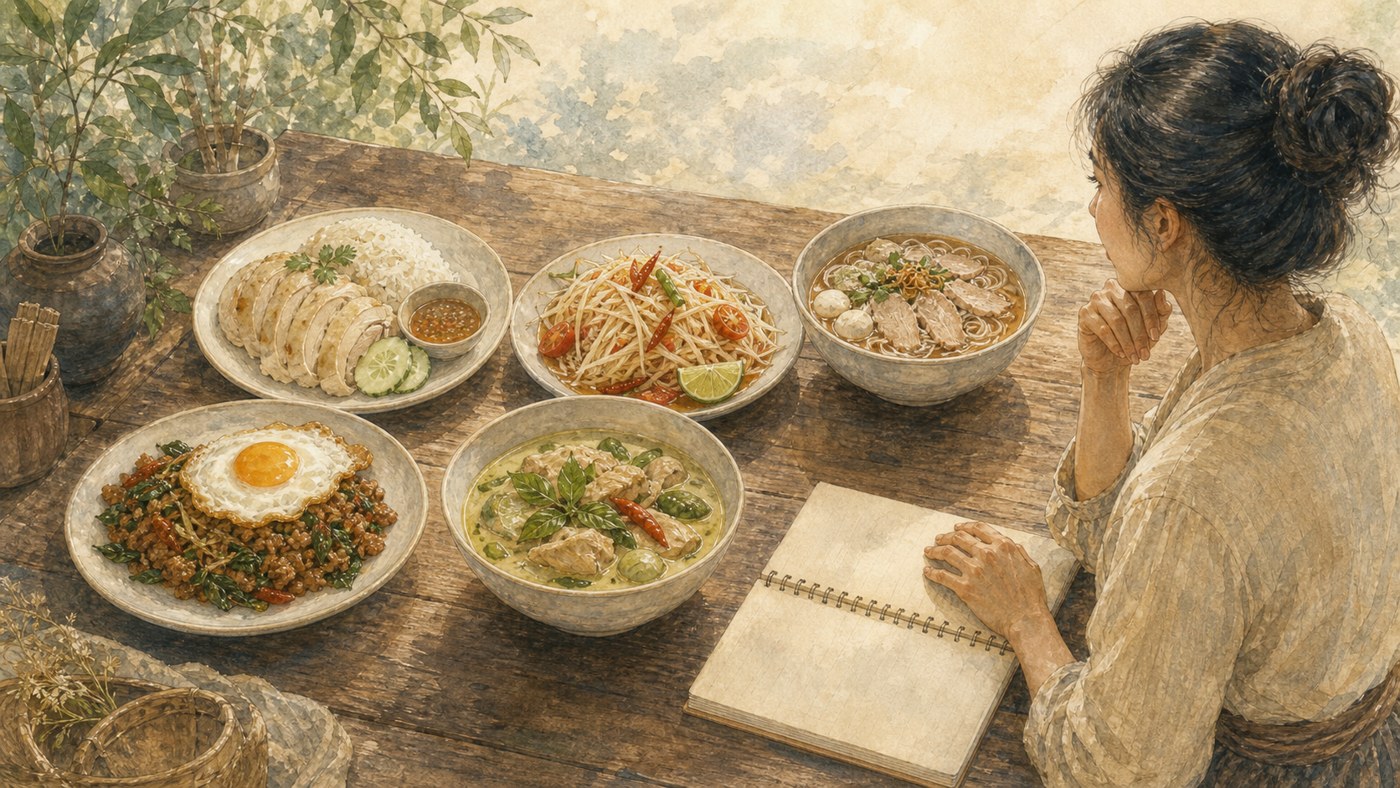
Chicken rice—khao man gai
The plate contains rice cooked with chicken fat, poached chicken, broth and a fermented-soybean sauce with ginger and chilli. It is traditionally read as warm, substantial and moist, with mild sweetness and saltiness; the sauce adds sharpness.
Within the map, it leans towards the nourishing or Water side. A Wind-oriented reader may welcome the warmth and moistness. A Fire-oriented reader may prefer less chilli. A Water-oriented reader may want a less rich preparation.
Practical adjustments include choosing a suitable rice portion, adding vegetables, asking for sauce separately and leaving excess oily broth if unwanted. A fixed “half plate” is not appropriate for every Water Type: appetite, activity and nutritional requirements differ. Ginger sauce does not erase the meal's fat or salt.
Thai green-papaya salad—som tam Thai
Green papaya, tomato and yardlong beans meet chilli, garlic, fish sauce, lime, palm sugar and peanuts. The preparation is often light in texture, juicy, sour, pungent, salty and sweet.
Its traditional reading emphasises Fire, with some Wind-like lightness. That does not make it a treatment for mucus or a meal a Water Type can eat without limit.
A Wind-oriented version can use less chilli and fewer raw beans if they cause discomfort, with rice and a suitable protein alongside. A Fire-oriented version can also reduce chilli and sharpness. A Water-oriented version may be appealing, but sauce, sugar, portion and tolerance still matter. Peanut, fish and shellfish ingredients require particular attention when there is an allergy; fermented or raw additions require food-safety care.
Boat noodles—kuaitiao ruea nam tok
A bowl may contain rice noodles, bone broth, meat, offal, meatballs, morning glory, bean sprouts, basil and blood used to enrich the soup. Chilli, vinegar and sugar are often added at the table.
The traditional description is warm, substantial and very moist, with concentrated flavour. Its richness can evoke both Fire and Water. A small warm bowl may feel comforting on a cool, tiring day, but an elemental preference cannot make undercooked ingredients safe. Blood, meat and offal must be handled and cooked properly.
We can add vegetables, choose a suitable amount of noodles and taste before adding condiments. People who notice reflux after spicy or acidic food can moderate those ingredients. Someone seeking a less rich meal can use less broth or choose a clearer alternative. These choices are available to every type.
Minced pork with holy basil and a fried egg—pad kaphrao
Minced pork, chilli, garlic, holy basil, sauces and oil are served with rice, often with a fried egg. The result is usually forceful in flavour and can be substantial, oily and relatively dry compared with soup.
Traditional language highlights heat and sharpness. The dish need not be prescribed to “wake up” a Water Type, and its oil does not disappear because it is spicy.
We can request less chilli, oil and sauce, add vegetables or choose an egg cooked with less added fat. Basil can still provide aroma when chilli is reduced. Cucumber or cooked vegetables offer contrast. Plain water is sufficient; coconut water is an optional drink, not a corrective treatment.
Mango with coconut sticky rice—khao niao mamuang
Sweetened coconut sticky rice, ripe mango and coconut sauce make a sweet, rich, moist dessert. Some versions add toasted seeds or beans. In the traditional map it evokes nourishment and heaviness, often described as moderating Wind and Fire.
Enjoyment is a good enough reason for a modest dessert portion. It is not necessary to claim that it treats an elemental flare. Wind and Fire Types still need to consider the whole eating pattern, and Water Types need not regard a shared dessert as forbidden. It generally complements a meal rather than supplying all that a main meal needs.
Reading the whole meal
A table often contains more than one dish. Consider basil pork with a fried egg and a glass of water. The water meets a hydration need; it does not cancel the seasoning or oil. Adding vegetables or choosing a gentler preparation changes the meal more directly. Fruit can be included if wanted, without being used as compensation.
Now consider a home meal: clear tofu and pumpkin soup, mixed stir-fried vegetables, rice and an orange. There is a range of textures, ingredients and flavours. It can be adapted easily for several people, although portions, allergies and medical needs still matter.
Reading a meal means looking at what is missing as well as what is prominent. Is there a protein source? Enough food? A vegetable or fruit we enjoy? Is the meal practical and safe to eat?
After an unusually rich or sweet day
After a grilled buffet, the next morning might bring tofu rice soup and fruit. After a birthday with many sweets, we may simply return to our usual meals and choose a less sweet drink.
There is no need for bitter-gourd juice, a “detox,” fasting or extra exercise to undo the previous day. Nor do pandan or gotu-kola drinks remove what we ate. The useful perspective is the pattern across days and weeks. A comfortable return to routine is more helpful than punishment.
A short reflection on our pattern
The fifteen areas below retain the breadth of the introductory self-observation exercise. They are not a validated screening score. Body size, hair, skin colour, appetite and symptoms cannot establish a constitution, and new symptoms belong in a health assessment rather than a personality checklist.
For each area, distinguish a familiar lifelong tendency from a recent change. We can write an observation or leave it unanswered.
| Area | Questions for observation |
|---|---|
| 1. Body build | What has been relatively consistent, and what has changed with health, activity or circumstances? Avoid judging ourselves by a body ideal. |
| 2. Skin | What is our usual skin pattern? Does a new rash, marked dryness or irritation need care? |
| 3. Hair | What is familiar, and is there a new change such as unusual hair loss? Hair texture is not a type test. |
| 4. Weight | Has weight changed intentionally or unexpectedly? Unexplained change deserves attention. |
| 5. Hunger | Is appetite regular, strong, easily overlooked or currently reduced? |
| 6. Temperature comfort | Which surroundings feel comfortable? Has tolerance changed recently? |
| 7. Bowel habits | What is normal for us, and what is new or troublesome? |
| 8. Stomach comfort | Do particular meals or circumstances coincide with discomfort? Persistent pain or reflux needs assessment. |
| 9. Speaking | Do we usually speak quickly, directly or after reflection? Context matters. |
| 10. Decisions | Do we explore, decide readily or prefer more time? None is a diagnosis. |
| 11. Stress | What happens under strain—worry, irritability, withdrawal or something else? |
| 12. Sleep | What supports rest, and what difficulty needs its own attention? |
| 13. Routine | Which rhythms are familiar, and which are imposed by work or caregiving? |
| 14. Weather | How do heat, cold and humidity affect comfort and practical needs? |
| 15. Daily energy | When is energy available, and is fatigue new, severe or persistent? |
Reading what we wrote
We do not add up these answers to pronounce a type. We can compare familiar patterns with the individual books, discuss uncertainty and use the current Plearnprai constitutional process if we want to explore further. Similarities with two portraits may invite reading Mixed Type; resemblance to all three does not prove an ideal or superior balance.
For today's meal, we can still make a sensible choice without a label. The observation record is most useful when it clarifies an actual need rather than making us fit a category.
Before we continue
The four questions help us notice qualities; the five dishes show how preparation and combination change a meal. We now turn to the Wind, Fire and Water portraits in more detail, keeping those observations flexible and grounded in everyday needs.
FOOD BY THE ELEMENTS
4 · Meals through the Wind Portrait
When eating feels irregular
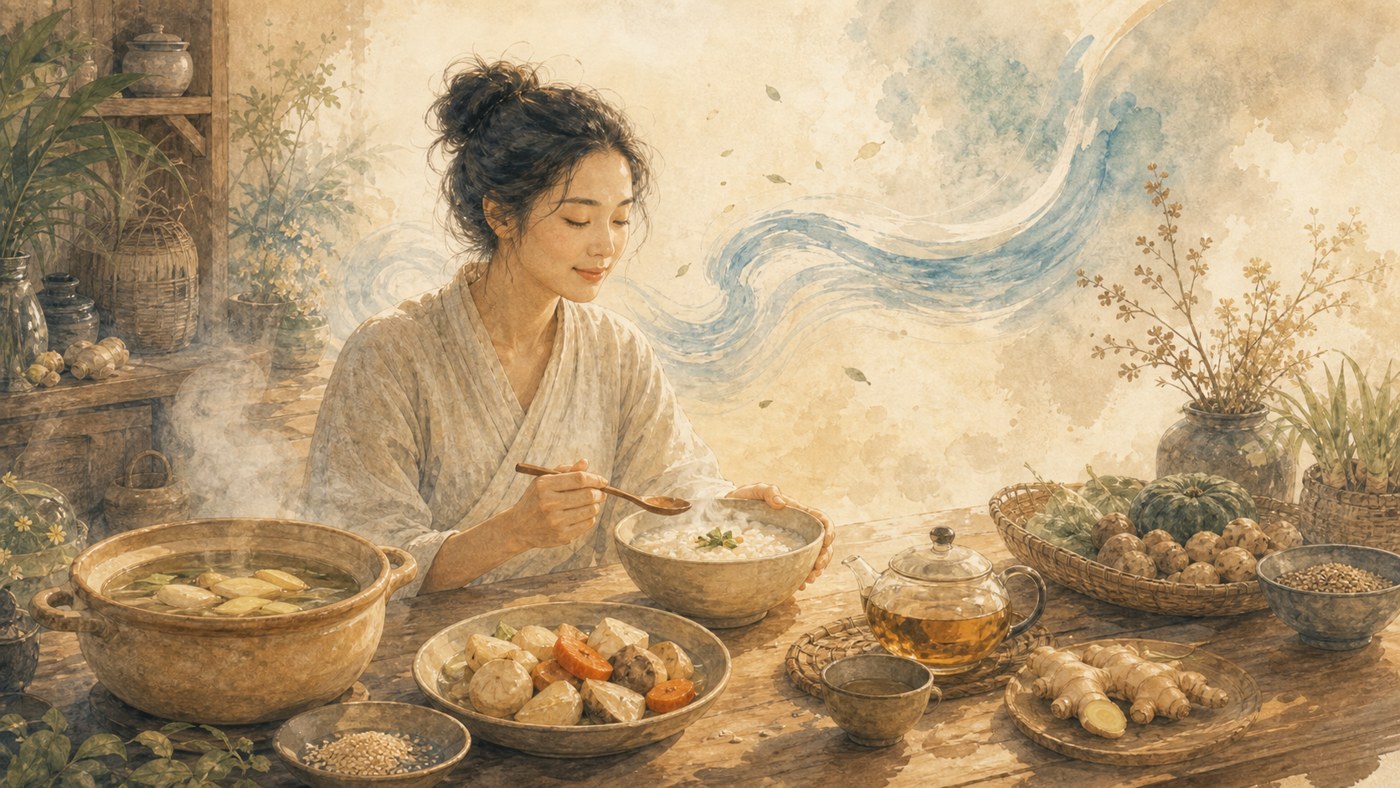
The Wind portrait uses the images of coolness, dryness, lightness and variability. We may recognise a tendency to forget meals when busy, prefer warm food or feel uncomfortable after a very large meal. These experiences do not prove a weak digestive system or explain diarrhoea, constipation or abdominal pain.
The meal ideas here emphasise comfortable warmth, moisture, mild flavour and a dependable rhythm. Mild sweetness means the flavour of foods such as rice and pumpkin as well as fruit; it is not an instruction to add sugar. A satisfying meal need not be exceptionally rich.
Five practical principles
Choose a comfortable temperature. Warm food can be welcoming, especially on a cool day. Cold food and drinks are not universally harmful to Wind Types. We can use preference and tolerance rather than avoiding refrigeration or leaving perishable food out to warm.
Create a dependable meal rhythm. If mornings disappear into work, preparing breakfast in advance may help. The aim is enough food at workable intervals, not a rule that everyone must follow the same timetable.
Adjust meal size. If a large meal is uncomfortable, smaller meals or a planned snack may be easier. Repeated early fullness, pain or weight loss deserves assessment rather than indefinite self-adjustment.
Use gentle culinary seasoning. Ginger, cooked garlic, pepper, cumin, coriander seed and a little nutmeg can provide flavour. They are not prescribed digestive medicines. Nutmeg belongs in small culinary quantities, never spoonfuls or concentrated doses.
Include fluids comfortably. Water or a mild soup can accompany food. Warm drinks are optional; they do not guarantee that food will digest properly. Follow any prescribed fluid restriction.
Ingredients we can find in Thailand
Rice and grains
Freshly cooked rice, a modest amount of warm sticky rice, brown rice cooked soft, rice soup and congee offer different textures. Chicken congee can be especially convenient at breakfast. Khanom chin rice noodles with a mild warm sauce and noodles in broth are alternatives.
Roti and pa thong ko fried dough can be occasional choices, rather than staple ways to obtain warmth or nourishment. Rice crackers and dry toast alone may leave a meal incomplete; adding protein, fruit or another suitable food matters more than banning crispness.
Protein
Poached, stewed or steamed chicken; steamed fish or fish with ginger; fully cooked eggs; an omelette made with modest oil; steamed or occasionally fried tofu; cooked beans or hummus; stewed pork; and cooked prawns provide options.
Food safety applies to every type. Raw meat, raw fish and inadequately cooked beans or sprouts are not made safe by a constitutional label. Choose preparation appropriate to the ingredient and to the people eating it. [8]
Vegetables
Boiled or stir-fried vegetables can be easier to chew and may be more comfortable for some readers than a large raw salad. Try pumpkin, cooked banana blossom, a little bitter gourd, cooked spinach, cauliflower or green beans.
Raw cabbage, broccoli, bean sprouts or large salads may cause discomfort for some people and no difficulty for others. We can alter the portion or cooking method without removing vegetables from the diet unnecessarily.
Fruit
Ripe mango, banana, papaya, lychee, longan, peach and avocado offer different flavours and textures. Watermelon and cantaloupe may be welcome in hot weather. Ripe guava, orange and pineapple can also fit, depending on tolerance. Durian is an occasional rich fruit rather than a required nourishing food.
Firm, sour or astringent fruit may be less comfortable for some readers; ripening, slicing or choosing another fruit can help. There is no need for a blanket ban on cold fruit. Star fruit, sometimes included in traditional lists, must be avoided by people with kidney disease; it is not a general Wind recommendation. [6]
Culinary herbs and spices
Ginger, cooked garlic and onion, modest pepper, cumin, coriander seed, holy basil, Thai basil, cinnamon, makrut lime leaf and galangal can make a mild meal aromatic. A little nutmeg is a flavouring only. Strong chilli or large quantities of dried chilli are optional, not necessary to stimulate digestion.
Drinks and soups
Water is the everyday base. If enjoyed, try mild ginger or lemongrass infusion, pandan tea, vegetable broth or a lightly seasoned meat broth. Milk can be warm if preferred and tolerated; a small culinary amount of turmeric or cinnamon is optional.
Gotu-kola drinks and other herbs should not become concentrated daily remedies without checking suitability. Juice supplies free sugars and lacks some of the advantages of whole fruit; warming it does not change that. Fizzy drinks, repeated strong coffees and very sweet tea may be worth reviewing if they crowd out water, affect sleep or provoke symptoms.
Oils
A little oil can improve flavour and texture. Olive or other suitable unsaturated oils are generally preferable as routine choices to making butter, ghee or coconut oil a therapeutic prescription. Sesame oil adds flavour where tolerated. Coconut oil, ghee and butter are rich in saturated fat. Do not reuse deteriorated frying oil. [1]
Meal ideas
| Time | Options to adapt |
|---|---|
| Breakfast | Pork rice soup with ginger and modest pepper; egg congee; mild khanom chin nam ngiao; toast with avocado and a fully cooked egg; fish rice soup |
| Lunch | Chicken stewed in soy sauce with rice; mild chicken tom-yum noodles; clear yen ta fo noodles; basil pork with less chilli and an egg; chicken rice with less oily broth; shrimp-paste rice with its egg and pork accompaniments in suitable portions |
| Dinner | Tofu, chicken and pumpkin soup; rice with stir-fried sweet-leaf greens or spinach; steamed fish with a little sauce; a lightly seasoned bone-and-vegetable soup; pepper chicken stew with moderate seasoning |
| Occasional sweets | Mango sticky rice; banana in coconut milk; pumpkin in coconut milk; lod chong coconut dessert—modest portions, at a safe serving temperature |
| Drinks | Water; mild ginger tea; lemongrass with a little cinnamon; pandan infusion; other suitable mild herbal drinks |
Chrysanthemum tea or mango juice may be enjoyable, but check added sugar. Ice cream, shaved ice and chilled desserts need not be forbidden solely because we identify with Wind. Their place depends on portion, preference and the broader diet.
One possible day
On waking, water is enough; mild ginger flavour is optional. Breakfast might be pork rice soup with ginger, a fully cooked egg and water or mild lemongrass tea.
If hungry in midmorning, a banana and a few almonds can be a snack, provided nuts are safe and tolerated. Lunch could be rice, chicken and shiitake stew, tofu and winter-melon soup, and ripe guava.
In the afternoon, choose a drink and, if wanted, a small piece of khanom chak coconut cake. Dinner might be rice, steamed fish, Chinese kale cooked with a modest amount of oyster sauce, and ripe mango.
Before bed, milk with a little turmeric or cinnamon is optional, not another required meal. Lactose intolerance or milk allergy may call for a different choice. Portion sizes and snacks should follow appetite and nutritional needs; the example is not a calorie prescription.
When difficulties keep returning
Bloating after meals. Slower eating, a comfortable portion and less distraction may help us notice patterns. Cold water is not automatically the cause. Persistent bloating, pain, vomiting, blood in the stool or unintended weight loss calls for medical advice.
Frequent hunger and unplanned snacking. Review whether meals contain enough food and a suitable combination of nutrients. A planned fruit or nut snack may be useful. Hunger is not proof of an erratic Wind metabolism, and unusual hunger with other symptoms deserves attention.
Alternating loose stools and constipation. Keep a brief record of meals, symptoms and medicines and seek assessment when problems persist. Regular meals and tolerable cooked vegetables can be supportive, but ginger and nutmeg do not replace diagnosis or treatment.
Poor appetite or difficulty maintaining weight. Softer meals, pumpkin, stews, rice, banana and avocado may offer accessible choices. Adequate protein and energy matter. Do not rely only on added butter or ghee; continuing weight loss or a marked appetite change needs professional review.
Before we continue
The Wind-oriented approach offers warmth, moisture and rhythm without making those preferences compulsory. Next we consider gentler flavours and dependable meals through the Fire portrait.
FOOD BY THE ELEMENTS
5 · Meals through the Fire Portrait
Appetite, intensity and digestive comfort
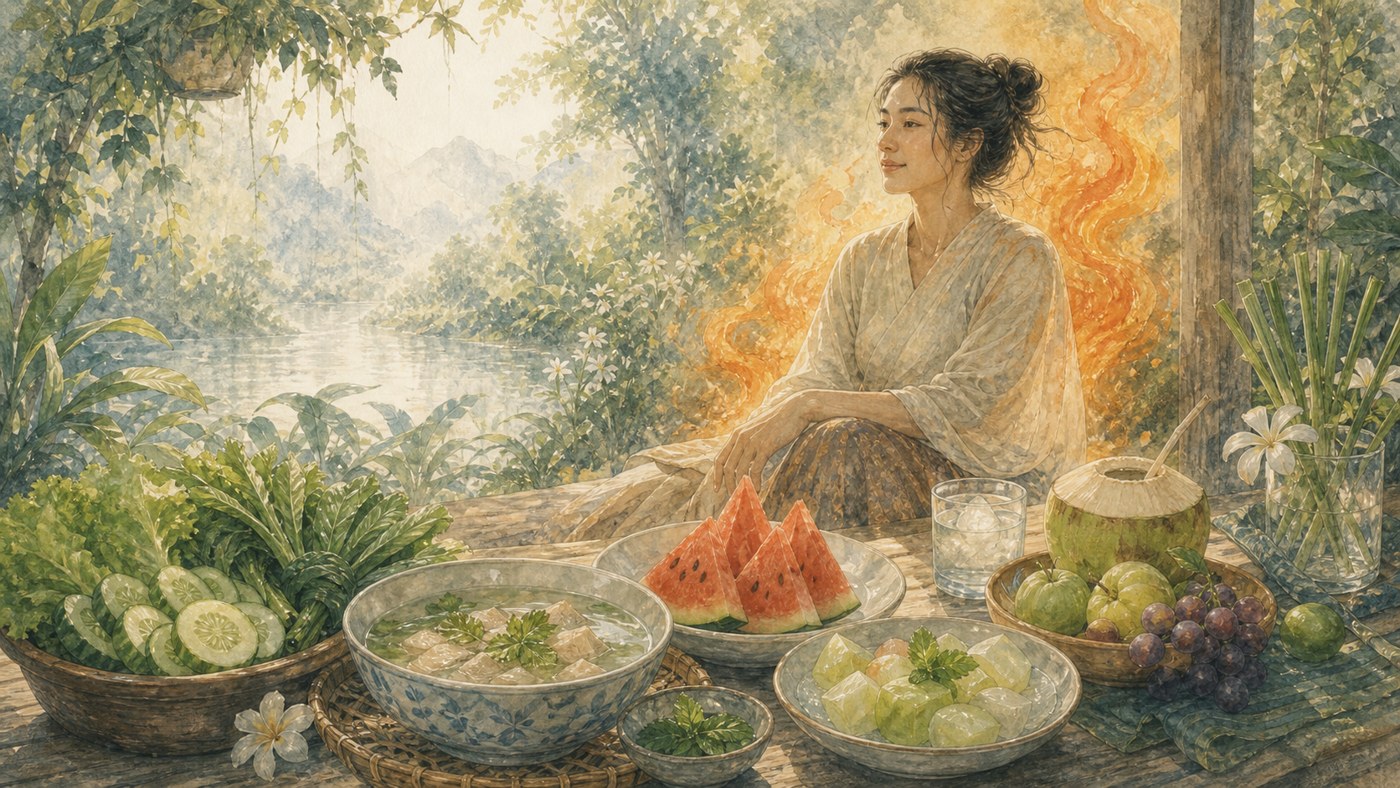
The Fire portrait evokes warmth, sharpness and drive. Some readers recognise strong hunger, hurried eating or irritability when a meal is delayed. These experiences do not establish excessive stomach acid or predict ulcers, inflammatory bowel disease, skin disease or migraine.
The practical emphasis is gentler seasoning, adequate food at workable times and fluids suited to actual needs. Traditional “cooling” is a food vocabulary, not a treatment for inflammation.
Five principles
Plan around hunger. Three regular meals and an optional snack may be convenient, but schedules differ. A small portable food can help when meetings delay lunch. Hunger does not mean that digestive fire is eating the stomach lining.
Moderate forceful seasoning. We can reduce chilli, very sour sauces or excess salt without removing Thai flavour. Herbs, texture and the ingredients themselves can carry the meal.
Include fruit we enjoy. Watermelon, cantaloupe, pear, sweet apple or grapes can provide variety. Whole fruit is generally more useful than repeatedly choosing sweetened juice. Fruit is not prescribed to extinguish Fire.
Vary cooking methods. Steaming, boiling and stewing can sit alongside occasional fried or grilled foods. A meal need not be flavourless to be less oily or sharply seasoned.
Drink according to real needs. Water at a comfortable temperature is the usual choice. Fire Type does not require unusually large amounts of fluid. Climate, activity, illness and any prescribed restriction matter.
Ingredients and preparations
Rice and grains
Soft cooked rice, brown rice where tolerated, rice soup, broad rice noodles in a mild broth and khanom chin with a gently seasoned sauce are possibilities. Coconut sticky rice belongs among occasional sweets, rather than digestive treatment.
There is no type-based need to exclude wholemeal bread, sticky rice or crisp grains. We can change texture when it improves comfort and ensure the whole meal is adequate.
Protein
Poached or stewed chicken, steamed or boiled fish, cooked prawns, tofu, mung beans, black beans and fully cooked eggs provide variety. Egg white can be used, but the type does not require excluding the yolk.
Stewed pork or a less oily preparation can replace frequent deep-fried meat. Smoked and heavily salted seafood need attention to sodium. An elemental label does not set a universal number of red-meat meals; consider the overall dietary pattern and individual guidance.
Vegetables
Spinach and other edible greens, safely prepared gotu kola, bitter gourd, cucumber, winter melon, cooked aubergine, pumpkin, banana blossom, Chinese cabbage, blanched broccoli or cauliflower, Thai basil and moringa leaves offer different tastes.
Bitter vegetables are foods, not a treatment for heat or inflammation. Use reliably identified edible plants; unfamiliar leaves should not be foraged from a name alone. Tomatoes and onions need only be moderated when their preparation or acidity causes a particular problem, rather than being universally forbidden. Cooked sweet peppers can add colour and flavour.
Fruit
Watermelon, cantaloupe, young coconut, grapes, Asian pear, pear, sweet apple, ripe mango, ripe guava, sweet orange, ripe pineapple, mangosteen and avocado can all have a place. Lychee and longan are sweet fruits to portion as part of the whole diet, not an unlimited cooling remedy.
Very sour mango, lime and other tart fruits may be uncomfortable for some readers. Durian is rich and energy-dense; its traditional warming label does not make it inherently forbidden. With kidney disease or potassium restrictions, fruit and coconut-water choices need individual advice.
Seasoning
Coriander, makrut lime leaf, lemongrass, modest ginger, cumin, coriander seed, cinnamon and mild curry seasoning can provide aroma. Turmeric is a culinary ingredient, not a promised anti-inflammatory treatment. Mint can feel refreshing, but may aggravate reflux in some people.
Reduce dried chilli, chilli powder, strong pepper or raw garlic and onion if they cause discomfort. Cooked garlic and onion may be preferred. There is no need to remove all seasoning.
Drinks, fats and sweets
Water is the base. Optional choices include unsweetened pandan or mild chrysanthemum infusion, weak green tea, a suitable gotu-kola drink or milk if tolerated. Coconut water and fruit drinks are not substitutes for plain water and need not be taken daily. Green tea contains caffeine; “herbal” does not automatically mean suitable for everyone.
Use oils in appropriate quantities, usually favouring unsaturated choices. Ghee and coconut oil need not be selected because they are traditionally cooling. Palm sugar and honey remain free sugars; a traditional name does not change that. Mango sticky rice is a dessert, not treatment. [1]
Coffee, strong tea, fizzy drinks or alcohol may need review according to symptoms, sleep and health. There is no general reason to avoid every fermented food solely because of Fire Type.
Thai meal ideas
| Time | Options to adapt |
|---|---|
| Breakfast | Fish rice soup with greens; brown-rice congee and a fully cooked egg; wholemeal toast and avocado with a protein source; mild rice soup; fruit with milk or yoghurt where tolerated, plus enough food for the morning |
| Lunch | Rice with chicken-and-shiitake stew and greens; gotu-kola rice with modestly fried fish; less salty yen ta fo; chicken rice with cucumber; mild khanom chin with cooked vegetables; khao yam with less salty budu sauce |
| Dinner | Tofu and pumpkin soup with basil; rice and bitter gourd with egg; steamed fish with a little soy sauce and cooked vegetables; a mild soup with rice and protein; a small serving of pickled-mustard soup with attention to salt |
| Occasional sweets | Mango sticky rice; young coconut; khanom tan palm-fruit cake; thap thim krop water-chestnut dessert; lod chong with coconut milk or pandan flavour |
| Optional drinks | Plain water; mild unsweetened pandan, chrysanthemum or butterfly-pea infusion; weak tea; a modest coconut-water serving; a small fruit drink without added sugar |
A watermelon smoothie remains different from eating intact fruit. Lemon tea can be acidic, and its caffeine and sweetness depend on preparation. Temperature need not determine whether a dessert is allowed: warm banana in coconut milk is not automatically unsuitable for Fire.
One possible day
Begin with water as needed. Breakfast might be fish rice soup with a little ginger, a fully cooked egg and a serving of watermelon. A midmorning snack could be a few longans; coconut water is optional rather than required.
Lunch could include rice, chicken-and-shiitake stew, bitter gourd with egg, cucumber and ripe guava. In the afternoon, water or an unsweetened pandan drink and a pear may be convenient if hungry.
Dinner could be rice, steamed fish with modest soy sauce, tofu and winter-melon soup, and a few mangosteens. A bedtime drink is optional and should not disrupt sleep or conflict with fluid advice. Adapt quantities to the person; this is an example, not a prescribed daily intake.
When symptoms need their own care
Reflux or heartburn. Triggers vary. Some people benefit from reducing particular fatty, spicy, acidic or caffeinated foods. If symptoms occur at night, avoiding meals within about three hours of lying down may help. Coconut water and curcumin supplements are not established reflux treatments. Persistent symptoms need assessment; trouble swallowing, bleeding or unexplained weight loss should not be managed by changing a type-based menu alone. [2]
Recurring skin problems. A rash is not evidence of accumulated food heat. Consider an appropriate clinical assessment, especially when symptoms recur or worsen. Do not remove multiple foods without a clear reason or replace treatment with bitter greens and herbal drinks.
Migraine or recurrent headache. Regular meals, a workable sleep routine and noticing individual triggers may be useful. A diary can support a clinical discussion. Cold water is not a guaranteed way to stop an attack, and not everyone needs to exclude chocolate, cheese or fermented foods. A new severe or unusual headache requires prompt assessment.
Irritability when hungry. A planned snack or more dependable meals may help. This is not unique to Fire Type. If symptoms suggest low blood glucose, especially when taking diabetes medication, follow the clinical plan rather than an elemental explanation.
Enjoying Thai food without a blanket ban
Isan and southern Thai cuisines include strongly seasoned dishes, but also many preparations that can be adapted. A whole regional cuisine is not an enemy of one constitution. Ask for less chilli or sauce when useful, choose a mild dish alongside a sharper one and consider the meal as a whole.
Saying what we need can be part of enjoying food together. We need not refuse every favourite dish or pretend that discomfort is the price of participation.
Before we continue
The Fire-oriented approach makes room for appetite, gentler flavours and practical hydration. Next we consider variety and less rich preparation through the Water portrait.
FOOD BY THE ELEMENTS
6 · Meals through the Water Portrait
Substantial meals and a sense of heaviness
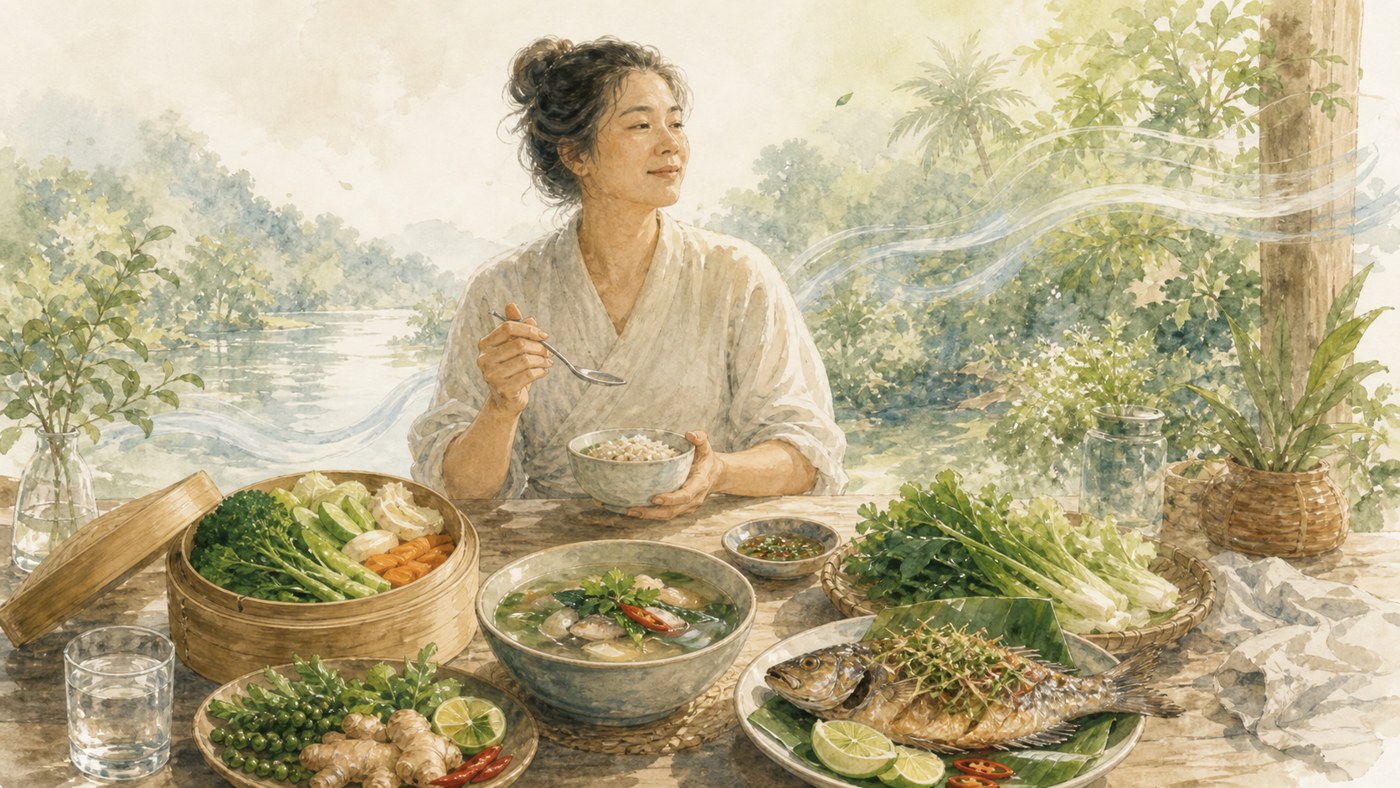
The Water portrait uses cool, moist, heavy and oily qualities. It may help us talk about preferring familiar meals or feeling overly full after a rich dish. It does not establish a slow metabolism, and body size does not identify a constitution.
Obesity, diabetes, high cholesterol, sinus problems and allergies cannot be predicted or explained by this portrait. They require their own assessment. Here the practical emphasis is variety, vegetables, satisfying portions and preparation that is less rich when that suits us.
Six principles
Let appetite inform us without making hunger a treatment. If we are not hungry between adequate meals, a snack may be unnecessary. If we are hungry, we can respond. Water Type is not an indication for fasting or food deprivation. Diabetes medicines, pregnancy, growth, frailty and a history of disordered eating make unsupervised restriction especially inappropriate. [3]
Fit meals to the day. A substantial breakfast and a smaller evening meal may work for some schedules. There is no universal peak of “digestive fire” that prescribes this pattern for every Water Type. Enough food across the day matters more than a rigid early dinner.
Use seasoning for enjoyment. Ginger, garlic, turmeric, pepper, cumin and basil can enliven food. Chilli is optional. Spices do not need to be taken at every meal to activate metabolism.
Include a range of vegetables. Bitter and astringent flavours can add interest—bitter gourd, suitable greens, ivy-gourd leaves and banana blossom among them. They are not a treatment for mucus or a substitute for protein and staple foods.
Review rich foods in the whole pattern. Sticky rice, sweets, fried foods and fatty dishes can be enjoyed without letting them dominate every meal. Starch is not inherently an enemy of Water, and restricting it severely may leave an inadequate diet.
Drink at a comfortable temperature. Warm water is fine if preferred. It does not have a special proven ability to burn fat or stimulate metabolism compared with suitable ordinary hydration.
Ingredients and choices
Rice and grains
Brown rice, germinated brown rice and Riceberry offer wholegrain options; white rice can also fit. Herbal rice soup, rice noodles and wholemeal noodles provide alternatives. Konjac noodles are not nutritionally equivalent to a complete meal: include enough energy and protein.
Roasted rice powder can add flavour. Sticky rice, broad rice noodles, bread and instant noodles need not be forbidden, but portion, accompaniments and sodium deserve attention. Brown rice is not automatically “lighter” in the nutritional sense.
Protein
Steamed, grilled or boiled fish; poached or grilled chicken; fully cooked eggs; red, black or mung beans; peas; and tofu can be useful. A small amount of fried mackerel can fit alongside other methods.
Choose less fatty cuts when useful, avoid blackened or burnt surfaces, and vary protein sources. Raw fish carries food-safety risks regardless of temperature or type. Milk and yoghurt are not automatically excluded: allergy, intolerance and nutritional needs are more relevant than a belief that dairy produces Water.
Vegetables
The Thai kitchen offers bitter gourd, gotu kola, neem, holy basil, edible bitter-gourd shoots, sweet-leaf greens, cashew shoots, spinach, Chinese cabbage, water mimosa, sesbania flowers, cowslip creeper flowers, moringa, ivy-gourd leaves, cooked banana blossom, bamboo shoots, properly identified edible noni leaves, stink beans, celery, coriander, onion, garlic and ginger.
Use familiar edible species and established safe preparation. Some plants require specific cooking; a short common name is not enough for safe foraging. Jengkol or luk niang is not recommended here because of its recognised potential for serious toxicity. Unfamiliar wild leaves likewise should not be chosen on this list alone.
Cucumber, winter melon and watermelon need not be restricted simply because they are juicy. Swelling or an abnormal fluid balance is a clinical issue, not a reason to remove watery vegetables without advice.
Fruit
Ripe guava, apple, persimmon, prunes, pomegranate and modest pineapple offer choices. Lime and makrut lime are flavourings. A little unripe mango or dried fruit can fit when tolerated.
Bananas, longan, lychee, jackfruit and avocado are not prohibited; consider quantity and the overall meal. Durian is a richer choice. Dried fruit concentrates sugars into a small volume, while avocado supplies fat; neither quality alone determines whether the food belongs in our diet.
Spices, drinks and oils
Ginger, turmeric, pepper, chilli, garlic, lemongrass, makrut lime leaf, galangal, holy basil, Thai basil, cumin, coriander seed, cinnamon, cardamom, cloves and mild curry seasoning can provide variety. Nutmeg is used only in small culinary amounts.
Water can be plain or lightly flavoured with ginger or lime if tolerated. Mild pandan or suitable herbal infusions, weak tea and less salty vegetable broth are options. Honey water remains a sugary drink; turmeric and gotu-kola preparations should not be treated as metabolic medicines.
Sweet milk tea, sweetened coffee, condensed milk and fizzy drinks can contribute substantial sugar. The practical distinction is sweetness and portion, not a ban on every chilled drink or all plain milk.
Use suitable food-grade oils in modest amounts, usually favouring unsaturated oils. Olive and sesame oil are examples. Mustard oil must be a product legally intended for eating in the place where we live, not an oil labelled for external use. Ghee and coconut oil are not special Water remedies.
Thai meal ideas
| Time | Options and adjustments |
|---|---|
| Breakfast | Rice soup with ginger, pepper and protein; brown-rice congee with coriander; a fully cooked egg with fruit and enough staple food; occasional roti with a suitable accompaniment |
| Lunch | Brown rice with basil chicken and vegetables; bitter gourd with egg and vegetable soup; clear noodles with extra vegetables; som tam with rice and protein; kaeng liang with rice; khanom chin nam phrik with its peanut-based sauce; glass-noodle, instant-noodle or banana-blossom salad with adjusted seasoning |
| Dinner | Grilled fish with vegetables and enough rice; clear tom yum with rice; grilled chicken with mixed salad; warm cooked-vegetable salad with protein and a staple |
| Occasional sweets | Fruit; shaved ice with fruit and little or no syrup; a small Thai sweet such as khanom tom, luk chup or thong yot |
| Drinks | Water; mild ginger or pandan infusion; suitable unsweetened herbal drinks; weak tea or modest coffee if tolerated |
Salted-fish rice soup can be enjoyed in a small amount but is not an ideal everyday breakfast merely because it contains little rice. Vegetable juice and a little fruit alone are not an adequate dinner for many people. Khanom tom contains coconut despite sometimes being grouped with “non-coconut-milk” sweets; luk chup and thong yot still contain sugar.
One possible day
Begin with water; ginger or a little lime is optional. Breakfast might be rice soup with minced pork, ginger and a fully cooked egg. If hungry later, a guava or apple can be a snack; there is no requirement to endure hunger.
Lunch might be brown rice, bitter gourd with egg, spinach with garlic and mixed vegetable soup. Make sure the combined meal contains enough food. In the afternoon, choose water or a suitable unsweetened drink, with a snack if needed.
Dinner could be grilled fish, a mixed vegetable dish, rice and fruit. Choose a time compatible with work, sleep and any medical plan rather than insisting on before 7 p.m. A bedtime ginger drink is optional and may not suit reflux or sleep disrupted by drinking late.
Problems that deserve a wider view
Weight change. Review food, activity, sleep, medicines and health with appropriate support. Weight is influenced by many factors; a type label is not a diagnosis or a reason for shame. Restriction, extra chilli and deliberate hunger are not the default answer.
High cholesterol or diabetes. Use a clinician or dietitian's plan. Vegetables and appropriate changes in the overall diet may help, but bitter foods, ginger and turmeric do not replace medication or monitoring.
Sinus symptoms or frequent mucus. Seek assessment when symptoms persist or recur. Removing milk and yoghurt is not automatically necessary unless allergy, intolerance or another clear reason is present. A warm soup may feel comforting without treating the cause.
Marked sleepiness after eating. Meal size and sleep may be relevant, but repeated excessive sleepiness deserves attention. A comfortable short walk can be pleasant if appropriate; ginger before meals does not diagnose or correct an assumed weak digestive fire.
Returning to ordinary care
Favourite coconut sweets and fried foods can remain part of life. We can choose them less often when that supports our nutritional goals. There is no need for a large bitter-vegetable meal or strong spice drink to reset ourselves immediately afterwards.
Before we continue
The Water-oriented ideas invite variety and a less rich preparation where useful. The next chapter applies the same flexible approach to twenty-five familiar Thai menu entries.
FOOD BY THE ELEMENTS
7 · Twenty-Five Familiar Thai Menu Entries
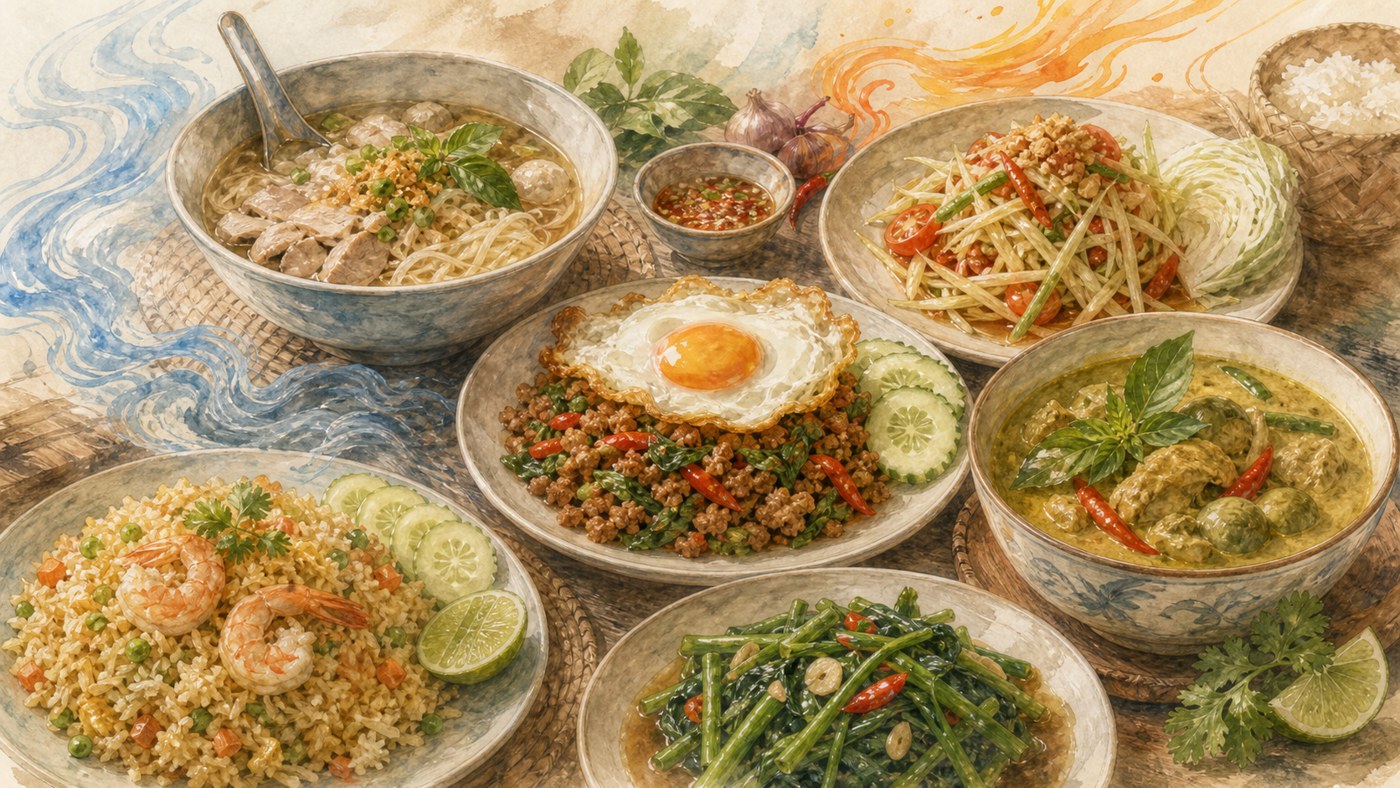
A menu companion
Use this chapter as a small dictionary at a restaurant or stall. The qualities describe a typical preparation; recipes vary widely. The suggestions are possibilities for adjusting a meal, not scientific suitability scores for constitutional types.
Across every entry, food allergy, safe preparation, adequate nutrition and an individual medical plan take precedence. Chilli does not cancel oil, coconut water does not neutralise salt, and no type has permission to ignore food safety.
Stir-fries and one-plate meals
1. Basil pork with a fried egg
Typically hot in flavour, substantial, salty and relatively dry, with oil from the stir-fry and egg. The map highlights Fire, while the rich ingredients also evoke Water. This illustrates why a dish cannot be reduced to one arrow.
For a gentler Wind-oriented plate, reduce chilli and add a vegetable side. For a Fire-oriented plate, keep basil's aroma while reducing chilli, oil and sauce. For a less rich Water-oriented plate, also consider the cooking fat and portion rather than treating pungency as a reason to eat freely.
2. Mixed stir-fried vegetables
Usually warm and comparatively mild, this is an adaptable side for all three portraits. The vegetables and cooking texture can vary. Ask for less sauce or oil if useful, and include protein and a staple elsewhere in the meal.
3. American fried rice
Rice, sausage, ham, a fried egg and raisins make a warm, substantial, oily, sweet-salty dish. Traditional language highlights heaviness. Cucumber or other vegetables add contrast. Processed meat, salt and the overall portion matter for everyone, not only Fire and Water Types; a smaller portion can be supplemented with more suitable foods rather than simply halved regardless of hunger.
4. Chinese-sausage fried rice
Warm, substantial and sweet-salty, this dish combines rice, oil and preserved sausage. Use less sausage, add vegetables and consider the rest of the meal. A Wind-oriented preference for nourishment does not remove the need to moderate salty processed meat.
Noodles
5. Boat noodles
The thick, intensely flavoured broth is traditionally warm, moist and substantial. A Wind-oriented reader may enjoy a warm bowl; a Fire-oriented version can use less chilli and vinegar; a Water-oriented version can include more vegetables and less rich broth. Blood, offal and meat require thorough safe cooking.
6. Clear-broth yen ta fo
This can be a warm, moist and less rich choice, but the pink sauce, fish products and broth vary in salt and allergens. It is adaptable across the portraits; taste before adding condiments and add vegetables where available.
7. Pad see ew and rad na
These share broad rice noodles but differ in preparation. Pad see ew is stir-fried and often oily; rad na has gravy and more moisture. Both can be substantial and salty.
A Wind-oriented meal may welcome the softer gravy texture. A Fire-oriented version can reduce oily or strongly seasoned additions. A Water-oriented version can include more vegetables and an appropriate noodle portion. Rad na is not automatically nutritionally superior: recipe and quantity matter.
8. Kao lao meat-and-vegetable soup
Without noodles, the bowl may feel less starchy, warm and moist. It can suit several meal styles, but it still needs enough overall nourishment—rice may be a useful accompaniment. Choose safe cooked meat, vegetables and a broth portion suited to sodium needs.
9. Khanom chin nam ngiao
Northern-style rice noodles with a tomato-based meat broth are often warm, moist and mildly sour, though chilli levels vary. Adjust seasoning and add suitable vegetables. Any blood or meat ingredients require safe cooking. The dish is adaptable, not inherently balanced for everyone.
10. Khanom chin with coconut nam ya
Coconut-based fish curry sauce makes the noodles warm, moist and rich. A Wind-oriented reader may welcome the softness; a Fire-oriented version can reduce chilli and add cooked vegetables; a Water-oriented version may use less coconut sauce or a non-coconut alternative. Coconut content and fish allergens remain relevant.
Soups
11. Clear tom yum with prawns
The broth is moist and usually sharp with sourness, chilli and salt. Traditional language calls it warming. Reduce chilli or lime if uncomfortable, use suitable portions and ensure prawns are cooked. A warm aromatic soup may be pleasant in cool weather without being prescribed by type.
12. Creamy tom yum
Evaporated milk, coconut milk or other additions make a richer version. It may carry both warming flavour and heaviness in the traditional map. Choosing clear broth, using less creamy soup or adding a mild dish alongside are options for any reader. Check dairy and shellfish allergens.
13. Clear tofu and minced-pork soup
Warm, moist and mild, this is a flexible shared dish. Its suitability still depends on ingredients, portion, salt and allergies. It can make a practical base for a shared meal.
14. Kaeng liang
Vegetables in an aromatic peppery broth provide warmth, moisture and vegetable sweetness. Moderate pepper where needed. Shrimp paste or dried shrimp may be included, so a vegetable appearance does not guarantee a vegetarian or shellfish-free dish.
Curries
15. Chicken green curry
Coconut milk, chilli and seasonings make a warm, rich, moist dish. Serve a suitable amount with rice and vegetables. For a Fire-oriented meal, reduce chilli where possible; for a less rich meal, use less sauce. Neither rice nor a cool drink cancels the curry's fat and sodium.
16. Sour fish curry—kaeng som
Usually less rich than coconut curry but sharply sour, salty and sometimes very hot. Fish and vegetables make an adaptable meal with rice, including warm sticky rice if we enjoy it. Moderate sourness and chilli if they provoke symptoms. A Water-oriented preference for lighter food does not mean strong seasoning is always helpful.
17. Massaman beef or chicken curry
Warm spices, coconut milk and a substantial sauce create a rich, usually less sharply pungent dish. Chicken may be an alternative to beef, but either can be prepared with varying fat content. A smaller amount of sauce and a vegetable side are useful options across the portraits.
18. Jungle curry—kaeng pa
A clear, herb-rich curry can be very hot and salty despite lacking coconut milk. Warm sticky rice or another staple can soften the meal’s intensity and provide needed nourishment. Moderate chilli and choose an amount that feels comfortable.
Som tam and yam salads
19. Som tam Thai
Green papaya with sour, salty, sweet and pungent seasoning gives a crisp, comparatively light dish. For a Wind-oriented meal, add enough rice and protein and reduce raw ingredients that cause discomfort. For a Fire-oriented meal, reduce chilli and sharpness. For a Water-oriented meal, retain the vegetables while still moderating sauce and sugar.
20. Som tam with crab and fermented fish
This version is often intensely salty, sour and pungent. Raw or insufficiently treated crab and fermented-fish ingredients can carry hazards. Choose safely prepared, cooked ingredients; no elemental fit makes unsafe fermentation or raw seafood acceptable. Reduce sauce and chilli as needed, and account for shellfish or fish allergy.
21. Glass-noodle salad—yam wun sen
The noodles and vegetables may feel light, while the dressing can be sharply sour, salty and spicy. Add adequate protein and other food if it is a main meal. A Wind-oriented reader may prefer a less sharp, more substantial combination; a Fire-oriented version can use less chilli and lime; a Water-oriented reader should still consider dressing and total intake.
Rice plates and northern noodles
22. Chicken rice with broth
Warm, moist and substantial, the dish can be adjusted with more vegetables, less rich rice, sauce on the side and less oily broth. A Wind-oriented preference may favour its texture; a Fire-oriented adjustment may reduce chilli; a Water-oriented adjustment may reduce richness. Portion is personal, not a fixed half plate.
23. Braised pork leg with rice
Soft, warm, moist and sweet-salty, this is often a rich plate. Choose a less fatty portion if preferred and add vegetables. Pickled vegetables can add flavour but also salt. A soft texture may appeal without making the dish a therapeutic food for Wind.
24. Khao soi
Northern curry noodles combine a coconut-rich broth with noodles and often a crisp topping. They are warm, moist and substantial. Adjust chilli oil, broth amount and accompaniments; add vegetables where possible. A clearer alternative may be available, but a smaller enjoyable serving with other foods can also work.
25. Shrimp-paste rice—khao khluk kapi
Rice, shrimp paste, egg (including the sweet egg accompaniment described here), raw mango and vegetables create several tastes and a relatively dry, substantial plate. Mango adds sourness, not a guaranteed digestive remedy. Use less salty paste or sweet accompaniment where possible, keep the vegetable accompaniments and check shellfish ingredients when relevant.
Quick comparison table
The twenty-five entries include two versions under entry 7, giving twenty-six rows here. The columns describe adjustable features, not permission or prohibition by type.
| Dish | Main qualities to notice | A practical adjustment |
|---|---|---|
| Basil pork and egg | Pungent, oily, substantial | Less chilli, oil and sauce; add vegetables |
| Mixed vegetables | Warm, variable texture | Moderate sauce; add protein elsewhere |
| American fried rice | Rich, sweet-salty, processed meat | More vegetables; less processed meat |
| Chinese-sausage fried rice | Rich, salty-sweet | Less sausage; add vegetables |
| Boat noodles | Concentrated, moist | Less condiment; safe cooked ingredients |
| Clear yen ta fo | Moist, sauce-dependent | Check salt and allergens |
| Pad see ew | Oily, substantial | Adjust oil and noodle portion |
| Rad na | Moist, substantial gravy | More vegetables; consider sauce |
| Kao lao | Warm soup without noodles | Include sufficient energy elsewhere |
| Nam ngiao noodles | Warm, sour, moist | Adjust chilli; safe preparation |
| Coconut nam ya noodles | Rich, moist | Less sauce or a clearer alternative |
| Clear tom yum | Sharp, sour, salty | Moderate seasoning |
| Creamy tom yum | Sharp and rich | Less creamy broth |
| Tofu soup | Mild, moist | Check salt and adequate protein |
| Kaeng liang | Vegetable-rich, peppery | Moderate pepper; check shrimp ingredients |
| Green curry | Rich and pungent | Smaller sauce portion; vegetables |
| Kaeng som | Sharp, less creamy | Less sourness or chilli if needed |
| Massaman | Rich, mild spices | Add vegetables; adjust sauce |
| Jungle curry | Clear but forcefully seasoned | Moderate chilli and salt |
| Som tam Thai | Crisp, sharp | Add protein and staple as needed |
| Crab and fermented-fish som tam | Intensely seasoned | Safe cooked ingredients are essential |
| Glass-noodle salad | Light texture, sharp dressing | Enough protein; less dressing |
| Chicken rice | Moist, substantial | More vegetables; adjust richness |
| Pork-leg rice | Soft, rich, sweet-salty | Less fatty cut; vegetable side |
| Khao soi | Rich broth and noodles | Adjust broth and chilli oil |
| Shrimp-paste rice | Several tastes, salty paste | Moderate salty and sweet components |
Reading a dish not on the list
Rich, mild meals often resemble the Wind-oriented preference for nourishment. Sharp, lighter dishes resemble a Water-oriented preference for contrast. Mild warm soups are easy to adapt across several needs. A very light salad may need more food beside it, while a rich curry may need less sauce rather than a corrective drink.
Return to the four questions: warming or cooling in the traditional description; light or substantial; dry or moist; which tastes lead? Then add the questions the map cannot answer: is it safe, adequate, affordable and suitable for this person's health?
Before we continue
We can now approach a familiar menu with more detail and fewer rigid labels. Next we look at vegetables and culinary herbs, the ingredients that often make small changes possible.
FOOD BY THE ELEMENTS
8 · Thai Vegetables and Culinary Herbs
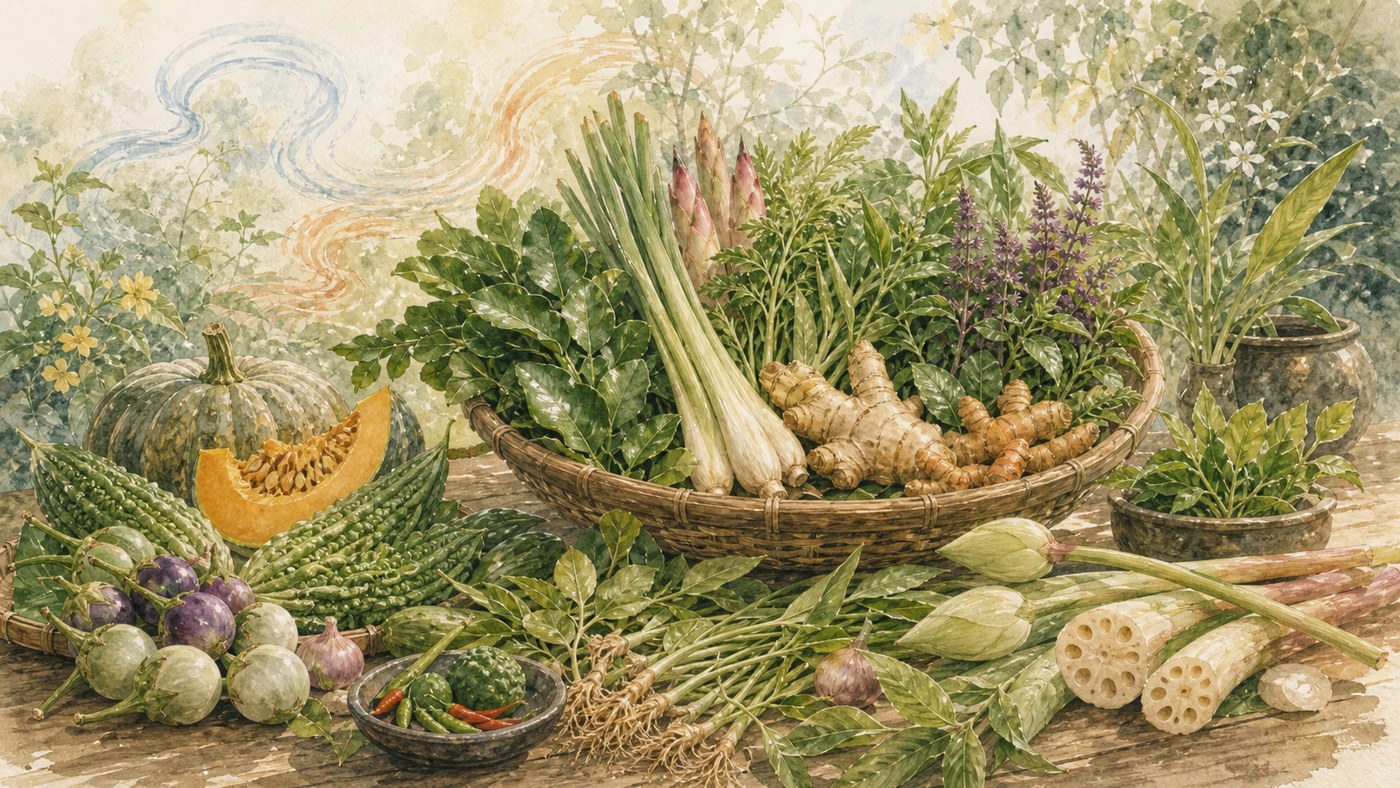
Small ingredients, many possibilities
Markets, gardens and neighbourhood shops offer a remarkable variety of vegetables and aromatic plants. Many are familiar and affordable. They can change texture, flavour and the enjoyment of a meal without requiring an entirely new recipe.
The traditional qualities below are a culinary map, not proof that a plant treats an illness. Familiar edible ingredients in ordinary food quantities are different from extracts, capsules or concentrated daily infusions. Accurate identification and safe preparation come first.
Vegetables through the traditional map
Leafy greens
Spinach or edible amaranth is described as cooling, light and slightly astringent; Chinese cabbage as cooling and moist. Cooking changes texture and may make either more comfortable for some readers. Ivy-gourd leaves and sweet-leaf greens offer relatively gentle flavours. Holy basil and Thai basil are more aromatic and warming, while edible noni leaves are more strongly flavoured.
A traditional preference for greens in a Fire- or Water-oriented meal does not require a Wind Type to avoid them. Preparation, portion and tolerance can make more difference than the label.
Fruiting vegetables and pods
Bitter gourd brings bitterness; pumpkin brings mild sweetness and a more substantial texture. Winter melon and cucumber are juicy and mild. Aubergine changes markedly with cooking, and the oil it absorbs depends on preparation. Yardlong beans, cauliflower and broccoli offer further textures; cook them when that improves comfort or safety.
Roots, shoots and blossoms
The edible root of jicama is crisp and mildly sweet; only the proper edible part should be used. Carrot and sweet potato can be cooked soft. Banana blossom is astringent; bamboo shoots require appropriate preparation rather than being treated as ready to eat when raw.
Sesbania flowers, cowslip creeper flowers and butterfly-pea flowers contribute different colours and flavours. Use reliably identified food varieties. A flower used to colour a dish is not automatically a suitable concentrated herbal medicine.
Other familiar plants
Gotu kola, neem, moringa, bilimbi and stink beans have distinctive tastes and traditional associations. These names do not establish safety for every person or preparation. Avoid concentrated bilimbi juice, particularly with kidney problems; its high oxalate content has been associated with kidney injury. Use extra care with unfamiliar local species, medicinal parts and products. [11]
Vegetable reference table
“Traditional association” means an emphasis in the book's interpretive map. It is not a ranking of nutritional value or a medical prescription.
| Ingredient | Traditional description | Association and practical note |
|---|---|---|
| Spinach / edible amaranth | Cooling, mild, slightly astringent | Often paired with Fire or Water; cook if raw texture is uncomfortable |
| Chinese cabbage | Cooling, moist, mild | Often paired with Fire; useful cooked in soup |
| Ivy-gourd leaves | Mild, slightly bitter | Flexible across the portraits; identify the edible plant |
| Sweet-leaf greens | Mild, slightly sweet | Use customary safe cooking, not concentrated raw juice |
| Holy basil | Warming, mildly pungent | Often paired with Wind or Water; adjust quantity to taste |
| Thai basil | Aromatic, somewhat gentler | A flexible culinary herb, not a remedy |
| Edible noni leaves | Warming, bitter, strong | Traditionally Water-oriented; correct species and preparation matter |
| Bitter gourd | Cooling, bitter | Traditionally Fire/Water-oriented; food is not diabetes medicine |
| Pumpkin | Mildly warming, sweet, substantial | Often Wind-oriented; other types can also eat it |
| Winter melon | Cooling, moist, mild | Often Fire-oriented; no automatic ban for Water |
| Cucumber | Cooling, juicy, mild | A refreshing side where tolerated |
| Aubergine | Mild; preparation-dependent | Cook thoroughly; the amount of oil matters |
| Yardlong beans | Mild | Raw or cooked according to safe preparation and tolerance |
| Cauliflower | Light, mildly astringent | Cooking may improve comfort |
| Broccoli | Light, mildly astringent | Raw is not inherently better than cooked |
| Jicama root | Crisp, mildly sweet | Use the edible root, not seeds or other parts |
| Carrot | Mildly sweet | Adaptable across the portraits |
| Sweet potato | Sweet, substantial | A nourishing starch, not inherently unsuitable for Fire |
| Banana blossom | Astringent | Traditionally Fire/Water-oriented; prepare appropriately |
| Bamboo shoots | Mild to slightly bitter | Require appropriate safe preparation |
| Sesbania flowers | Slightly bitter | Use familiar edible varieties and customary cooking |
| Cowslip creeper flowers | Mild | Flexible in cooked dishes |
| Butterfly-pea flowers | Mildly astringent | Culinary colour and flavour; concentrated use is separate |
| Gotu kola | Bitter, astringent, cooling | Ordinary food use differs from extracts and daily strong drinks |
| Neem | Intensely bitter | Small customary food quantities; no medicinal dosing here |
| Moringa leaves | Bitter/astringent, warming | Edible leaves are not interchangeable with other plant parts |
| Bilimbi | Very sour | Not a cleansing juice; kidney safety is important |
| Stink beans | Strong, slightly bitter/astringent | A food preference, not an elemental treatment |
Culinary herbs
A herb can make a dish more aromatic, more pungent or more appealing. It cannot be assumed to cancel the sodium, sugar or fat in the rest of the meal.
Warming aromatics
Ginger, galangal, lemongrass, makrut lime leaf, garlic, onion, chilli, pepper, turmeric and fingerroot appear frequently in Thai cooking. Traditional accounts connect several with Wind or Water care. In practice, we can use them to make a mild meal interesting or vary a familiar recipe.
Cooked garlic and onion taste different from raw forms. Chilli and pepper are optional; a strong burning sensation is not evidence that the food is doing us good. Turmeric in a curry is not equivalent to a curcumin supplement, and neither should be promised to cure inflammation. Supplements can have risks and interactions. [9]
Gentler and refreshing aromatics
Pandan, butterfly pea, coriander and mint provide different aromas. Culantro—phak chi farang—is distinct from other plants sometimes given similar local coriander names; use the correctly identified culinary herb. Holy basil, Thai basil and lemon basil each contribute a different flavour.
Mint's cooling sensation is not a treatment for excess body heat, and mint can be a reflux trigger for some readers. Choose according to preference and tolerance.
Herb reference table
| Herb | Traditional / sensory emphasis | Practical use |
|---|---|---|
| Ginger | Warming, pungent | Small culinary amounts in soup or food |
| Galangal | Warming, aromatic | Infuse soups; tough pieces are usually not eaten |
| Lemongrass | Aromatic, warming | Use the prepared tender part or infuse and remove |
| Makrut lime leaf | Aromatic, mildly astringent | Flavour soups and curries |
| Garlic | Pungent, stronger raw | Adjust to tolerance; food is different from supplements |
| Onion | Pungent raw, sweeter cooked | Choose preparation to suit the meal |
| Chilli | Very pungent | Optional; no need to tolerate pain |
| Pepper | Pungent | Use a comfortable amount |
| Turmeric | Bitter/astringent, aromatic | Culinary colour and flavour, not prescribed therapy |
| Fingerroot | Warming, pungent | A culinary ingredient in suitable quantities |
| Pandan | Fragrant, mild | Flavour food or an unsweetened drink |
| Butterfly pea | Mildly astringent | Colour and gentle flavour |
| Coriander | Fresh, aromatic | Add to food where enjoyed |
| Mint | Refreshing | Optional; may aggravate reflux |
| Holy basil | Aromatic, mildly pungent | Flavour without necessarily adding much chilli |
| Thai basil | Sweet aromatic notes | Adaptable in curries and sides |
| Culantro | Strong fresh aroma | Correctly identify; use as a culinary herb |
| Lemon basil | Distinct citrus-like aroma | A further option for variety |
Making a small adjustment
A very sharp meal. Reduce chilli in basil stir-fry and add coriander or cucumber if enjoyed. In tom yum, reducing chilli or lime changes sharpness more directly than adding a supposedly cooling herb. Mint or coconut water may alter flavour, but neither neutralises a problematic ingredient.
A meal that feels too cold or raw. A salad can include a ginger, lime and sesame dressing, where tolerated, or a cooked component. Nuts can add texture and nourishment if safe for the people eating. Watermelon does not need chilli-salt to make it suitable; adding salt is a flavour choice, not a health correction.
A very rich meal. With chicken rice, ginger can add flavour but does not remove fat. Adjust the rice, sauce or vegetable portion directly. With coconut noodles, add cooked vegetables and use a suitable amount of sauce; basil, coriander or mint can make that combination more enjoyable.
A meal with little variety. Add a vegetable, fruit or a contrasting mild component. A salty meal does not require sour fruit to become safe, and a spicy meal does not require dessert. We need not force all six tastes into every plate.
Four principles for herbs
Fresh and dried forms can both be useful. Fresh is not always better: availability, safe storage and the recipe matter.
Some delicate leaves are best added near the end for aroma, while roots and tougher herbs often need cooking or infusion. There is no single timing rule for every herb.
Use enough for the flavour we enjoy, but do not escalate quantities to obtain a presumed medicinal effect. More is not automatically better.
Before using concentrated herbs or supplements, check with a qualified clinician or pharmacist, particularly with pregnancy, kidney or liver disease, anticoagulants or diabetes medicines. A food chapter does not supply a safe medicinal dose.
Before we continue
The kitchen offers many ways to change texture and flavour while keeping meals familiar. Next we look at fruit, its seasons and the difference between enjoying variety and prescribing a fruit by type.
FOOD BY THE ELEMENTS
9 · Fruit across the Seasons
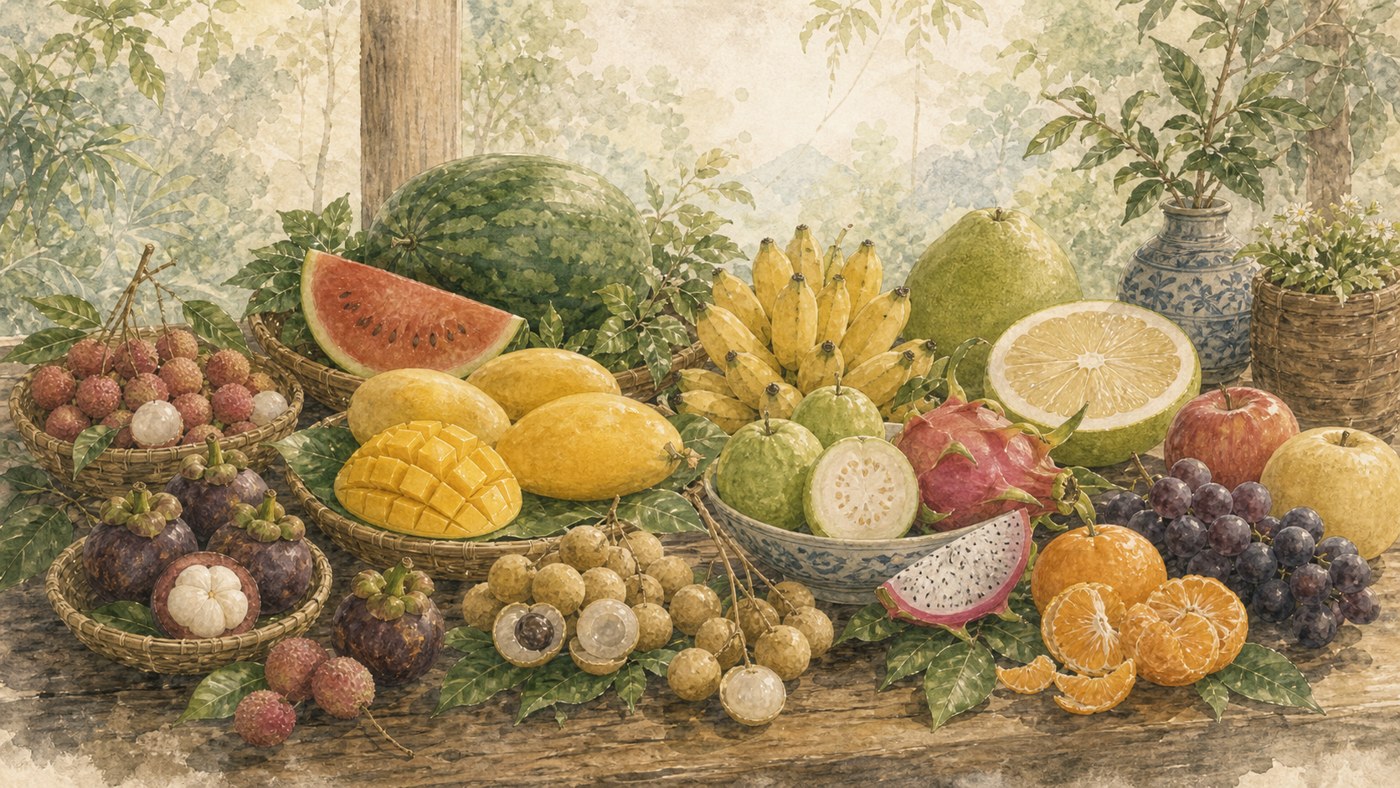
What seasonal fruit offers
Seasonal fruit may be plentiful, enjoyable and affordable. Growing conditions, region, variety and distribution all affect availability. Thailand's hot, rainy and cooler periods offer a useful way to explore a market, but no fixed calendar applies everywhere.
Nature does not guarantee that a fruit appearing in a particular month treats that season's health problems. Nor is out-of-season or imported fruit automatically less nutritious or unsafe. We can consider quality, price, storage and variety without turning origin into a moral ranking.
The traditional descriptions below preserve a language of sweetness, sourness, moisture and richness. They do not determine who is allowed to eat a fruit.
Fruits often associated with hot-season markets
Mango
Ripe mango is sweet, juicy and softer; unripe mango can be firm, sour and astringent. The traditional map often places ripe mango with nourishment and unripe mango with sharper qualities. Either can fit according to portion and tolerance. Sourness may be uncomfortable for some people with reflux.
Watermelon
Juicy and mildly sweet, watermelon is often described as cooling. It can be pleasant in hot weather. It does not require a Water Type to avoid it, nor replace a person's prescribed approach to hydration or fluid restriction.
Mangosteen
Sweet with some tartness, mangosteen offers another texture and flavour. Enjoy the edible flesh; the peel and concentrated extracts are not interchangeable with the fruit.
Lychee and longan
These sweet fruits are often described as warming in traditional lists. Their portions matter as part of the diet, but they do not reliably cause or diagnose internal heat. Remove seeds safely and consider choking risks for children.
Pomelo
Pomelo is sweet-tart and juicy. Some medicines can interact with grapefruit-related fruits, including certain pomelos. Check the medicine's instructions or ask a pharmacist rather than assuming all citrus is interchangeable. [7]
Pineapple
Ripeness changes its sweetness and acidity. It may be enjoyable alone or with a meal. Acidity can be uncomfortable for some readers, but pineapple is not a required digestive aid.
Marian plum—maprang and mayong chit
These fruits range from sweet to tart. The traditional map calls them relatively cooling. Choose ripe fruit, remove the stone and enjoy an appropriate portion without expecting a treatment effect.
Fruits often found around rainy-season markets
Rambutan and longkong bring sweet, soft flesh. Salak offers a sweet-tart flavour and firmer texture. Availability differs by growing region and variety.
Guava changes from firm and astringent to softer and sweeter with ripening. Preparation can help someone who has difficulty chewing. Its traditional Water-oriented association is not a reason to make it the only fruit in the household.
Star fruit has a sour-sweet flavour but an important safety boundary: people with kidney disease should avoid it because toxins can accumulate and cause serious illness. Do not use star-fruit juice as a health drink. [6]
Santol can be sour and astringent. Eat only the appropriate flesh and do not swallow the seeds. Cashews, although grouped with seasonal produce in Thai markets, are nuts rather than juicy fruit; use properly processed edible nuts, consider allergy and choose a suitable portion.
Fruits associated with cooler-season markets
Oranges and mandarins offer sweet-tart juice and segments. Jujube can be crisp and mildly astringent. Sapodilla is soft and sweet when ripe. Sweet tamarind and sour tamarind differ in flavour and use; concentrated sour tamarind is generally a seasoning rather than something needed to stimulate digestion.
Java plum—luk wa has a sweet-astringent character. Ripe jackfruit is sweet and substantial; young jackfruit, cooked as a vegetable, has a different texture and role. Durian is rich and energy-dense, and a modest portion can be enjoyed without using it to nourish or heat a particular type.
These fruits are not confined to the cooler months. In particular, jackfruit and durian availability varies, and durian should not be treated as a universally winter-season Thai fruit. Ask what is locally in season rather than relying on a fixed list.
Fruits available for much of the year
Bananas
Ripe nam wa, hom and khai varieties differ in size, sweetness and texture. Unripe banana is firmer and more astringent and often needs preparation. Bananas need not be excluded for Water Type. Amount, the rest of the diet and any clinical potassium advice matter.
Papaya
Ripe papaya is soft and sweet. Green papaya is a different culinary ingredient, often shredded or cooked. Both require appropriate handling. Papaya can contribute fruit and fibre, but it is not a guaranteed treatment for constipation.
Young coconut
Coconut water and young flesh differ nutritionally. Both can be enjoyed, but coconut water is not an unlimited cooling drink and may be unsuitable in some potassium- or fluid-restricted diets.
Custard apple, guava and lime
Custard apple is sweet and substantial; remove its seeds. Guava offers several ripeness options. Lime is usually a seasoning because of its intense acidity. A traditional label should not override dental, reflux, allergy or other individual concerns.
Imported and internationally familiar fruit
Apples: sweet varieties and tart Granny Smith apples offer different flavours. Slice or cook when chewing or tolerance requires it.
Grapes: green, red and black varieties vary in sweetness and acidity. Colour is not a reliable health ranking. Prepare grapes safely for young children rather than offering whole round fruit.
Pears and Asian pears: European pears and crisp Asian pears are different groups. Both can be juicy and mild; the Thai word sali commonly refers to Asian pear. Neither must be excluded because of an elemental classification.
Kiwi, blueberries and strawberries: these add sweet-tart or mildly astringent flavours. Choose according to tolerance and allergy, not a universal cooling rule.
Avocado: substantial and rich in fat, it differs from most sweet fruits. A suitable portion can fit any type; fat content does not require a Water Type to avoid it entirely.
Pomegranate and persimmon: both may offer sweetness and astringency, with texture depending on variety and ripeness. Prunes and raisins are dried fruits with concentrated sugars in a small portion. They can fit without being prescribed as warming foods.
A quick fruit table
| Fruit | Flavour or texture to notice | Practical consideration |
|---|---|---|
| Ripe mango | Sweet, soft, juicy | Portion and ripeness |
| Watermelon | Juicy, mildly sweet | Safe storage after cutting; individual fluid advice |
| Mangosteen | Sweet-tart flesh | Eat the flesh, not medicinal peel preparations |
| Lychee / longan | Sweet | Remove seeds; suitable portion |
| Pomelo | Sweet-tart | Check relevant medicine interactions |
| Pineapple | Sweet-acidic | Personal tolerance |
| Rambutan | Sweet, soft flesh | Remove seed safely |
| Longkong | Sweet, soft flesh | Seed and choking awareness |
| Ripe guava | Sweet, mildly astringent | Chewing texture |
| Orange / mandarin | Sweet-tart | Whole fruit is different from juice |
| Jackfruit | Sweet and substantial when ripe | Young cooked jackfruit serves a different role |
| Durian | Rich and energy-dense | Modest portion; not a type remedy |
| Ripe banana | Sweet, soft | Variety and portion |
| Ripe papaya | Sweet, soft | Food, not guaranteed bowel treatment |
| Young coconut | Mildly sweet liquid and flesh | Potassium/fluid advice where relevant |
| Sweet apple | Crisp, mildly sweet | Slice or cook if needed |
| Grapes | Juicy, sweet-tart | Choking precautions for children |
| Asian pear | Crisp, juicy | Prepare for chewing ability |
| Avocado | Mild, rich | Can fit all types in suitable portions |
| Pomegranate | Sweet-tart, sometimes astringent | Texture and safe eating |
Try this at home
Add two fruits available locally to the table. Note ripeness, preparation, price and whether we enjoy them. There is no need to assign a medical effect or a permanent type rating.
Five practical habits
Fruit can be eaten with or between meals. There is no general evidence-based requirement to separate it from meat or milk because their digestion differs. Choose a timing that works. Fruit alone may be insufficient as a main meal.
Use a comfortable temperature and safe storage. Chilled fruit is not automatically harmful. Cut fruit still needs appropriate refrigeration; do not leave it out for long to satisfy a traditional temperature rule.
Respect personal tolerance of sourness. Very tart fruit may be uncomfortable for some readers, but sour fruit does not inevitably cause stomach disease in Fire Types.
Prefer whole fruit most often. Freshly squeezed juice is not automatically superior to all packaged juice. Both can supply free sugars with less intact fibre than whole fruit; labels and portion matter. [1]
Use local seasonality as an opportunity. Abundance can improve price and enjoyment. Choose what is available and appealing, without treating a calendar as a medical prescription.
Specific situations
When hungry but not ready for a large meal, banana or mango with tolerated yoghurt can be a useful snack. On a hot day, watermelon or another juicy fruit may be enjoyable alongside suitable hydration. On a cool day, a warm banana preparation or a familiar fruit may be comforting; coldness does not make the other choices forbidden.
If bowel habits change, fruit and suitable fibre may form part of ordinary care, but persistent or severe symptoms need assessment. When taking fruit to someone who is ill, ask about appetite, chewing, swallowing, allergies and their medical diet. Their clinical needs matter more than guessing an element.
Before we continue
Fruit can bring variety through the year without becoming a list of permissions. Next we turn to sweets, coffee, tea and herbal drinks—the choices that often accompany the day between meals.
FOOD BY THE ELEMENTS
10 · Sweets, Coffee, Tea and Herbal Drinks
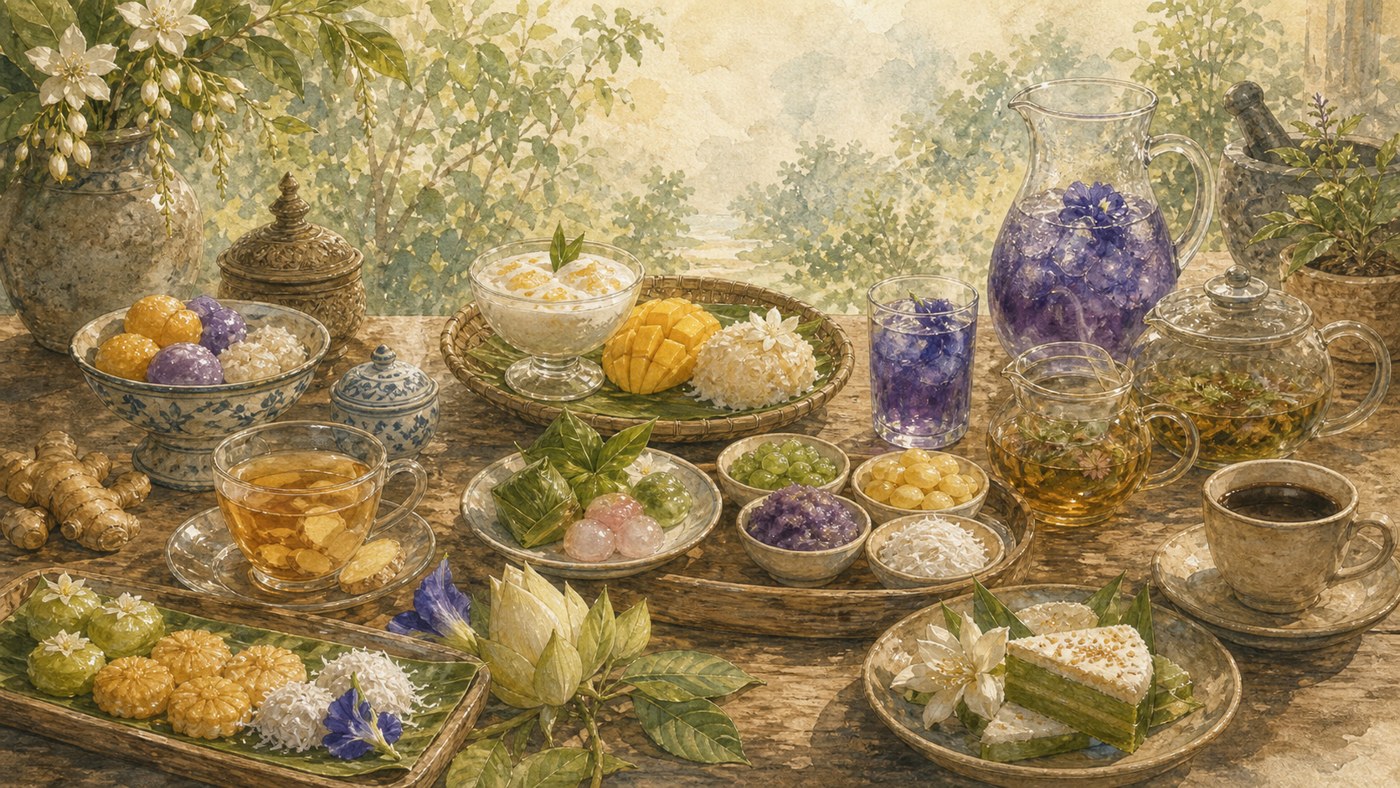
A place for sweetness
Thai sweets belong to ordinary afternoons, temple days, ordinations and weddings. They carry memories of people and places as much as a flavour. We can enjoy that place in our lives while choosing a portion and frequency that fit the whole diet.
The elemental vocabulary describes sweetness as nourishing and Water-like, rich coconut or cream desserts as substantial, and chilled desserts as cooling. These images help describe the experience. Nutritionally, sugar, fat, portion and the rest of the day's food remain the practical considerations.
Reading a dessert
A warm banana-and-coconut dessert feels different from shaved ice. A crisp cookie differs from a soft rice dumpling. Temperature and texture can guide enjoyment, while the amount of added sugar and richness guide how the dessert fits a meal.
Simple syrup and sweets can bring pleasure without supplying much nutritional variety. Coconut milk, cream and sticky rice make some desserts more substantial. A small serving shared with others may be enough to enjoy the flavour. We can choose that without needing to justify it as treatment for a type.
Thai sweets
Warm, soft and substantial
Mango or durian with coconut sticky rice, banana in coconut milk, pumpkin in coconut milk, warm lod chong, bua loi rice dumplings and water-chestnut thap thim krop can all have a soft, rich quality. Palm-fruit cake, banana cake and khanom chak coconut cake offer further textures.
A Wind-oriented reader may enjoy their warmth and softness. The same foods can be enjoyed by other readers in suitable portions. “Nourishing” in a traditional description does not mean unlimited, and safe storage still matters when a dessert contains coconut milk or dairy.
Cool and refreshing
Chilled mango sticky rice, thap thim krop, lod chong, shaved ice, grass jelly, soaked basil-seed desserts and palm-fruit cake may feel refreshing. Their sweetness depends heavily on syrup and toppings. Ask for less syrup or share a serving if that is what we want.
A Fire-oriented preference for cool food is one possible reason to choose them, but a cold dessert is not treatment for heat illness or inflammation. On a hot day, suitable water and a cooler environment remain important.
Small, intensely flavoured sweets
Luk chup mung-bean sweets, thong yot, thong yip and foi thong egg-yolk sweets can be enjoyed in small quantities. They may look small while being quite sweet. Luk chup commonly contains coconut milk; the recipe matters more than an assumed “light” category.
Khao tom mat often contains coconut milk and sticky rice. Khanom tom contains a sweet coconut filling and coconut coating. Neither should be described as automatically low in sugar or free of coconut. A Water-oriented meal can include a modest sweet without relying on misleading ingredient assumptions.
International and contemporary desserts
Cream cake and cheesecake are usually rich; cookies and brownies vary in fat and sugar despite their drier texture. A croissant is buttery and layered, and its size matters.
Milk ice cream, sorbet and gelato differ in ingredients. Sorbet may contain less fat but can still contain considerable sugar. Bingsu can become a large sweet meal through milk, syrup and toppings. Mochi is chewy and sticky; it requires particular caution where choking or swallowing is a concern.
Dorayaki and hotteok provide filled cakes or pancakes with different textures and fillings. We can enjoy them as foods from another culinary tradition without assigning a health advantage to a type.
Dessert comparison table
| Dessert | Qualities to notice | An everyday decision |
|---|---|---|
| Warm mango sticky rice | Soft, rich, sweet | Share or choose a suitable portion |
| Chilled mango sticky rice | Rich, sweet, cold | Temperature does not remove sugar or richness |
| Banana in coconut milk | Soft, warm, substantial | Enjoy as a dessert alongside a varied diet |
| Pumpkin in coconut milk | Soft, mildly sweet ingredient plus sweetened sauce | Consider the sauce as well as pumpkin |
| Warm lod chong | Sweet, moist | Adjust syrup and coconut milk |
| Chilled lod chong | Sweet, cold | Safe water, ice and storage |
| Bua loi | Soft dumplings, rich sauce | Portion and chewing ability |
| Thap thim krop | Crisp-chewy pieces, coconut sauce | Check texture and ingredients |
| Shaved ice with syrup | Cold, often very sweet | Less syrup or fewer sweet toppings |
| Grass jelly | Mild before syrup | Sweetness depends on additions |
| Luk chup / egg-yolk sweets | Small but often sugar-rich | Enjoy a few rather than judging by size alone |
| Khanom tom | Sticky rice flour and sweet coconut | Check choking/texture needs |
| Cream cake / cheesecake | Rich, sweet | Occasional suitable portion |
| Cookies / brownies | Dry or dense, sweet | Recipe and quantity matter |
| Croissant | Buttery, layered | A pastry, not a type-specific staple |
| Milk ice cream | Cold, sweet, dairy | Consider milk allergy and portion |
| Sorbet | Cold, fruity, often sweet | Less fat does not mean little sugar |
| Bingsu | Cold, toppings can be substantial | Sharing may be convenient |
Water first
Fluid needs vary with body size, climate, activity, food, illness and medicines. Wind, Fire and Water labels do not establish a daily glass count, and a Water Type should not restrict fluid on the assumption of already “holding water.”
Keep water accessible and drink at a comfortable temperature. People with kidney or heart conditions may have a specific fluid plan; follow that plan. Thirst, routine and advice for the situation are more useful than a type-based quota. [10]
Coffee
Black coffee is bitter and can feel stimulating; milk and sugar change its texture and taste. People differ in their response to caffeine, and drink sizes and strengths differ too.
If coffee worsens sleep, palpitations, anxiety or reflux, reduce the amount or timing and seek advice for persistent symptoms. A Water Type does not automatically tolerate more caffeine, and a Wind Type need not be assigned an identical one-cup limit.
Decaffeinated coffee, chicory or roasted-grain drinks may offer alternatives. Check ingredients: some substitutes contain allergens or still include coffee. A milk coffee can fit where tolerated; sweetness can be adjusted independently of the milk.
Tea
Black, green, white and oolong teas offer different flavours, but all can contain caffeine. Earl Grey is usually a tea flavoured with bergamot. A fruit infusion may be caffeine-free, though the label should confirm it.
Milk tea and bubble tea can contain substantial sugar and additional energy from toppings. Ordering less sugar or a smaller drink can preserve enjoyment. Tapioca pearls also require suitable chewing ability. Tea need not be prescribed or prohibited by element.
Thai herbal drinks
Ginger and lemongrass give warming aromas. Pandan is fragrant and gentle. Gotu kola is grassy and bitter; chrysanthemum floral; roselle distinctly sour; butterfly pea mildly astringent; bael aromatic; stevia sweet; pandan with cinnamon combines familiar scents.
These can be enjoyed as suitable food drinks, often with little or no added sugar. Strength, frequency, medicines, pregnancy and health conditions matter when a drink becomes a concentrated daily practice. A familiar plant name does not guarantee that every extract or preparation is safe.
Fruit drinks, milk and other choices
Coconut water, orange, watermelon, pineapple, apple and grape juice each have a different flavour. Choose modest portions where appropriate, and keep whole fruit in the picture. Freshly squeezed juice still contributes free sugars.
Milk, yoghurt drinks, sweet lassi and buttermilk differ in sugar, fat and fermentation. They can supply useful nutrients where tolerated. A lactose-free or suitable fortified alternative may help some readers; a milk allergy needs a different approach. “Golden milk” simply adds spices such as turmeric or cinnamon and need not be treated as medicine.
Fizzy drinks vary from sugary to unsweetened versions. Alcohol is not a way to warm a constitution or support daily care. It can interact with medicines and create safety risks, especially with driving and caregiving.
Drink comparison table
| Drink | What to notice | A practical choice |
|---|---|---|
| Warm or cool water | Comfortable temperature | The usual everyday base |
| Black coffee | Caffeine, strength, timing | Adjust to response and sleep |
| Coffee with milk | Caffeine plus additions | Choose sweetness separately |
| Black tea | Caffeine | Check strength and timing |
| Green / white tea | Caffeine despite a lighter flavour | Do not assume caffeine-free |
| Oolong / Earl Grey | Tea base and flavouring | Choose by preference and tolerance |
| Fruit infusion | Ingredients vary | Check caffeine and added sugar |
| Bubble or milk tea | Sugar, milk, toppings | Smaller size or less sugar if useful |
| Ginger drink | Strength and added sugar | Mild culinary preparation |
| Pandan drink | Often sweetened commercially | Choose little or no added sugar |
| Gotu-kola drink | Herb strength and suitability | Avoid assuming a daily medicinal dose |
| Chrysanthemum drink | Sugar and allergy considerations | A mild suitable infusion |
| Roselle drink | Sourness, sugar | Personal tolerance and medicines matter |
| Butterfly-pea drink | Ingredients and preparation | Culinary use rather than a treatment |
| Lemongrass / bael drink | Herb strength and sweetness | Modest suitable preparation |
| Stevia drink | Product and other ingredients | Sweet taste alone does not ensure nutritional quality |
| Coconut water | Potassium, fluid, sugars | Follow relevant medical restrictions |
| Orange / watermelon / pineapple juice | Free sugars and acidity | Modest amount; whole fruit most often |
| Apple / grape juice | Free sugars | Read labels and portion |
| Milk / golden milk | Protein, fat, tolerance | Suitable milk or alternative; spices optional |
| Yoghurt / lassi / buttermilk | Sugar, fermentation, dairy | Choose a version that fits needs |
| Fizzy drink | Sweetened or unsweetened | Water remains a simple default |
| Alcohol | Health, medicine and safety effects | Do not use it for elemental care |
Four situations needing extra care
Diabetes or high blood glucose. Dessert and drink choices should fit the individual's plan, including medicines and meal timing. A dietitian can help preserve enjoyment while making the plan workable.
Pregnancy. Keep total caffeine from all sources within the advised limit of 200 mg a day. Coffee, tea, cola, chocolate and some energy products can all contribute. Avoid alcohol in pregnancy. [4]
Breastfeeding and alcohol. Not drinking is the safest option. If alcohol is consumed, obtain appropriate guidance about timing and feeding; breastfeeding advice is distinct from the risk of alcohol exposure during pregnancy. [12]
Energy drinks and high caffeine. These are not nutritional care for a tired child or a way to compensate for sleep deprivation. Children and young people should avoid energy drinks; adults with relevant heart symptoms, conditions or medicines should seek advice. [13]
Before we continue
Sweets and drinks can remain pleasurable parts of life. Knowing the ingredients and choosing a suitable amount often helps more than memorising a type rating. Next we take the same approach to restaurants, street food and convenience shops.
FOOD BY THE ELEMENTS
11 · Restaurants and Street Food
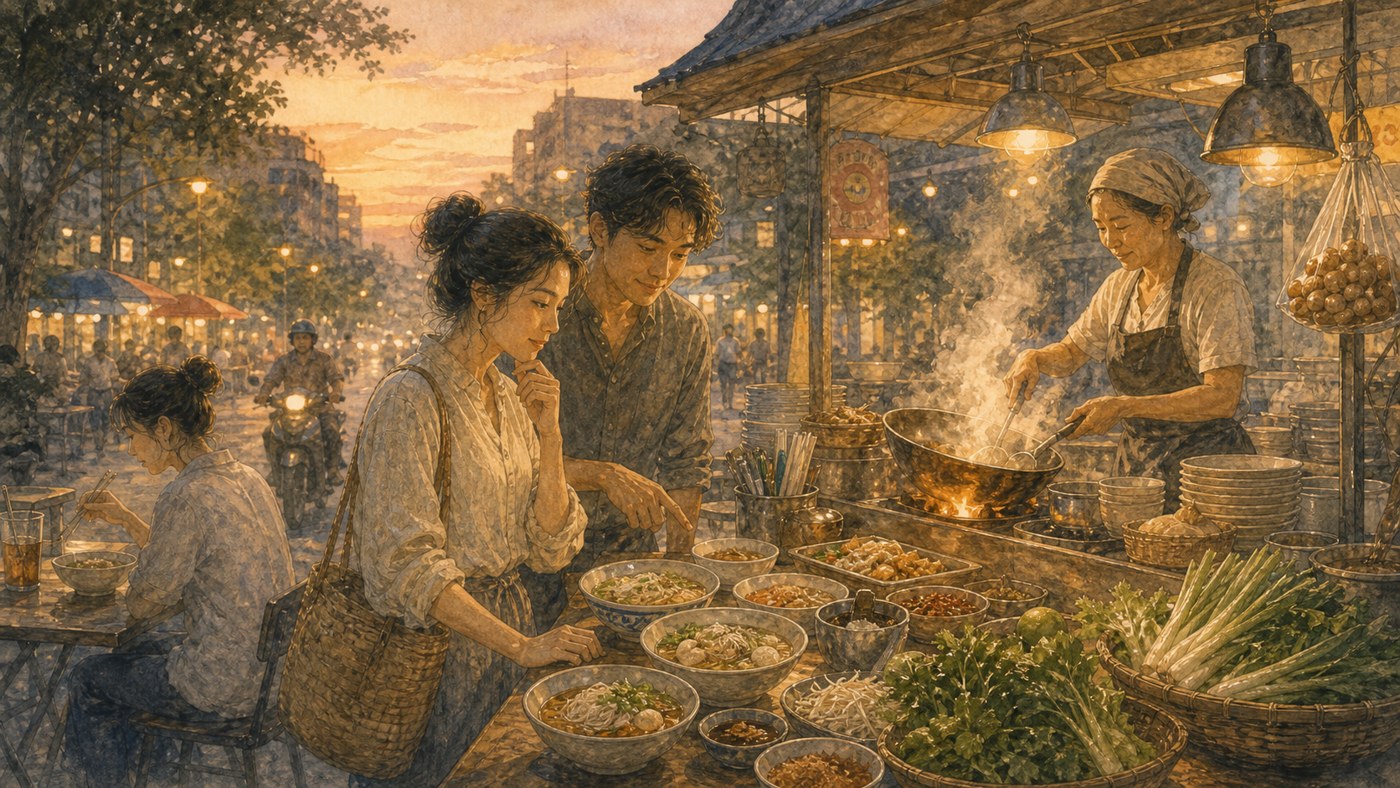
Working with the life we have
For many urban workers, choosing a restaurant is a more frequent task than planning a home-cooked meal. We may eat at a stall between appointments, buy dinner on the way home or share lunch with colleagues.
Knowing how to choose and ask for a small adjustment can make care practical. We need not cook every meal ourselves to eat thoughtfully.
Different kinds of restaurant
Made-to-order stalls and rice shops
A cook may be able to adjust chilli, oil, salt or sugar. Look for soups, stews, steamed food and vegetables as well as the familiar fried options. Observe cleanliness, food storage and whether cooked food is handled safely. A dish's appearance alone cannot establish its safety or sodium content.
A Wind-oriented order might be: “Pork rice soup with ginger, please, and a fully cooked egg.” A Fire-oriented order might be: “Rice, mild mixed vegetables and steamed fish, with sauce on the side.” A Water-oriented order could be: “Bitter gourd with egg, kaeng liang and a rice portion that suits my appetite.”
Simple requests are often easier to fulfil than asking a busy cook to understand an elemental theory.
Noodle shops
A warm bowl can combine a staple, protein and vegetables conveniently. Broth may be salty even when clear, so taste before adding condiments.
For a softer, moist meal: “Clear rice-noodle soup with cooked morning glory.” For gentler flavour: “Yen ta fo with little sauce and no added chilli.” For more vegetables: “Kao lao with extra vegetables, and rice separately.” A noodle-free bowl may need a staple elsewhere to make an adequate meal.
Regional Thai restaurants
Isan cooking offers larb, nam tok, som tam, tom saep and steamed fish. Ask for comfortable chilli levels and safely cooked meat or fish. Sour and pungent flavours can be part of a meal without defining the entire region as suitable for only one type.
Northern cooking offers khao soi, nam ngiao, hang le, kaeng ho and nam phrik ong. These vary in richness and seasoning. A mild vegetable side can complement a substantial curry.
Southern cooking offers khanom chin sauces, bai liang greens with egg, khua kling and fried fish with turmeric. Some dishes are intensely seasoned; others are easy to adapt. Ask what can be made milder rather than assuming every dish is fiery.
Central Thai cooking includes kaeng liang, tofu soup, fried fish with fish sauce and stir-fried vegetables. Moderate sauce and oil where useful. Familiarity does not remove the need to consider the whole plate.
Japanese restaurants
Soups, stews, steamed dishes, cooked fish and noodle meals provide many options. Miso, soy sauce and ramen broth can contribute substantial sodium. Raw fish has food-safety considerations independent of its temperature.
A Wind-oriented reader may enjoy a warm soup or stew. A Fire-oriented reader may prefer mild noodles, cooked vegetables or steamed food. A Water-oriented reader may choose grilled protein with vegetables and enough rice. Soba can be served warm or cool according to preference; tempura can remain an occasional choice.
Chinese restaurants
Steamed fish, clear soups and vegetable dishes can help build a varied table. Soy sauce, oyster sauce and cooking oil differ by recipe, so ask for less when that suits us.
Warm vegetable noodles or a soup may appeal to the Wind portrait; steamed fish and gently cooked vegetables to the Fire portrait; vegetables with aromatic garlic and a suitable protein to the Water portrait. These are meal styles to borrow freely, not separate menus that must be enforced.
Western restaurants and fast food
Look at the options actually available. A salad with protein, pasta with tomato sauce, grilled chicken or a vegetable pizza may be useful alternatives to a very rich meal. Dressing, sauce and portion still matter; a salad is not automatically more nourishing than every sandwich or burger.
For warmth, choose soup or pasta. For a milder meal, choose a gentler sauce or cooked vegetables. For less richness, request dressing separately or choose grilled rather than fried protein. A tomato sauce may not suit someone whose reflux is triggered by acidity.
Barbecue and shabu-shabu buffets
A buffet makes variety easy and portions harder to judge. Begin with foods we actually want, include vegetables and allow time to notice fullness. At shabu-shabu, cook meat and seafood thoroughly and keep utensils for raw and cooked food separate. At a grill, avoid eating blackened burnt portions.
A warm broth and cooked vegetables may suit a Wind-oriented preference. A mild broth with fish and vegetables can suit a Fire-oriented preference. A Water-oriented reader may enjoy vegetables with a suitable amount of protein and starch. None needs to earn the meal's value by eating beyond comfort.
Five adaptable requests
Ask for less where it helps. Less chilli, salt, sugar or oil is a clear request, though some prepared dishes cannot be changed. Sauce on the side gives another option.
Add a vegetable where feasible. Cooked vegetables, cucumber or a separate vegetable dish can bring variety. Pickled vegetables are a condiment with their own salt content, not always a substitute for a larger vegetable serving.
Vary cooking methods. Steamed, boiled and stewed dishes can reduce reliance on deep-frying. The whole recipe matters; there is no rule that every boiled dish is superior to every stir-fry.
Choose a suitable drink. Plain water is usually enough, warm or cool according to comfort. A hot drink is optional and need not be used to aid digestion.
Make a little room to eat. Even in a busy shop, putting the phone down for a few minutes and chewing comfortably can help us notice the meal. We need not turn this into another performance to get right.
Four social situations
A client, manager or friend orders strongly seasoned food
Choose a portion we enjoy, add a mild dish or vegetables where possible and state a need plainly when necessary. Allergy, intolerance and medical restrictions are valid reasons to decline. Drinking extra water does not cancel salt or make an allergen safe.
A special-occasion buffet
Enjoy the occasion. Try a range of foods, pause before another helping and stop at a comfortable point. The next meal can be ordinary and adequate; there is no need to skip it or impose a corrective diet.
A meal at a friend's home
A good guest can also have needs. Thank the host, choose suitable foods and explain an allergy or restriction in advance when possible. We are not obliged to taste every dish to show affection. Shared conversation is part of the meal's value.
Travelling somewhere unfamiliar
Look for safely prepared food, clean water and options that feel manageable. Familiar packaged snacks may help during a long journey, subject to border and storage rules. There is no need to carry medicinal herb powders or add turmeric to every meal if the stomach becomes unsettled. Persistent diarrhoea, dehydration or severe pain needs appropriate care.
A pattern across the week
One lunch need not represent the whole week. After a rich basil-pork lunch, a dinner of tofu soup, vegetables and rice may be welcome. In a week with several fried meals, other meals can bring more vegetables and different cooking methods.
This is variety, not repayment. A gentler meal is useful because it meets a present need, not because we must erase an earlier choice. The most sustainable pattern leaves room for both ordinary care and life with other people.
Before we continue
A clear request and a flexible combination can go a long way at a restaurant. Next we look at the smaller range of choices in a convenience shop, where a workable meal may be assembled from several simple items.
FOOD BY THE ELEMENTS
12 · Convenience Shops: Care within Limited Choices

A familiar stop
A student buys food before an exam. An office worker picks up a drink between meetings. A delivery driver stops beside the road. Someone returning home late finds the other shops closed.
A convenience shop can be an important source of food in these situations. We can work with what it offers rather than feeling that care is impossible until life becomes less busy. Stock, brands and prices change, so the examples below describe combinations rather than guaranteed products or fixed budgets.
Five principles
Start with recognisable components
A cooked egg, rice, a portion of chicken, plain yoghurt or fruit can make a useful base. Compare labels where possible: salt, sugar, protein, portion and ingredients tell us more than a package's health image. Processing alone does not decide whether a food is useful.
Combine two or three things
Rice with chicken can be supplemented with vegetables or fruit if those are missing. A tuna sandwich, banana and suitable milk may make a more varied meal than a pastry and coffee alone. Extra food is useful when it fills a need, not because every meal must contain a set number of packages.
Follow preparation instructions
Heat ready meals as directed, including stirring or standing time where specified. A food intended to be eaten chilled does not need microwaving for a Wind or Water Type. Use only containers intended for the appliance; never microwave an unsuitable sealed plastic bottle.
Let water be the easy choice
Water or a suitable unsweetened drink can accompany the meal. Bottled ginger, pandan and chrysanthemum drinks may contain plenty of sugar, so read the label. Tea may contain caffeine.
Keep enjoyment without making sweets the whole meal
An ice cream, cookie or packaged sweet can fit. If we rely on the shop for most meals, it helps to have a few dependable combinations that provide enough nourishment as well as the foods we enjoy.
Meal styles to borrow
A warm, moist Wind-oriented combination
Possible main foods include heated chicken rice, pork rice soup, warm spaghetti with meat sauce, steamed dumplings with rice, roast chicken with rice or instant noodles supplemented with protein and vegetables.
Possible snacks include a ripe banana, avocado when available, wholemeal bread with a tolerated nut butter, plain yoghurt, a small dried-fruit portion or roasted nuts. A malted drink may be enjoyable, but check its sugar content and do not assume it is a necessary nutritional supplement.
Water, milk if tolerated, modest coffee with milk or a suitable mild tea can complete the choice. A dry snack alone may leave us hungry; adding enough real food is more helpful than simply avoiding crispness.
A mild Fire-oriented combination
Fish rice soup, chicken salad with enough accompanying food, an onigiri rice ball, chicken with rice, tomato-sauce pasta or a chicken-and-vegetable sandwich can be options. Choose a mild preparation when sharp seasoning causes discomfort.
Fruit such as watermelon, apple, Asian pear or grapes, plain yoghurt, wholemeal bread and a suitable portion of roasted nuts can supplement a meal or provide a snack.
Water is a simple drink. Unsweetened tea or a modest coconut-water portion may be alternatives where suitable. Read labels on herbal drinks and lemon tea; their name does not tell us sweetness or caffeine. Very spicy instant noodles may be uncomfortable for some readers, while fermented foods need not be universally excluded.
A vegetable-rich, less rich Water-oriented combination
Try rice soup with protein, grilled chicken with salad and a staple, noodles with vegetables and an egg, chicken rice salad, or onigiri with a cooked egg and vegetables.
Guava, apple, pomegranate, a cooked egg or a few roasted nuts can be snacks when wanted. Toasted rice or a crisp food is a texture option, not a metabolic treatment.
Water, suitable unsweetened tea or modest coffee can accompany the meal. Sweetened milk tea and large sugary drinks may be less useful as everyday hydration, but plain milk need not be excluded merely because of a type label.
Three quick combinations
Warm and soft: heated chicken rice, a cooked egg if more protein is needed, banana and water.
Mild and varied: tuna onigiri, a safely stored salad, apple and water or another suitable drink.
Vegetables with a warm main: rice soup with protein, a cooked egg if needed, guava and an unsweetened drink.
Prices and availability vary. We can substitute within the same broad role rather than searching for the exact package. A limited budget may call for a simpler combination, and that still counts as a meal worth caring about.
A useful shelf, and choices to review
| Role | Useful possibilities | What to check |
|---|---|---|
| Protein | Cooked eggs, chicken, canned salmon or tuna, beans or nuts | Salt, allergens, refrigeration where needed; canned fish in oil can also fit |
| Staple | Rice, brown rice, rice soup, onigiri, bread, pasta | Portion and what accompanies it |
| Vegetables and fruit | Safely chilled salad, fresh fruit, suitable cooked vegetables | Storage, freshness, chewing and swallowing needs |
| Drinks | Water, suitable unsweetened drinks, milk if appropriate | Sugar, caffeine, fluid restrictions |
| Processed meat | Sausage, ham, meatballs, salty canned meat | Frequency, salt and the overall dietary pattern |
| Sweet products | Sweet drinks, flavoured milk, packaged sweets, ice cream | Portion and whether they displace more nourishing food |
| Crisps and fried snacks | Occasional enjoyment | Usually not a complete meal on their own |
| Pickles and fermented foods | Small accompaniments | Salt, safe storage and individual tolerance |
“Canned in oil” does not automatically place fish in the same category as crisps. Likewise, the presence of MSG alone does not establish that a meal is harmful. Total sodium, nutritional content and the overall pattern are more useful concerns.
Making instant noodles more useful
Instant noodles are inexpensive and quick. Many versions are high in sodium and provide little vegetable or protein on their own. Labels help us compare products.
Use some rather than all of the seasoning if that reduces sodium, and add safely cooked vegetables and an egg, tofu or another protein. A herb can add flavour, but does not remove salt. Drinking extra water afterwards is not a way to cancel sodium, especially when there is a fluid restriction.
There is no single evidence-based “one or two times a week” rule for every reader. Frequency depends on the wider diet, product and health needs. People with hypertension, kidney disease or a prescribed sodium plan should make the choice within that plan. Children need a sufficiently varied diet rather than relying on noodles repeatedly.
Ready-meal safety
Check the use-by date, packaging and required storage. A product still within date can be unsafe if it has been stored incorrectly, while closeness to the date alone does not automatically make it unsafe. Follow the label.
Heat throughout as instructed and observe any standing time. Eat or store leftovers safely rather than leaving them unrefrigerated. An unusual smell or texture is a reason to discard food, but normal smell does not prove that food is safe. Food-safety instructions matter even when the meal looks familiar. [8]
A small bag of helpful extras
A clean water bottle, a piece of fruit, a small nut or dried-fruit packet, and perhaps a familiar culinary ginger or pepper sachet can make a limited meal easier to adapt.
Keep foods safely stored. Turmeric capsules are supplements, not seasoning packets to open into every meal. If we want turmeric flavour, use an appropriate culinary ingredient in an ordinary amount; medicines and supplements should be taken only as directed.
Three days in an office worker's week
Consider a Fire-oriented reader who often depends on a nearby shop.
Monday: chicken rice and water at breakfast; chicken salad with enough rice or bread and fruit at lunch; dinner at home.
Tuesday: tuna onigiri with another suitable item if needed and unsweetened tea; a less fatty pork-rice portion with colleagues at lunch; an adequate evening meal, perhaps soup, rice and tofu, with fruit if wanted.
Wednesday: fruit with yoghurt or milk if tolerated and a staple or protein to make breakfast sufficient; chicken rice and watermelon at lunch; tofu soup, vegetables and rice at home in the evening.
The pattern can continue with substitutions on other days. Fruit and a herbal drink alone may leave an evening meal inadequate, so the aim is enough food, not the lightest-looking choice.
Students and homes without a kitchen
A kettle, small rice cooker or microwave may widen the options if housing rules and electrical safety allow. A weekly shop for fruit, bread, nuts and suitable refrigerated foods can reduce the pressure of choosing from scratch each day.
Local markets, supermarkets, prepared-food stalls and delivery services each have advantages. Compare the actual price, travel time, storage and quality rather than assuming one is always cheaper. Online “clean food” is not necessary for care, and a convenience shop may remain the most practical source.
Before we continue
A limited shelf still offers combinations. The next chapter brings that same flexibility to a shared household, where several people can eat together without needing a separate kitchen for every type.
FOOD BY THE ELEMENTS
13 · One Table, Different Needs
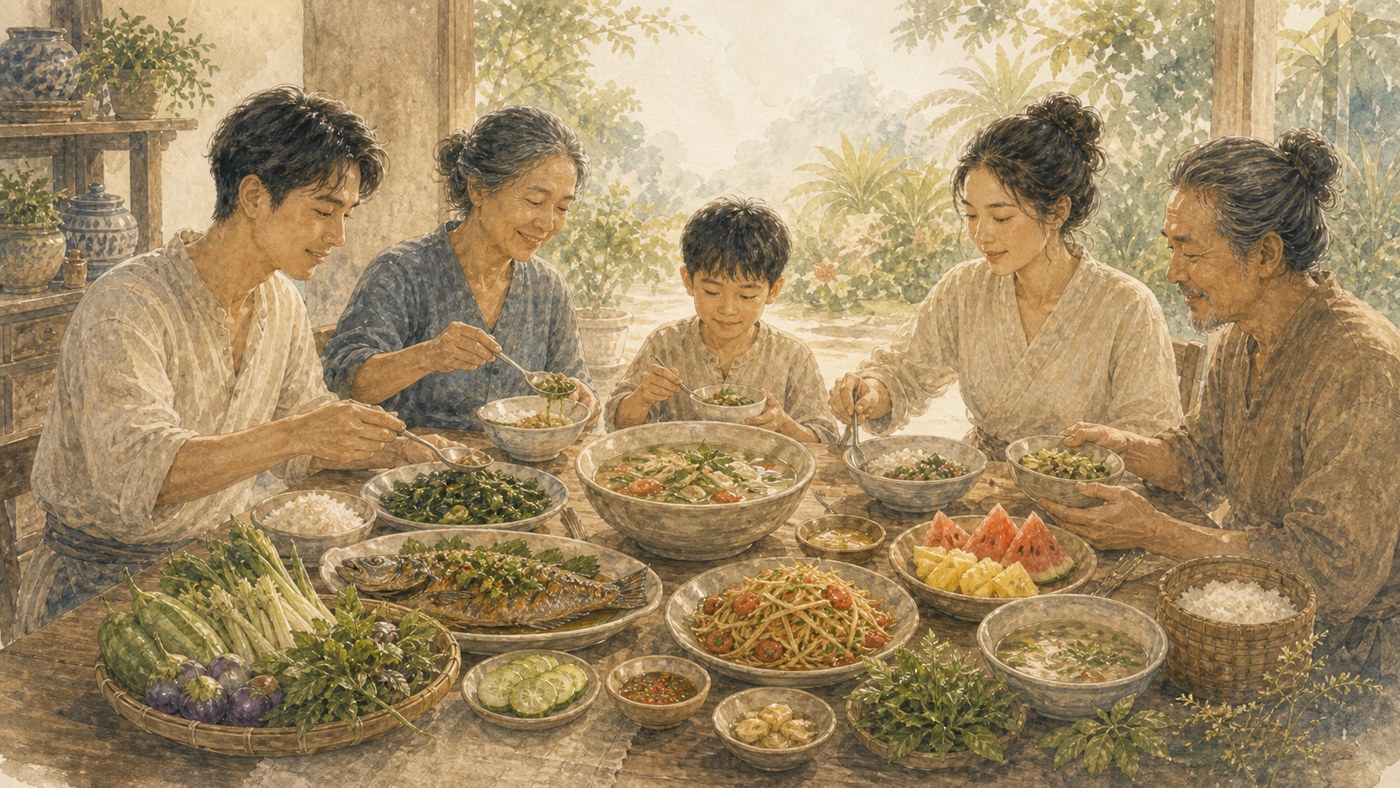
The everyday household puzzle
A pot of soup, a pan of vegetables and rice in the cooker: one person may prepare the meal, and everyone sits down together. The work can be shared by any household member; it need not belong automatically to a mother, wife or grandmother.
What happens when one person loves chilli, another wants something mild and a child prefers softer food? Or when an older parent and a working adult have different appetites? We can care for these differences without cooking three separate dinners.
Five foundations
Begin with an adaptable base
A mild tofu-and-winter-melon soup, mixed vegetables, steamed fish and rice leave room for several preferences. The base can supply a staple, protein and vegetables without making one strong seasoning unavoidable.
Put adjustments beside the main dish
Alongside steamed fish, offer a little chopped chilli and ginger, lime, pickled ginger, mint or cucumber. People can choose what they enjoy. Keep salt in sauces and pickles in mind, and use separate utensils where allergy requires it.
The Wind portrait may suggest a warm, moist combination; the Fire portrait a gentler flavour; the Water portrait a less rich plate. The person still chooses. No one needs another household member to diagnose their needs at the table.
Include several colours and textures
A vegetable pan might contain carrot, Chinese kale, a little bitter gourd, garlic and basil. Different components give people options. Variety can emerge from one dish rather than several pots.
Allow different portions
Shared dishes let people choose portions according to appetite, growth, activity and health. A type label should not decide how much rice a child receives or whether an older adult gets enough food. Offer assistance when needed without taking away choice unnecessarily.
Keep a few useful extras
Fruit, a tolerated yoghurt, a cooked egg or another simple food can help when someone's appetite or schedule differs. Watermelon, ripe mango and guava give contrasting textures; water or a suitable mild drink is enough alongside. Desserts can be shared occasionally without being assigned as remedies to particular people.
A weekday dinner
Prepare rice, tofu-and-pumpkin soup with basil, mixed vegetables and steamed fish with a modest amount of soy sauce. Put a small chilli condiment, lime, mint, cucumber and pickled ginger on the side. Offer whichever fruit is available.
One adult prefers mild fish, vegetables and cucumber, followed by watermelon. Another likes a little chilli with the vegetables and chooses guava. A child enjoys rice, soup and fish with ripe mango afterwards. The child's portion and texture follow developmental needs, and the adults help remove bones.
The shared meal remains recognisable while the plates differ. If someone wants a different fruit or no condiment, the plan still works.
A dependable household repertoire
| Base dish | Why it is easy to adapt |
|---|---|
| Tofu and pumpkin soup | Mild, soft ingredients; salt can be moderate |
| Mixed vegetables | Variety within one pan; texture can be adjusted |
| Steamed fish | Sauce can be served separately; check bones |
| Chicken and shiitake stew | A warm protein dish with adjustable seasoning |
| Mild clear tom yum | Aromatic without requiring much chilli |
| Mild kaeng liang | Several vegetables in one pot |
| Rice soup with toppings beside it | Each person can choose suitable additions |
| Tofu with vegetables | A flexible plant-protein option |
| Glass noodles with vegetables and protein | Texture and seasoning can vary |
| Mild khanom chin nam ngiao (rice noodles with broth) | Condiments can be added individually |
A basil stir-fry can be made with less chilli, with additional chilli at the side. Som tam can be moderately seasoned and served with enough rice and protein. Green curry can include more vegetables and a comfortable chilli level. Adding a drink afterwards is optional; changing the preparation directly is usually simpler.
When generations share the table
Young children and adults
A mild base lets adults add seasoning later. Tofu-and-winter-melon soup, steamed fish, cooked greens and rice can form a shared meal when textures and ingredients are appropriate for the child. Avoid excessive salt, remove bones and apply age-appropriate choking precautions.
Older adults
Chewing ability, appetite and health vary widely. Softer fish, tender chicken, fully cooked egg, tofu, soft rice and cooked vegetables may be useful. Fruit can be peeled, sliced or otherwise prepared to suit the person.
Swallowing difficulty requires an individual assessment: “soft” or “small pieces” alone may not be safe, and thin soup can be difficult for some people. Follow the recommended texture and fluid plan rather than improvising. [14]
Teenagers and parents
A teenager may want stronger flavours or larger portions. Offer an adequate shared base and room to adapt. Discuss food and energy needs away from a tense mealtime, with curiosity rather than criticism of appetite or body size.
Cooking less than we imagine
One soup, one vegetable dish, rice and a protein can be enough. A larger stew can help with a later meal if it is cooled, refrigerated and reheated safely. The next day may need only fresh rice and a quick vegetable addition.
The point is not a perfectly varied banquet. A few dependable meals can reduce the burden on the person cooking and make it easier for others to help.
Cooking as a conversation
Instead of telling someone what their element requires, ask what would be welcome: “Would you like the sauce beside the fish?” “Would a warm soup be easier today?” “Shall we keep some vegetables softer?”
The elemental vocabulary can open a conversation, but the person's answer should remain central. Children can wash suitable vegetables, adults can share preparation and family members can learn one another's preferences through the work.
Four familiar difficulties
One person wants very hot food
Keep the shared dish mild and place chilli or a sauce on the side. This is a practical compromise rather than a judgement of either preference.
A child avoids vegetables
Offer small, repeated, pressure-free opportunities. Mildly sweet carrot, pumpkin or an appropriately prepared jicama can be starting points. Pumpkin soup or carrot with egg changes texture and may be easier to explore. Blending can be one preparation, while continuing to let the child see and learn foods openly.
If restriction affects growth, nutrition or daily life, seek paediatric or dietetic support. Avoidant/restrictive food intake disorder is one possible explanation among others and needs proper assessment; the answer is not simply more pressure to eat vegetables.
An older parent dislikes raw vegetables
Try tender cooked vegetables or a preparation they enjoy. A vegetable smoothie is not automatically safer for someone with swallowing difficulty; use the assessed texture plan when relevant.
Everyone is too tired to cook daily
Share tasks and plan leftovers safely. A prepared meal supplemented with a simple food can be entirely reasonable. Care includes the cook's energy as well as the contents of the pot.
The value of eating together
A safe, welcoming table can nourish a relationship. A favourite dish prepared for us may matter beyond its ingredients, and we can receive that kindness without demanding a perfect menu.
Participation still leaves room for boundaries. Allergy, medical restrictions, swallowing safety and personal consent do not disappear because a meal is special. We can appreciate the person and choose what is safe for us.
Before we continue
An adaptable base, optional accompaniments and shared responsibility can make one table work for several people. Next we consider life stages, current capacity and schedules in more detail.
FOOD BY THE ELEMENTS
14 · Food through the Stages of Life
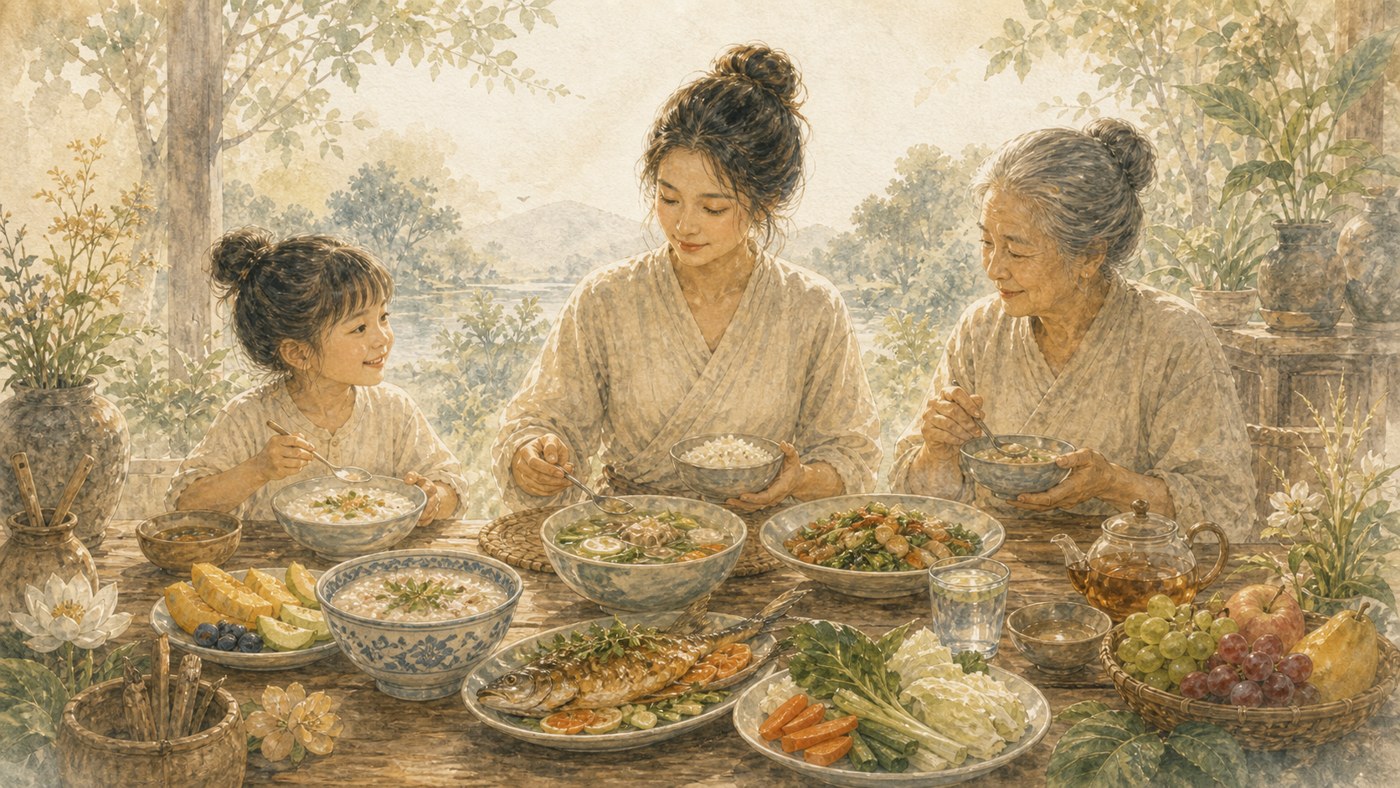
Changing needs, an enduring constitution
Traditional Ayurvedic accounts use Water-like images for growth, Fire-like images for active adulthood and Wind-like images for later life. Thai traditional medicine has its own life-stage framework. These are interpretive lenses, not fixed biological timetables.
Within Plearnprai's current framework, constitution remains enduring. What changes with age is the context: growth, activity, hormonal transitions, appetite, illness, medicines and the support available. We adapt food to those real needs rather than announcing that a child or older person has become a different type.
The age bands below organise discussion. Individuals develop and age differently, and adolescence and young adulthood should not be assumed to share identical needs.
Children
Birth to around six months
Breast milk is the recommended first food where available, with appropriate support for feeding. Infant formula is an alternative when needed; use a suitable product and safe preparation guidance. Babies do not need an elemental diet, herbal drinks or adult milk substitutes.
A paediatric professional can help with growth, feeding difficulties or questions about formula. Feeding support should be practical and compassionate, not a judgement of the parent.
Around six to twelve months
Complementary foods begin alongside breast milk or infant formula when the baby is developmentally ready, usually around six months. Offer a variety of appropriate textures and foods, including iron-containing foods. Rice, pumpkin, suitable greens, fish, chicken, banana, papaya and cooked apple can be prepared appropriately.
Texture should progress with development rather than remaining a thin purée indefinitely. Introduce common allergenic foods according to current local guidance, with individual advice when allergy risk is a concern. Avoid honey before twelve months, and follow choking and food-safety guidance. [5]
One to three years
Continue variety in flavour, colour and texture, with meals and snacks suited to growth. Keep strong seasoning, added salt and sugary drinks limited. Whole nuts, round fruit and other choking hazards need age-appropriate preparation and supervision.
A small appetite on one occasion does not necessarily mean illness. Persistent difficulty, poor growth or a very restricted range deserves support.
Three to twelve years
A varied pattern can include rice or other staples, chicken, fish, eggs, tofu or beans, colourful vegetables, fruit, suitable milk or alternatives and water. Nuts can fit in a safe form where tolerated.
Frequent sweet drinks, snacks that displace meals and repeated instant-noodle or fast-food meals can narrow nutritional variety. Energy drinks and coffee are not ways to support a tired child's school day.
Responding to a child's needs
Weight, growth, rash or irritability should not be translated into Wind, Water or Fire diagnoses. If a child needs additional nourishment, foods such as rice, eggs, avocado or tolerated nut butter may be useful within an assessed plan. If weight or eating is a concern, work with a paediatric professional rather than imposing an adult restrictive diet.
A recurrent rash needs its own assessment. Bitter vegetables and coconut water are not substitutes for identifying allergy, eczema or another cause. The priority is growth, safety and a calm relationship with food.
Adolescents and young adults
A changing social world
Growth and puberty increase or alter nutritional demands. Friends, sport, school, study and eating away from home begin to shape choices. Calcium, iron, protein and adequate energy deserve attention, especially when growth is rapid or menstruation begins.
Needs vary: the claim that everyone in this broad age group has the fastest metabolism of their life is too simple. Appetite, activity and growth provide better starting points.
Foods that support a varied pattern
Rice, wholegrain bread and other staples can accompany fish, chicken, eggs, beans or tofu. Vegetables and fruit offer variety. Milk, yoghurt or suitable fortified alternatives can contribute calcium; not every leafy vegetable supplies calcium equally well.
A bitter vegetable may be an enjoyable food, but it is not an acne treatment. Skin concerns deserve appropriate care without blaming every spot on fried food or an elemental flare.
What deserves attention
Sugary drinks, bubble tea, energy drinks, frequent fast food and meal-skipping can make adequate nourishment harder. A young person trying to change weight may need support before restriction becomes entrenched.
Distress about eating, repeated bingeing, compensatory behaviour, marked restriction or changes affecting growth and daily life warrant professional help. A trusted adult can assist with access. We should not wait for a particular body size before taking the concern seriously.
Working adulthood
Work can bring hurried meals, long gaps between meals, frequent restaurant food and increasing responsibilities. Stress may affect appetite and comfort even when the food itself has not changed.
Useful foundations include a dependable way to obtain meals, a range of ingredients, water within reach and attention to caffeine's effects on sleep. Coffee strengths vary, so an identical cup count does not suit everyone. If strongly seasoned food causes discomfort, adjust it rather than assuming that all adults are constitutionally Fire.
Chapters 4–6 offer different meal styles to try. Use them alongside activity, health, budget and preference. Preventive clinical care remains separate from reading a type.
Midlife
Changes worth noticing
Activity, muscle mass, sleep, menopause, medicines and health conditions can change food needs. These changes differ between people. A smaller energy need does not mean less need for protein, vitamins and minerals, and a person should not reduce every meal merely because of a birthday.
Suitable protein, vegetables, wholegrains where appropriate, fruit and adequate calcium remain useful foundations. Fish can be one protein choice; it need not be a special deep-sea species to belong in a nourishing diet. Adjust portions and preparation to actual needs.
Menopause
Hot flushes, sleep disruption and mood changes can affect the day. Some people notice particular triggers such as alcohol, caffeine or very spicy food; others do not. A brief record can help a clinical conversation.
Tofu, soy milk, greens, flaxseed and sesame can be foods within a varied diet, but they are not a guaranteed treatment for menopausal symptoms. Ordinary soy foods are generally considered safe, including for many people with a history of breast cancer; concentrated isoflavone supplements are a different question and should be discussed with the treating team. [15]
Seek care when symptoms interfere with life. Food need not carry the entire responsibility for managing the transition.
Other midlife concerns
Changes in waist size or weight can occur across genders and have several contributors. Review food, movement, sleep and health without assuming an inevitable male pattern or personal failure. More vegetables, varied protein and less reliance on rich fried food may be useful parts of an individual plan.
Older adulthood
Appetite, access and ability
Taste and smell, dental health, dexterity, appetite and medicines may affect eating. Some older adults remain active with a strong appetite; others need assistance or a specific clinical diet. Unintended weight loss and malnutrition deserve attention even when a person appears to have a larger body.
Practical foundations
Offer food that is enjoyable and easy enough to eat: tender fish or chicken, tofu, fully cooked eggs, soft rice and appropriately cooked vegetables. Include a protein source regularly, with amounts adapted to health needs; kidney disease may require individual advice.
Keep drinks accessible, while following any fluid plan. Reduced thirst can make reminders helpful. A warm drink is one option, not a requirement.
Fruit can be prepared for chewing ability. Difficult swallowing needs a professional assessment and an individual texture plan; thin soup, mixed textures or small pieces are not automatically safe. [14]
Useful meal components
Fish, chicken, eggs, tofu, cooked beans and suitable milk can contribute protein. Pumpkin, cooked jicama root, soft greens, rice soup and ripe fruit offer varied textures. Ground nuts or nut butter may be useful where safe for swallowing and allergy.
Leafy greens provide vitamin K, predominantly K1 rather than being a special K2 source. People taking warfarin should discuss consistency and diet with their care team, not simply remove greens. Turmeric may flavour a meal, but concentrated supplements need separate review.
When to seek help
Coughing or choking during meals, difficulty swallowing, dehydration, continuing weight loss, poor appetite or a new inability to manage food calls for assessment. Lactose intolerance, medicine interactions and dental problems may be manageable once recognised. A softer menu should support care rather than delay it.
Life-stage overview
| Stage | Practical emphasis | Particular care |
|---|---|---|
| Birth to about six months | Breast milk or suitable infant formula | Feeding and growth support; safe preparation |
| Around six to twelve months | Complementary foods with appropriate progression | No honey before one year; allergy and choking guidance |
| One to three years | Variety, suitable textures and adequate meals | Choking hazards, excessive salt and sweet drinks |
| School-age childhood | Growth, protein, staples, vegetables and fruit | Restriction or poor growth needs assessment |
| Adolescence / young adulthood | Adequate energy, calcium, iron and protein | Eating distress, meal-skipping and energy drinks |
| Working adulthood | A workable meal rhythm and variety | Sleep, symptoms and medical risks assessed directly |
| Midlife | Adapt to actual activity, symptoms and health | Avoid blanket age- or sex-based restrictions |
| Older adulthood | Enjoyable adequate food, protein and accessible fluids | Swallowing, malnutrition, medicines and individual diet plans |
Pregnancy and breastfeeding
These periods need guidance matched to the person and pregnancy or feeding stage. Protein, iron, folate, calcium and a varied diet matter, alongside recommended supplements and safe food handling.
Avoid unsafe raw or undercooked animal foods and unpasteurised products according to local guidance. Fermented foods are not all forbidden; ingredient and preparation determine risk. Pregnancy caffeine and alcohol guidance appears in Chapter 10. Check herbs and supplements before use rather than assuming a familiar plant is harmless. [4]
Before we continue
Our constitution need not change for care to change. Life stage gives us new circumstances to understand. Next we consider bala: the capacity available now, especially when appetite, energy or health is not at its usual level.
FOOD BY THE ELEMENTS
15 · Bala: Eating with the Capacity We Have Today
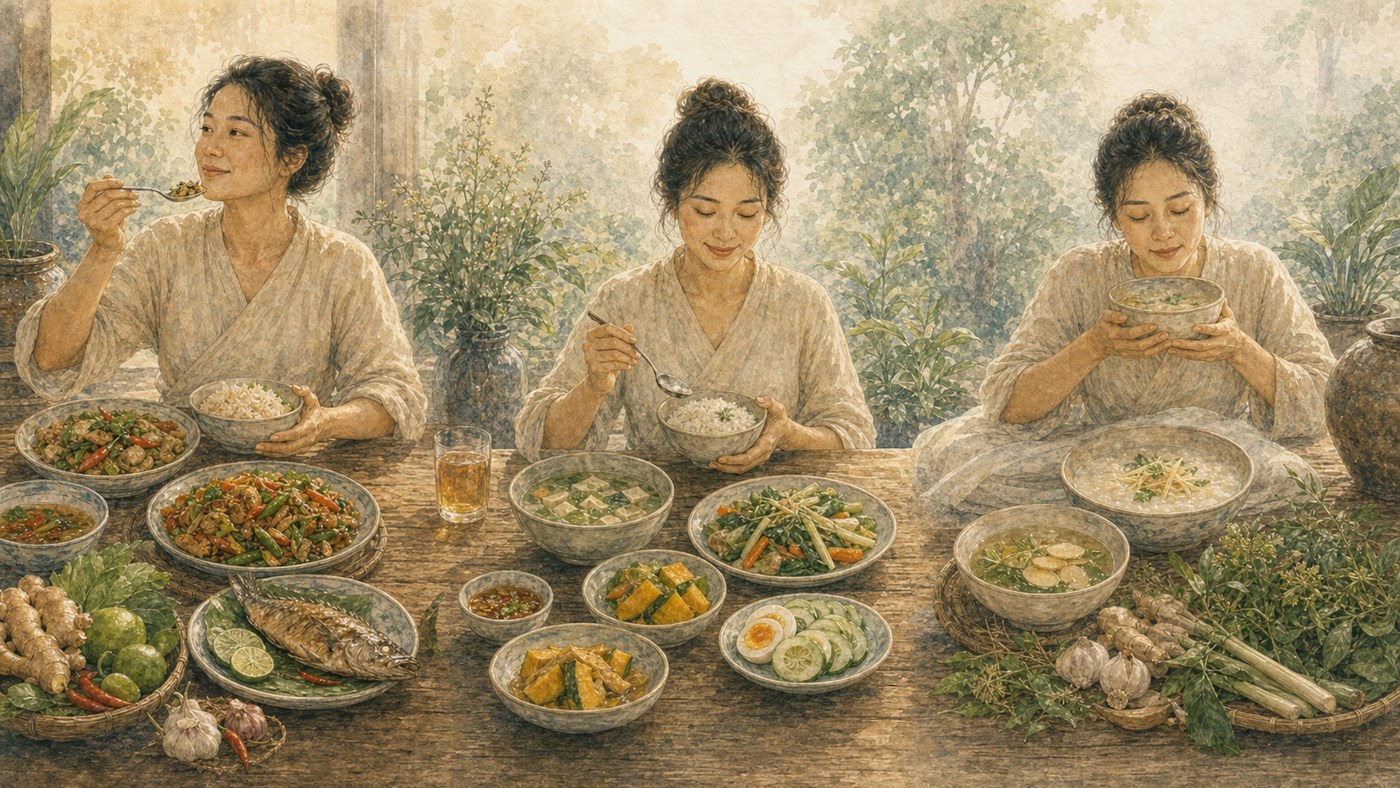
What bala means
In Ayurveda, bala means strength or capacity. Traditional descriptions use it when considering a person's ability to meet demands and recover. Three broad terms are pravara bala for stronger capacity, madhyama bala for intermediate capacity and avara bala for lower capacity.
These are traditional concepts, not measurements of immunity or substitutes for a clinical assessment. Their useful invitation is to notice the condition we are in today. Appetite, comfort, fatigue, illness and recovery may change what is manageable, even while constitution remains enduring.
Why current capacity matters
A rich beef green curry may be enjoyable on one day and unappealing when the stomach is unsettled. A raw salad may be welcome when we feel well but harder to tolerate during a particular illness. Rice soup can offer a familiar starting point when appetite is low.
The meal should still provide appropriate nourishment. Plain rice water or broth alone is not a complete recovery diet. We may need a gentler texture, a smaller serving or professional nutrition support, rather than simply “lighter” food indefinitely.
When capacity feels strong
Enjoy variety. A robust appetite can make it easier to include different vegetables, protein sources and staple foods. The meal styles in Chapters 4–6 offer possibilities, while activity and actual nutritional needs guide amounts.
A richer dish can be part of life, but feeling strong does not make every food safe or remove the importance of medical advice. We can use a period of good capacity to establish routines that will also help on harder days.
Ordinary days
Many days are neither exceptionally energetic nor distinctly unwell. A dependable pattern is often enough: adequate meals, variety across the week and a rhythm compatible with work and rest.
We do not need a perfect elemental balance at each sitting. The practical test is whether the pattern supports ordinary functioning and remains manageable.
When capacity is lower
What we may notice
Fatigue, poor appetite, bloating, fever, abdominal pain, diarrhoea, recovery after illness, surgery or birth, and emotional strain can all affect eating. These observations deserve attention in their own right. Older age alone does not mean that every system is weak.
Severe pain, inability to keep fluids down, signs of dehydration, confusion, bleeding or a rapidly worsening condition calls for prompt medical care. Naming the experience “low bala” must not delay help.
Six ways to make eating more manageable
Choose a tolerable texture. Familiar, less rich food may be easier to begin with. Keep enough energy and protein in view.
Use a comfortable temperature. Warm food may feel soothing, but chilled food is not universally burdensome during illness. Preference and the clinical plan matter.
Prioritise safe preparation. Properly cooked and safely stored food is particularly important when health is vulnerable. Fermented food is not one single category of safety or digestibility.
Keep seasoning comfortable. Mild flavours can be welcome when nausea, mouth soreness or reflux makes strong tastes difficult.
Offer smaller portions more often if useful. A full plate can feel daunting. Several manageable eating opportunities may help, while persistent poor intake needs assessment.
Attend to hydration appropriately. Fever or diarrhoea may increase fluid losses. Oral rehydration solution may be needed for diarrhoea; kidney or heart conditions can require individual advice about fluids. More is not automatically better for everyone.
Familiar foods during recovery
Rice soup, congee with suitable protein, tofu, tender fish or chicken, fully cooked eggs, ripe banana, stewed pumpkin and cooked apple can be options. Broth can provide fluid and flavour, but its protein content varies and may be low; include a more dependable protein source when appropriate.
A warm milk drink with culinary turmeric or cinnamon can be enjoyed if tolerated. It is not an anti-inflammatory treatment. For swallowing difficulty, follow an assessed texture plan rather than assuming congee or thin soup is safe.
After diarrhoea
Use oral rehydration and a return to an appropriate usual diet as tolerated, following advice for the person and illness. Rice soup, banana or cooked apple can be foods we happen to tolerate, but they should not become a prolonged restrictive diet. Dairy may temporarily worsen symptoms for some people; a universal ban is unnecessary. Seek care for dehydration, blood in the stool, severe pain or persistent illness. [16]
After fever
Offer suitable fluids and adequate food in manageable portions. Soup, rice and a protein source can be comforting. Continued fever, marked weakness or poor intake needs assessment rather than an increasingly narrow menu.
After surgery
Follow the surgical team's plan. Some procedures allow ordinary food promptly; others require a specific progression. We should not assume everyone must begin with clear liquids and work slowly towards solids.
After birth
The person recovering needs their own adequate meals, protein, fluids and practical help. Chicken rice soup, tofu, eggs and vegetables can be convenient examples. After a caesarean birth, constipation or medication effects should be discussed with the care team. Cold foods are not automatically excluded, and herbs need checking during breastfeeding.
During emotional strain
A familiar soup, simple rice meal or tolerated snack may make beginning easier. Sharing a meal or having someone arrange food can be more useful than searching for a perfect calming ingredient. Significant changes in eating, mood or functioning deserve support.
Particular conditions
Reflux
Notice individual triggers and consider meal size and timing. For night-time symptoms, finishing food around three hours before lying down may help. Rice, cooked vegetables and tolerated fruit can fit, but there is no universal corrective menu. Persistent or severe symptoms need assessment. [2]
Irritable bowel syndrome
Symptoms vary between constipation, diarrhoea and mixed patterns. Diagnosis and dietary advice should be individual. A low-FODMAP approach may be useful for some people, ideally with a qualified dietitian and a plan for reintroduction rather than indefinite broad restriction. Regular meals can be supportive; ginger tea is optional rather than treatment. [17]
Diabetes or high blood glucose
Work with a clinician or dietitian on meals, medicines and monitoring. Changes to carbohydrate, timing or fasting may affect medication safety. Vegetables, suitable protein and an appropriate overall pattern can support care, but increased water or bitter foods do not replace the plan.
High blood pressure
A dietary plan may address sodium, overall food pattern and alcohol, alongside activity and treatment. Potassium-rich foods or salt substitutes are not automatically suitable with kidney disease or certain medicines; ask before deliberately increasing them.
High blood lipids
Consider the overall pattern and types of fat with the treating team. Fish, legumes, suitable wholegrains, vegetables and fruit can contribute variety. The aim is a workable long-term plan, not a type-based list or one supposed cholesterol-clearing food.
Sinus symptoms and mucus
Persistent or recurrent symptoms need their own assessment. A warm soup may offer comfort. Milk and yoghurt should not automatically be removed, and spices do not treat an assumed accumulation of Water.
Allergy
Identify the actual allergy and follow the avoidance and emergency plan. Do not deliberately test a suspected serious food allergy at home. Herbs or extra water cannot neutralise an allergen. Symptoms involving breathing difficulty, throat swelling or collapse require emergency help.
Kidney disease
Dietary needs depend on the condition, stage, treatment and laboratory findings. Protein, potassium, phosphorus, sodium and fluids may need individual adjustment. General “healthy” lists in this book must not override the kidney team's plan.
Cancer and treatment
The treating team and an oncology dietitian can address appetite, mouth soreness, altered taste, infection risk and changing nutritional needs. Adequate intake may be more urgent than following a restrictive food ideal. Supplements and herbs should be checked for interactions.
Food and sleep
A very large late meal can be uncomfortable; caffeine can affect sleep for hours, with individual differences. Alcohol can disrupt sleep even when it initially makes us sleepy.
Choose a dinner time and size that fit the schedule and symptoms. A small snack may be useful if hungry; a warm drink is optional and can be unhelpful if it worsens reflux or causes repeated night waking. We do not need a mandatory bedtime ginger or golden-milk ritual.
Food and emotional life
When grief, anger or anxiety makes eating difficult, lower the practical burden. A familiar meal, a prepared portion, a trusted companion or an agreed shopping task may help.
Sweet food and coffee can remain pleasures, but they need not carry the whole task of comfort. If eating becomes markedly restricted, distressing or difficult to control, seek professional support. Care should make nourishment easier to reach, not turn it into another test of discipline.
Agni as a traditional concept
Ayurveda uses agni, often translated as digestive fire, when discussing transformation and digestion. Ama belongs to the same traditional system and should not be equated with a measured biomedical toxin.
A practical reading can encourage regular opportunities to eat, attention to appetite, comfortable seasoning and a gentle walk after a meal when suitable. Water temperature remains a preference. Skipping dinner once a week is not a necessary way to care for agni, and fasting requires separate consideration rather than being prescribed by the metaphor.
Capacity and food: a quick guide
| Situation | Helpful starting point | What takes priority |
|---|---|---|
| Feeling well and capable | Varied, adequate meals | Actual needs and ordinary safety |
| An ordinary day | A workable rhythm and variety across the week | Avoid unnecessary rigidity |
| Unwell or recovering | Tolerable textures and manageable portions | Clinical assessment and enough nourishment |
| Emotional strain | Familiar food and practical support | Significant eating or mood changes need help |
| After diarrhoea | Appropriate rehydration and food as tolerated | Dehydration and other warning signs |
| After fever | Fluids and adequate meals in a manageable form | Persistent illness or poor intake |
| After surgery | The surgical team's plan | Procedure-specific instructions |
| After birth | Adequate food, protein and support | Recovery, medicines and feeding needs |
| Older person with difficulty eating | Accessible enjoyable food | Swallowing, weight loss and individual diet needs |
Before we continue
Bala invites us to notice the capacity available today. Appetite and preference remain part of that information, alongside symptoms and professional advice. The final chapter considers timing: how meals can fit work, travel and family life without requiring an impossible timetable.
FOOD BY THE ELEMENTS
16 · Meal Timing and Contemporary Life
A traditional rhythm
Traditional accounts often describe a light morning meal, a substantial midday meal and a gentler evening meal. In Ayurvedic language, this is related to digestive fire; in Thai life it also reflects daylight, work and household rhythms.
Modern research on circadian rhythms is a separate field. It does not simply validate every traditional clock time or establish one universal meal schedule. The useful question is how to arrange adequate food around the day we actually live.
When the timetable does not fit
Breakfast may be rushed, lunch brief and dinner the only time a family is together. Someone may return late and still need food. A night-shift worker's waking day starts at a different hour.
We can protect the value of shared meals while adjusting portions, preparation and timing to comfort. A plan should support work, sleep and relationships rather than force us to choose one against the others.
Five practical principles
Make the first meal feasible
For someone who becomes hungry or struggles to concentrate after leaving without food, a prepared breakfast can help. Options that take little time include bought rice soup with a fully cooked egg, wholemeal bread with avocado and protein, banana with suitable nuts, or yoghurt with fruit and enough accompanying food.
A smoothie may be convenient, but consider whether it supplies an adequate meal. A Wind-oriented reader may prefer rice soup or toast with nut butter; a Fire-oriented reader may enjoy a mild fruit-and-yoghurt combination; a Water-oriented reader may like a warm savoury breakfast. These are preferences to adapt, not rules that set a child's or adult's intake.
Give lunch enough room
A lunch break can be genuine time to eat, even if brief. Choose a meal that includes enough food for the afternoon: a staple, protein and vegetables where possible. Drinking water is useful according to need, not as a way to compensate for an inadequate meal.
If a large lunch leaves us very sleepy, review meal size, sleep and the wider pattern. A more comfortable portion may help; persistent excessive sleepiness deserves assessment. Skipping adequate food to avoid every afternoon dip can create another problem.
Keep dinner as family time
Conversation does not require an enormous meal. Soup, fish or tofu, vegetables and a suitable rice portion can make an enjoyable table. If late or rich meals worsen reflux, consider an earlier or smaller meal where feasible.
The amount needed still depends on what happened earlier in the day. Someone who could not eat enough at work may need a substantial dinner. After a special banquet, return to ordinary adequate meals rather than restricting the next day's breakfast and lunch.
Plan for late hunger and shift work
There is no universal 9 p.m. boundary after which all food becomes harmful. A person working at night needs a plan related to waking, work, sleep, health and medicines.
If returning home hungry, a manageable meal or snack may be appropriate. Broth alone may not provide enough nourishment. For diabetes or other conditions affected by timing, discuss shift work with the treating team. For reflux, the interval before lying down may matter more than the clock on the wall.
Keep water accessible
A bottle in view can help on a busy day. Adjust intake to weather, activity and any medical plan. Reminders can be useful, but there is no need to force a drink every hour regardless of circumstances.
Six kinds of busy day
School and university
Limited budgets, canteen choices and friends' preferences all influence food. A feasible first meal and a portable snack—fruit, suitable nuts or wholemeal bread—can prevent the day from depending entirely on whatever appears next.
Use available canteen combinations and keep water accessible. A student worried about weight or eating deserves support, not praise for skipping meals. Talk with a trusted adult or qualified professional when restriction, bingeing or distress affects life.
Caring for a new baby
Interrupted sleep and little uninterrupted time can make the parent's own meal disappear. Prepare food that can be reached easily, share cooking and shopping, and arrange support while the parent eats.
Adequate meals, protein, vegetables and suitable fluids matter. A snack and water beside a feeding chair may be convenient. Herbal drinks and golden milk are optional and need checking where relevant; they are not a requirement for milk production.
The parent deserves food of their own rather than surviving on a child's leftovers. Feeding schedules between parent and baby need not match perfectly, and practical help is often more useful than another rule.
Living alone and working long days
A small amount of meal preparation, safe refrigerated leftovers or a weekly shop can reduce decision-making. A kettle, rice cooker or microwave may help where permitted and safe. Family meals on days off can be enjoyable if available, but are not the only way to eat well.
Eating alone can feel peaceful or lonely. We can experiment with one unhurried meal, a call with a friend or a shared meal outside home. A screen is not a moral failure; choose whether it helps or distracts from the rest we need.
Executives and tightly scheduled work
Treat a meal break as a legitimate need. Keep suitable food in the office, ask for a workable meeting-food option and build water and rest into the day where possible.
Repeated reflux, changing weight, high blood pressure or persistent fatigue deserves clinical attention. A weekend of “perfect” food does not cancel the need to change an unsustainable weekday arrangement.
Drivers, delivery workers and riders
Keep safely stored food and drinking water accessible, and stop safely to eat. Roadside clear noodles, rice with protein and vegetables, or another adequate cooked meal can be practical choices.
Heat, protective clothing and long outdoor hours can increase strain. Plan shade, breaks and appropriate hydration. Coconut water is not a universal oral-rehydration replacement, and energy drinks do not make sleep deprivation safe for driving. Confusion, collapse or severe heat illness needs emergency help; food advice is not enough.
Avoid leaving perishable food in a hot vehicle. A portable snack is useful only while it remains safe to eat.
Frequent travel
Different time zones, unfamiliar food and uncertain breaks can unsettle routines. Carry allowed, safely stored familiar foods if helpful, and check border restrictions before packing plant or animal products.
Choose safe water and meals that feel manageable. Gradually fitting meals and sleep to the destination may help establish a routine, but digestive spices are not a proven shortcut through jet lag. Alcohol can worsen travel-related sleep and safety problems, so it is not a useful adjustment tool.
Aircraft meals are not inherently unsuitable; choose among the available options, arrange a required special meal ahead when possible and avoid long periods without adequate food because the menu is unfamiliar.
A planning table
| Situation | A useful anchor | Something to prepare | What needs attention |
|---|---|---|---|
| School / university | Feasible first meal and canteen plan | Suitable snack and water | Eating distress and inadequate intake |
| New parent | Protected opportunities to eat | Ready meals, snacks, shared practical help | Recovery and breastfeeding-specific advice |
| Living alone | A few dependable meals | Safe leftovers and basic groceries | Loneliness, exhaustion, limited facilities |
| Tight work schedule | A real meal break | Office food and meeting requests | Persistent symptoms and workload |
| Driving / delivery | Safe stops, food and heat breaks | Safely stored snack and water | Heat illness, fatigue and vehicle food storage |
| Frequent travel | A workable destination routine | Allowed familiar foods; special-meal arrangements | Time zones, safe water and medical timing |
Intermittent fasting and skipping meals
Time-restricted eating, 16:8 schedules and one-meal-a-day plans are widely discussed. Their suitability cannot be decided from Wind, Fire or Water Type. Water Type does not establish that fasting will improve metabolism; Fire or Wind labels do not explain every response to a missed meal.
Before considering a restrictive schedule, ask whether it permits adequate nutrition, fits medicines and supports a healthy relationship with eating. Pregnancy, breastfeeding, childhood and adolescence, frailty, a history of eating disorder, diabetes and other conditions call for particular caution and professional guidance. Diabetes medicines can make fasting hazardous without an individual plan. [3]
No reader needs to fast to use this book. A regular, adequate pattern can be a complete and worthwhile approach to care.
Before the closing chapter
Traditional rhythms can prompt reflection, but our plans must live in real households, workplaces and journeys. We have now explored ingredients, dishes, shops, shared tables, life stages and current capacity. The closing chapter brings them together as a continuing practice of attention and nourishment.
FOOD BY THE ELEMENTS
Closing — The Care We Bring to Every Meal
Looking back at our journey
We have travelled through a large part of everyday life together. Thousands of meals lie behind us and many more ahead. Each one brings nourishment, sensation and experience into our body and our day.
We began with a way of noticing: warming and cooling, light and substantial, dry and moist, and the six tastes. These traditional descriptions helped us look more closely at the plate in front of us.
We met three familiar portraits: the Wind-oriented preference for warmth and nourishment, the Fire-oriented preference for gentler flavours and a cooling contrast, and the Water-oriented preference for lighter preparations and aromatic warmth. We used them as starting points for observation, alongside nutrition, personal tolerance and health needs.
We explored Thai dishes, vegetables, culinary herbs, seasonal fruit, desserts and drinks. Then we took those ideas into restaurants, convenience shops and households whose members want different things from dinner. Care became something we could practise in the settings we already inhabit.
Finally, we considered growth and ageing, the traditional idea of bala, recovery and illness, and the irregular schedules of contemporary city life. The same person may need different practical support at different times.
The heart of this book
The phrase “food is our everyday medicine” expresses how much our daily meals matter. It is a metaphor for care; food and prescribed treatment have different roles.
There is something larger within that metaphor. A meal is a conversation with nature, our body, our family and the land that sustains us.
Someone grew its ingredients. Someone harvested them, carried them, cooked them and perhaps served them. When we eat, we join that chain of work and generosity. Even a meal bought in a hurry has a history beyond its packaging.
This is why an elemental approach can be more useful as an invitation to pay attention than as a list of permissions. We can ask what relationship we are building with food, with our own needs and with the people who share our table.
The realities of eating in Thailand
Choice is unevenly distributed. A limited income narrows what is affordable. A rural household may live far from a fresh market. An older person may depend on meals prepared by relatives. Someone leaving a night shift may find only a convenience shop open.
These realities belong inside our understanding of food. A demanding ideal that ignores them offers little help.
A small feasible change is still care: choosing from what the nearby shop actually sells, adding an available protein food, asking for a little less sauce, or accepting a friend's meal while making room for our own needs. Where circumstances allow, we can also plan changes over time.
We do not have to make every meal exemplary before our efforts count. Understanding should make everyday life more manageable.
A gift for the next generation
Some of us read these pages while our children are young; others live with teenagers already forming their own habits. What can we pass on?
We can introduce the traditional language of qualities without using it to define a child's body. We can help children notice hunger, fullness, comfort and discomfort. We can respect the difference between having enough and being pressed to keep eating.
We can teach them that food connects us with people: the family member who cooks, the grower at the market and the workers whose hands we never see. We can share the stories of Thai dishes and the care held in their preparation.
A menu changes. A list of numbers may be forgotten. The ability to listen, ask questions and care for oneself with kindness can accompany a child much further.
The deeper value of Thai food culture
In many Thai households, eating has meant gathering: a child returning from school, parents at the evening table, news exchanged over rice.
It has meant giving: a parent cooking for a child, a friend preparing a meal for friends. It has marked ordinations, weddings and merit-making. Seasonal ingredients have tied meals to weather and place. Adults have fed children, and younger family members have helped older relatives eat with comfort and dignity.
Some of these practices become harder to sustain in contemporary life. Remembering them gives us options for what to protect or renew. A shared dish, a familiar recipe or time to sit beside someone may matter as much to the meal as its ingredients.
We can deepen our relationship with Thai food culture while adapting it thoughtfully to present-day knowledge and circumstances.
Our needs can change
Within Plearnprai's framework, constitution describes an enduring tendency. Our current state, appetite, capacity, health and circumstances can change. Growing older or passing through a difficult week does not mean that our constitutional identity has been replaced.
A food that fitted one stage of life may need a different preparation or portion at another. When we feel well, a varied meal may be easy to enjoy. During recovery, we may need food that is manageable and sufficiently nourishing, with clinical guidance where necessary. On a difficult emotional day, familiarity and companionship may help us return to a meal.
Listening allows us to adapt without turning a type name into a rule that follows us everywhere.
A final word
We began with the elements as one more lens through which to choose food. We finish with a wider view of what a meal can hold: nourishment, memory, culture, work, relationship and care.
Wind, Fire and Water have been accompanied elsewhere in the series by stories of the early hunter, the warrior or leader, and the keeper of the community. These are imaginative portraits, not accounts of our biological ancestry. Each gives us another way to reflect on human needs; none determines what an individual must eat.
Thank you for travelling to the final pages with us. May the next meal offer something that fits the life we actually live. May we make room for the gifts we bring, the support we need and the company we enjoy.
In the next meal, the next day and the years ahead, may our listening grow a little deeper.
Food can be a daily gift: something received from the world and offered back to the body and mind in the form of sustenance, pleasure and belonging.
One day. One meal. One mouthful at a time.
FOOD BY THE ELEMENTS
Appendix — Sources, Further Reading and a Safety Index
This book draws on traditional Thai medicine, Ayurveda, food culture and contemporary nutrition. These bodies of knowledge serve different purposes. A traditional description of a food's qualities does not by itself demonstrate a clinical effect.
The first sections preserve the reading trail supplied with the Thai book. Several entries name a collection or research topic rather than an identifiable edition or paper. They are presented as background reading, not as verified citations for a particular medical claim. The numbered references provide identifiable sources for specific safety points in this English adaptation.
Traditional Thai medical texts
- The royal medical-text collection associated with the reign of King Rama V, particularly material concerning tastes and food. The source manuscript does not specify an edition or page range.
- Khamphi That Wiphang, concerning traditional elemental qualities. No translation or edition is specified.
- Traditional Thai materia medica and culinary-herb material associated with the Department of Thai Traditional and Alternative Medicine, Ministry of Public Health. Individual document titles are not supplied.
- Local Thai food-wisdom materials associated with the Department of Cultural Promotion, Ministry of Culture. Individual publications are not identified.
These references offer historical and cultural context. Exact editions and passages would be needed for a scholarly attribution of a particular traditional statement.
Ayurvedic texts
- Vasant Lad, Ayurveda: The Science of Self-Healing (1984), listed for tastes, qualities, agni and bala.
- Vasant Lad and Usha Lad, Ayurvedic Cooking for Self-Healing (1997), listed for traditional dosha-oriented food practices.
- Charaka Samhita and Sushruta Samhita, particularly discussions of rasa, virya and vipaka. Editions and translations are unspecified.
Ayurveda's Vata, Pitta and Kapha provide a comparative vocabulary in this book. They should not be treated as interchangeable with the four elements of classical Thai medicine or with Plearnprai's three reader-facing portraits.
General reading on nutrition and food culture
- Michael Pollan, In Defense of Food: An Eater's Manifesto (2008).
- Michael Pollan, The Omnivore's Dilemma (2006), for the wider food chain.
- Weston A. Price, Nutrition and Physical Degeneration (1939). This is historical reading; aspects of its methods and conclusions are disputed and it is not a modern clinical guideline.
- Sally Fallon, Nourishing Traditions. The Thai reading list does not identify an edition.
- Dan Buettner, The Blue Zones (2008), concerning accounts of longevity-associated ways of life.
- General works on Mediterranean and Okinawan eating patterns; no specific titles are provided.
- General works on food and the gut microbiome, including The Good Gut, identified in the Thai list under Justin Sonnenburg. Full bibliographic details are not supplied there.
Popular books can help us ask better questions about food and culture. Their presence in a reading list does not validate every health claim they contain.
Public-health and clinical guidance
The Thai manuscript points readers towards nutrition materials from Thailand's Department of Health, guidance from Thai professional associations on diabetes, kidney disease and high blood pressure, WHO healthy-diet material, CDC resources on noncommunicable disease, the US National Institute on Aging and Monash University's work on the low-FODMAP diet for IBS.
Use the current, relevant guidance with the healthcare team responsible for an individual condition. A low-FODMAP programme, for example, involves structured restriction and reintroduction; it is not a permanent general-purpose list of foods to avoid.
Research themes for further reading
The source names the following topics without complete paper-level citations:
- Mediterranean eating patterns and cardiovascular disease, including PREDIMED.
- Time-restricted eating and intermittent fasting, including limitations and groups at risk.
- The gut microbiome and health.
- Dietary patterns described as anti-inflammatory and chronic disease.
- Plant-focused eating and noncommunicable disease.
- Glycaemic index and blood-glucose management.
- Sodium intake and blood pressure.
- Sarcopenia and protein needs in later life.
- Maternal nutrition and infant development.
- Paediatric nutrition, including American Academy of Pediatrics material.
- Disordered eating among young people.
- Chrononutrition and circadian rhythms.
These are research areas rather than conclusions. Population, intervention, comparison, duration and outcomes all matter when interpreting a study. PubMed and ThaiJO can help locate original papers; a search result alone cannot establish that an intervention suits a particular person.
Identifiable references for safety and clinical boundaries
[1] WHO — Healthy diet. General principles of dietary variety, fats, salt and free sugars.
[2] NIDDK — Eating, Diet, and Nutrition for GERD. Individual triggers and meal timing in reflux.
[3] NIDDK — Fasting Safely with Diabetes. Risks requiring an individual medication and care plan.
[4] NHS — Foods to avoid in pregnancy. Pregnancy food safety, caffeine and alcohol.
[5] NHS — Your baby's first solid foods and Foods to avoid giving babies and young children. Complementary feeding, textures, honey and choking hazards.
[6] National Kidney Foundation — Why you should avoid eating starfruit. Starfruit toxicity in kidney disease.
[7] FDA — Grapefruit Juice and Some Drugs Don't Mix. Includes the need to ask about related fruits such as pomelo for affected medicines.
[8] FDA — Are You Storing Food Safely?. Refrigeration, perishable food and why appearance or smell cannot establish safety.
[9] NCCIH — Turmeric: Usefulness and Safety. Limits of evidence and supplement safety.
[10] NHS — Water, drinks and hydration. General hydration advice, adapted to individual circumstances rather than elemental quotas.
[11] Acute oxalate nephropathy due to Averrhoa bilimbi fruit juice ingestion. Clinical case evidence supporting caution about concentrated bilimbi juice; this is not a trial defining a safe serving.
[12] CDC — Alcohol and breastfeeding. The safest choice is not to drink; breastfeeding advice is distinct from pregnancy advice.
[13] FDA — Spilling the Beans: How Much Caffeine is Too Much?. Individual sensitivity and cautions about children and adolescents.
[14] NHS — Swallowing problems (dysphagia). Assessment and individually appropriate food and fluid textures.
[15] American Cancer Society — Soy and cancer risk: our experts' advice. Ordinary soy foods are distinguished from concentrated supplements.
[16] NIDDK — Eating, Diet, and Nutrition for Diarrhea. Hydration and returning to an appropriate usual diet rather than prolonged restrictive feeding.
[17] NIDDK — Eating, Diet, and Nutrition for Irritable Bowel Syndrome. Individual dietary approaches and supervised low-FODMAP care.
[18] Cambridge University Hospitals — Dietary advice for patients taking warfarin. Consistency of vitamin K intake.
[19] An unusual cause of acute abdomen and acute renal failure: Djenkolism. Clinical case evidence for the jengkol caution.
[20] FDA — Import Alert 26-04. Expressed mustard oil is not interchangeable with approved culinary flavouring products; food rules differ by jurisdiction.
Safety index for people needing additional support
| Situation | What needs individual attention | Chapters |
|---|---|---|
| Diabetes | Meal pattern, carbohydrate intake, medication and any proposed fasting | 10, 14, 15, 16 |
| Kidney disease | Individual fluid, potassium, sodium and protein advice; avoid starfruit and seek advice on unfamiliar fruit or herbs | 8, 9, 15 |
| Heart disease or high blood pressure | Salt, dietary pattern, alcohol and individual caffeine advice | 5, 10, 14 |
| Severe food allergy | Ingredients, cross-contact and the personal emergency plan | Throughout |
| Pregnancy | Food safety, caffeine, alcohol, herbs and major dietary restriction | 10, 14, 16 |
| Breastfeeding | Adequate intake, alcohol, caffeine and herbal products | 10, 14 |
| Infants under about six months | Breastmilk or suitable infant formula; the adult elemental menus do not apply | 14 |
| Children from about six months to twelve years | Age-appropriate textures and portions, choking prevention, adequate growth; no honey before one year | 14 |
| Adolescents | Adequate intake for growth, caffeine, restrictive dieting and body-image concerns | 14, 16 |
| Older adults | Swallowing, hydration, muscle loss, medicines and adequate intake; avoid unsupervised restriction | 14, 15, 16 |
| Eating-disorder history | Restriction, fasting, weight-focused advice and compensatory behaviours | 6, 14, 16 |
| ARFID or persistent severe food refusal | Individual assessment and support rather than pressure or a type label | 13, 14 |
| Warfarin use | Consistent vitamin K intake and review of supplements, rather than automatically avoiding leafy vegetables | 8 |
| Breast cancer or hormone-sensitive cancer history | Discuss supplements with the cancer team; ordinary soy foods are not subject to a blanket prohibition | 14 |
| Active cancer treatment | Individual nutrition, food safety and treatment interactions | Throughout |
| Coeliac disease | Gluten avoidance, labels and cross-contact | Throughout |
| Cow's-milk allergy or lactose intolerance | Distinguish immune-mediated allergy from lactose digestion; choose suitable alternatives | 4, 10 |
| Regular medicines | Food, fruit and herb interactions; consult a pharmacist | Throughout |
A note on using the book
This is a companion to everyday care, not a clinical nutrition manual. An individual treatment plan takes precedence over a traditional food description.
Seek personalised advice before major changes when living with diabetes, kidney, heart or liver disease, high blood pressure, high cholesterol, coeliac disease or serious food allergy. Additional support is also appropriate in pregnancy, breastfeeding, infancy, frailty, swallowing difficulty and active cancer treatment.
A history of anorexia, bulimia, binge-eating disorder or another eating difficulty deserves particular care around restrictive plans. If food or body concerns cause marked distress, or eating is affecting health, a qualified healthcare professional can help. Urgent symptoms need urgent local care.
People using regular medicines should check proposed herbs and supplements with a pharmacist. Anyone considering fasting should first consider whether it is safe and necessary in their circumstances; a constitutional type cannot answer that question.
Our intention is to support care for ourselves and our families, with room for pleasure, culture and individuality. Treatment decisions belong with the person and their qualified healthcare team.
Caring for one another.