
The Plearnprai Three Elements Series · Book 3
WATER TYPE
Understanding Yourself and Caring for Your Well-Being
PLEARNPRAI
First English Edition · 2026
A COMPANION TO EVERYDAY CARE
WATER TYPE
Understanding Yourself and Caring for Your Well-Being
The Plearnprai Three Elements Series · Book 3
Plearnprai · English editorial adaptation
13 October 2026 · First English Edition
This edition follows the chapter route of the Thai source, retaining its practical examples, reflections and original illustrations. It uses the agreed concise type names and the inclusive voice “we”.
Traditional interpretations, Plearnprai's current framework and clinical information are distinguished where needed. Substantive adaptations are documented in the accompanying editorial notes. Constitution and current state are treated as distinct concepts.
English edition 1.0 · Published in the Plearnprai Library on 13 October 2026.
Contents
Introduction — This Book Is for Us4Chapter 1 — The Story of Our Water7Chapter 2 — Getting to Know Our Body10Chapter 3 — Recognising Our Strengths13Chapter 4 — Our Mind in Balance16Chapter 5 — When Our Mind Feels Heavy18Chapter 6 — The Conversation Between Body and Mind21Chapter 7 — Health Concerns and the Limits of a Type24Chapter 8 — A Four-Part Map for Noticing Strain27Chapter 9 — Signals We Should Not Ignore30Chapter 10 — Food That Supports Us33Chapter 11 — Moving with Room to Recover36Chapter 12 — Rest and Sleep39Chapter 13 — Helping Our Inner Life Move42Chapter 14 — A Daily Rhythm We Can Live With45Chapter 15 — Choosing Complementary Approaches48Closing — Our Care Can Change51Sources and Further Reading53WATER TYPE
Introduction — This Book Is for Us

A story that may sound familiar
Some people arrive at Plearnprai carrying a similar story. Getting up in the morning feels difficult. The body seems heavy even after a long night in bed. Weight changes are frustrating. Congestion comes and goes. After a meal, the desire to rest can be stronger than the desire to move.
Other people may see only the reassuring part of us: patient, good-natured, dependable, unlikely to complain. They know whom to call when someone needs looking after. They may not realise how heavy life sometimes feels inside the person they rely on.
Perhaps we have heard, “We just need to try harder,” or, “Why not get some exercise?” Repeated often enough, these remarks can become our own inner voice. We begin to treat tiredness as a character flaw and our body as an opponent.
If some of this feels familiar, this book offers a gentler place to begin. It does not ask us to hate our body into changing. Nor does it assume that every symptom has the same explanation. Persistent fatigue, troublesome weight changes, congestion and unrefreshing sleep deserve attention in their own right.
Our body is not a moral failure
In Plearnprai's language, Water Type names a constitutional pattern associated with steadiness, nourishment, continuity and the qualities of heaviness and moisture. Constitution here means the enduring tendencies used in this traditional interpretive framework. It is not a medical diagnosis, a laboratory result or a judgement about someone's worth.
The image of water can help us recognise a quiet strength. Water holds, supports and nourishes. It can also become still when there is no room for movement. This gives us a question worth exploring: how can we create movement without losing the steadiness that matters to us?
We do not need to prove that an uncomfortable symptom is secretly a gift. We can value ourselves and still seek help for what is difficult. We can appreciate a dependable temperament without expecting ourselves to carry everyone else indefinitely.
Throughout this book, the ancestral keeper—the person who maintains warmth and cares for others through a difficult season—is an image for reflection. It is not evidence that present-day Water Types descend from a distinct biological group. Our dignity does not depend on an evolutionary story being true.
Does this description feel familiar?
Traditional descriptions invite us to notice a cluster of features associated with Water: a substantial build, a measured pace, a preference for continuity, patient attention, deep attachment and a reassuring presence. It also describes moist skin, thick hair, a slower arrival of hunger, long sleep and a tendency to feel heavy or congested.
We may recognise some features and not others. A body shape cannot tell us a person's character, and a calm manner cannot tell us their metabolic rate. New symptoms should not be counted as evidence for a type. The following prompts are a starting point for observation, not a diagnostic questionnaire.
A gentle first reflection
When we have been well, which tendencies have felt familiar over many years? Do we prefer an unhurried pace? Do people experience us as steady? Do we enjoy maintaining relationships and routines? What has changed recently, and therefore needs to be considered separately from our longstanding nature?
There is no score to reach. All three elements appear in the Plearnprai framework, and many people recognise a mixed pattern. We can read this book for the parts that are useful without forcing ourselves into every description.
What do we mean by elements?
Traditional Thai medicine describes the body through Earth, Water, Wind and Fire. Earth evokes structure; Water, fluidity and nourishment; Wind, movement; Fire, transformation and warmth. These are traditional ways of organising observations, not four substances that can be measured as modern physiological systems.
This series concentrates on Wind, Fire and Water. Comparisons with Ayurvedic Vata, Pitta and Kapha can be useful for study, but the systems have distinct histories and meanings. A resemblance does not make them interchangeable.
A distinction will guide the whole book: constitution and current state are different. In Plearnprai's current framework, our constitution is treated as an enduring pattern. Our current state—the way we are sleeping, feeling, functioning and responding to circumstances—can change. Care aims to support that changing state, not to erase our nature or promise a new constitutional identity.
From a limiting label to a wider view
Modern life often praises speed, visibility and constant output. Qualities such as patience, consistency and willingness to stay can become almost invisible. We may be noticed only when something needs doing or when our pace does not match someone else's.
The keeper image invites us to look again. A family needs people who remember. A community needs people who maintain what others begin. Care takes repetition as well as inspiration. These capacities deserve recognition.
Yet a useful story must leave room for the actual person. No element assigns us a duty to become a caregiver. Food is not equally available to everyone, and exhaustion cannot always be solved through an individual routine. Work, income, illness, disability, discrimination and responsibilities shape what is possible. Good care starts with the life we have.
The route through this book
We travel through six parts. First we explore the keeper story, the body and our strengths. Then we consider the mind and the conversation between physical experience and emotion. The third part looks at difficulties, patterns of strain and signals that require professional care.
The next part considers food, movement and sleep. We then turn to emotional skills and an everyday rhythm. Finally, we examine complementary approaches, with attention to suitability and limits. A closing chapter brings us back to the possibility of change; the reference section separates traditional sources from clinical information.
Three agreements before we begin
We use “we” because writer and reader stand on the same side of this exploration. We avoid turning observations into verdicts. And we treat the book as a companion to everyday care, not a replacement for assessment or treatment.
There is no requirement to fast, exhaust ourselves or become a different kind of person. A useful first step may be small: noticing what happens after a meal, arranging help with a task, opening the curtains or booking an appointment for a symptom that has been dismissed for too long.
We begin with curiosity. The next chapter explores the keeper story and what it can—and cannot—tell us.
WATER TYPE
Chapter 1 — The Story of Our Water
An imagined winter
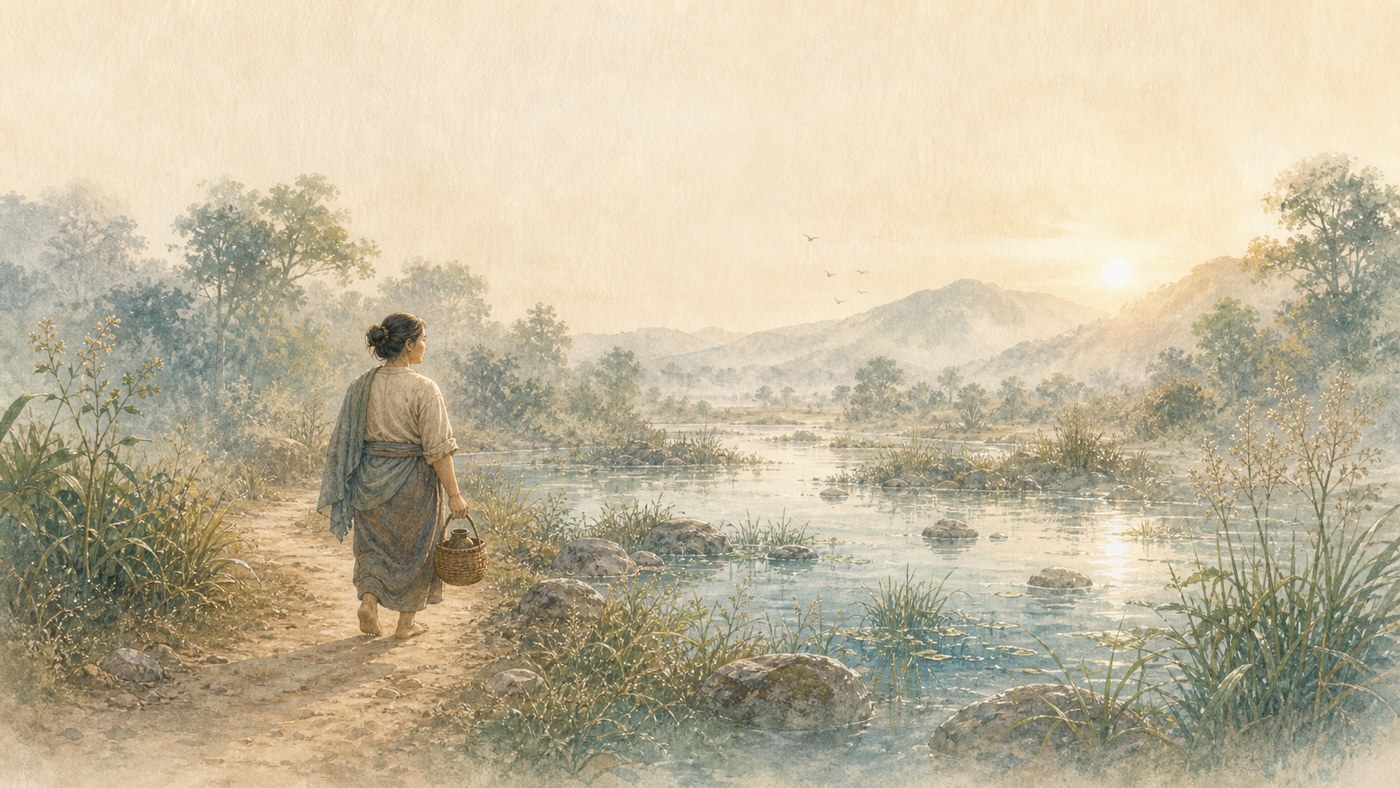
Imagine a small community facing a long winter. Food is limited. The weather makes travel difficult. Someone keeps the fire going, remembers what supplies remain and notices when a child or an older person needs help. While others are away, this person maintains the everyday work that makes returning home possible.
The survivor and keeper is a metaphor that gives a human face to steadiness, patience and the ability to sustain care. We cannot identify an ancient person's element, assign today's readers an ancestral occupation or infer physiology from a role in an imagined community.
The value of the scene lies in the question it opens: what forms of strength do we overlook when we admire only speed or force?
A community needs more than one kind of contribution
The series uses three images: the explorer or hunter for Wind, the initiator or warrior for Fire, and the keeper for Water. They are ways of describing complementary contributions. They are not fixed categories of human beings.
An actual person can explore, lead and care. Someone who is quiet may make a bold decision. Someone who enjoys action may be a patient parent. Health, training, opportunity and circumstance matter more than a label when deciding what a person can do.
The keeper image highlights work that is easy to miss: maintaining a routine, remembering a promise, tending a relationship and completing a task after its novelty has faded. Such work can hold a family or organisation together. It also deserves rest, recognition and a fair distribution of responsibility.
Looking again at characteristics we have been taught to dislike
We can reconsider characteristics often criticised in everyday life: a substantial body, a slow beginning, long sleep and an unhurried manner. Reconsidering them does not mean claiming that they all have one biological cause. It means refusing to use them as evidence of personal failure.
Body size is influenced by many interacting factors. Appearance alone does not establish how efficiently someone uses energy, how much they eat or what effort they make. A preference for continuity may support reliable work, but it does not tell us whether fatigue has a medical cause. Long sleep may feel restorative—or may leave someone unrefreshed and in need of assessment.
The distinction matters. Compassion is more useful when it helps us see accurately. We do not have to choose between “nothing is wrong” and “our body is wrong.” We can say, “This is our body, it deserves respect, and this difficulty deserves care.”
A careful look at evolutionary ideas
James Neel's thrifty genotype hypothesis was proposed in 1962. Broadly, this hypothesis considered whether traits helpful during periods of food shortage might have disadvantages in a different environment. It has generated debate and further hypotheses; it does not establish a Water Type gene or explain any individual person's weight.
Bergmann's rule is a broad ecological observation about body size and climate. That observation is not a method of identifying human constitutions. Applying it to a reader's body would go beyond what it can show.
Similarly, deep sleep and autonomic nervous-system activity cannot be inferred from a calm personality or an elemental label. Traditional descriptions may suggest questions to explore, but they do not substitute for measurements.
Polynesian, Inuit and Pima peoples have appeared in discussions of evolutionary adaptation. Such discussions do not justify classifying these populations as Water Type or using ethnicity as proof of an elemental model. Communities are internally diverse, and their histories cannot responsibly be reduced to a single inherited body pattern. The metaphor of a keeper can stand without that claim.
When our environment and our needs do not fit
The practical insight behind the ancestral story is that context matters. A habit that supports us in one setting may create difficulty in another. Long periods of sitting, limited opportunities to move, disrupted sleep, stressful work and easy access to some foods can shape daily experience. So can food insecurity, physically demanding work and the absence of a safe place to rest.
It would be inaccurate to say that everyone now lives in abundance or that illness simply results from “storing without using.” Energy regulation and chronic disease are more complex. No reader needs to recreate scarcity or punish the body with hunger in order to deserve health.
Instead, we can ask concrete questions. Is there room to move in a way we enjoy? Are meals regular and adequate? Does the day contain both activity and recovery? Are we carrying responsibilities that leave little time for ourselves? These questions create possibilities without turning care into a test of discipline.
Four traditions, four distinct languages
| Perspective | A useful way to approach it | A boundary to remember |
|---|---|---|
| Traditional Thai medicine | Water provides a language for fluidity, nourishment and related bodily qualities. | An elemental description is not a modern physiological diagnosis. |
| Ayurveda | Kapha offers a traditional constitutional account involving stability and nourishment. | Kapha and Water Type are not identical categories. |
| Chinese medicine | Concepts such as Yin, dampness and phlegm belong to a separate pattern-based tradition. | We cannot translate Water Type automatically into a Chinese diagnosis. |
| Contemporary biomedicine | Symptoms, history, examination and appropriate tests support clinical assessment. | “Endomorph” or a body shape does not establish hormone levels, metabolism or disease risk. |
Preliminary research, including work by Govindaraj and colleagues, has examined genetic differences between Ayurvedic constitution groups. Such research can be a subject of study without being presented as validation of the entire Plearnprai framework or of a reader's personal classification.
Different traditions may attend to overlapping human experiences. Their resemblance is an invitation to investigate carefully, not proof that their explanations are equivalent.
What the keeper story leaves with us
The story is most useful when it restores attention to neglected strengths. Perhaps we have been the person who stays, remembers or makes a difficult day manageable. Perhaps we have also stayed too long in a role that no longer fits.
Being dependable does not oblige us to endure everything. Keeping something alive can include changing how it is organised. Sometimes the most sustaining act is asking another person to share the work.
Try noticing
Recall a time when our steadiness helped. What did we actually do? Who benefited? What support did we need in return? Name the action without claiming that an element made it inevitable.
In the next chapter, we leave the imagined winter and return to the body we live in today. The aim is to learn its familiar patterns without explaining away changes that deserve attention.
WATER TYPE
Chapter 2 — Getting to Know Our Body

Familiar patterns, not a predetermined physiology
The keeper story offers an image of endurance. Now we look more closely at everyday bodily experience. Our purpose is not to memorise medical vocabulary or prove that we fit a category. It is to become more accurate observers of what is usual for us and what has changed.
A traditional profile describes tendencies. It cannot establish a person's metabolic rate, hormone function, cardiovascular fitness or sleep stages. We will keep these distinctions visible as we explore our everyday bodily experience.
The body other people see
Traditional Water descriptions often evoke a substantial frame, rounded features, a measured movement and an impression of steadiness. These descriptions also include moist skin, thick hair and a soft or resonant voice.
These features are not a checklist that everyone must satisfy. Bodies vary within every group. Appearance does not reveal a person's motivation, emotional life, health or moral character. A smaller person may recognise a Water-style temperament; a larger person may not.
The practical question is more personal: how does our body feel and function? Can we do the activities that matter to us? What feels comfortable, strained or newly difficult? These observations can guide care without making appearance the measure of success.
Energy use and appetite
Traditional imagery describes Water as a pattern of storing and conserving. As a metaphor, this may capture the experience of having a slower start or enjoying continuity. It should not be translated into a claim that every Water Type has a low basal metabolic rate.
Basal metabolic rate concerns the energy used for essential bodily functions at rest. It depends on factors that cannot be read from a personality label. Similarly, appetite and body weight involve more than willpower or one hormone. We cannot infer insulin resistance or altered leptin signalling because someone identifies with Water.
Some people notice that hunger arrives gradually or that they remain satisfied after a meal. Others experience strong hunger, irregular eating or difficulty recognising fullness. None of these experiences proves that fasting is safe. Medication, pregnancy, illness and a history of disordered eating can change what is appropriate. We return to food with these individual circumstances in mind.
Digestion and the feeling of heaviness
A lingering sense of fullness, constipation or sleepiness after meals may be familiar. These are observations to describe rather than evidence of a single elemental mechanism. We can note their timing, duration and relationship to meals, sleep, activity and medicines.
Persistent or worsening digestive symptoms deserve assessment. Severe pain, vomiting blood, black stools or other urgent changes should not be managed as “Water accumulation.” A diary may help a consultation; it should not delay one when symptoms are concerning.
The useful part of the Water image is an invitation to notice rhythm. Does an unhurried meal help us register fullness? Does a comfortable walk fit after eating? Are meals so irregular that we arrive exhausted or unusually hungry? We can explore these questions without assuming that the whole digestive system is inherently slow.
Congestion and breathing
Traditional language associates Water with mucus and moisture. Mucus does have protective functions in the airways, but frequent congestion does not establish a Water constitution or unusually active mucus-producing cells. Allergies, infections and other conditions have their own explanations and treatments.
Notice when congestion appears: during a particular season, around dust, at night or after an illness. Record any wheeze, breathlessness or interruption to sleep. Seek appropriate assessment for persistent symptoms and urgent help for serious breathing difficulty.
We can respect traditional language while allowing a respiratory problem to be investigated as a respiratory problem.
The heart, circulation and endurance
Steadiness in temperament does not necessarily mean a slow heart rate or superior endurance. Fitness develops through many influences, including activity, health, age and training. Some people enjoy sustained activity; others need pacing or rehabilitation.
Likewise, an elemental label cannot establish high blood pressure or lipid levels. These may require measurement. We should not wait to feel “out of balance” before following screening advice relevant to our age, history and circumstances.
A practical approach is to build suitable activity gradually and notice recovery. The aim is a body that can participate in life, not proof that we are stronger than another type.
Sleep and waking
Traditional Water descriptions often include easy sleep, long sleep and reluctance to get up. These experiences do not tell us how much deep sleep we obtain. Long sleep is not automatically better sleep, and difficulty waking is not automatically laziness.
If we regularly wake unrefreshed, feel unusually sleepy during the day or have loud snoring with pauses in breathing, it is worth discussing the pattern with a healthcare professional. Simply cutting sleep or exercising harder may miss the reason for the difficulty.
For everyday observation, distinguish time in bed, estimated time asleep and how we function the next day. The sleep chapter returns to practical ways of supporting a dependable rhythm without imposing one schedule on everyone.
Learning our actual daily rhythm
Rather than assuming that Water always means a slow morning and steady afternoon, we can watch what happens. Work shifts, caregiving, medicines and sleep loss may change the pattern. Our body today may need something different from what a traditional profile predicts.
A one-day observation
Note how we feel on waking, before and after meals, during movement and before bed. Use ordinary words: comfortable, heavy, alert, breathless, tense, sleepy. Mark what is familiar and what is new. Choose one question to explore; do not turn the whole day into a scorecard.
Knowing our baseline helps us recognise change. It also lets us appreciate capacities that a focus on symptoms alone can obscure. The next chapter turns to those strengths.
WATER TYPE
Chapter 3 — Recognising Our Strengths
Gifts that can become invisible
If most comments about our body concern weight or speed, we may begin to see ourselves through those comments alone. This chapter pauses to recognise strengths that receive less attention because they do not announce themselves loudly.
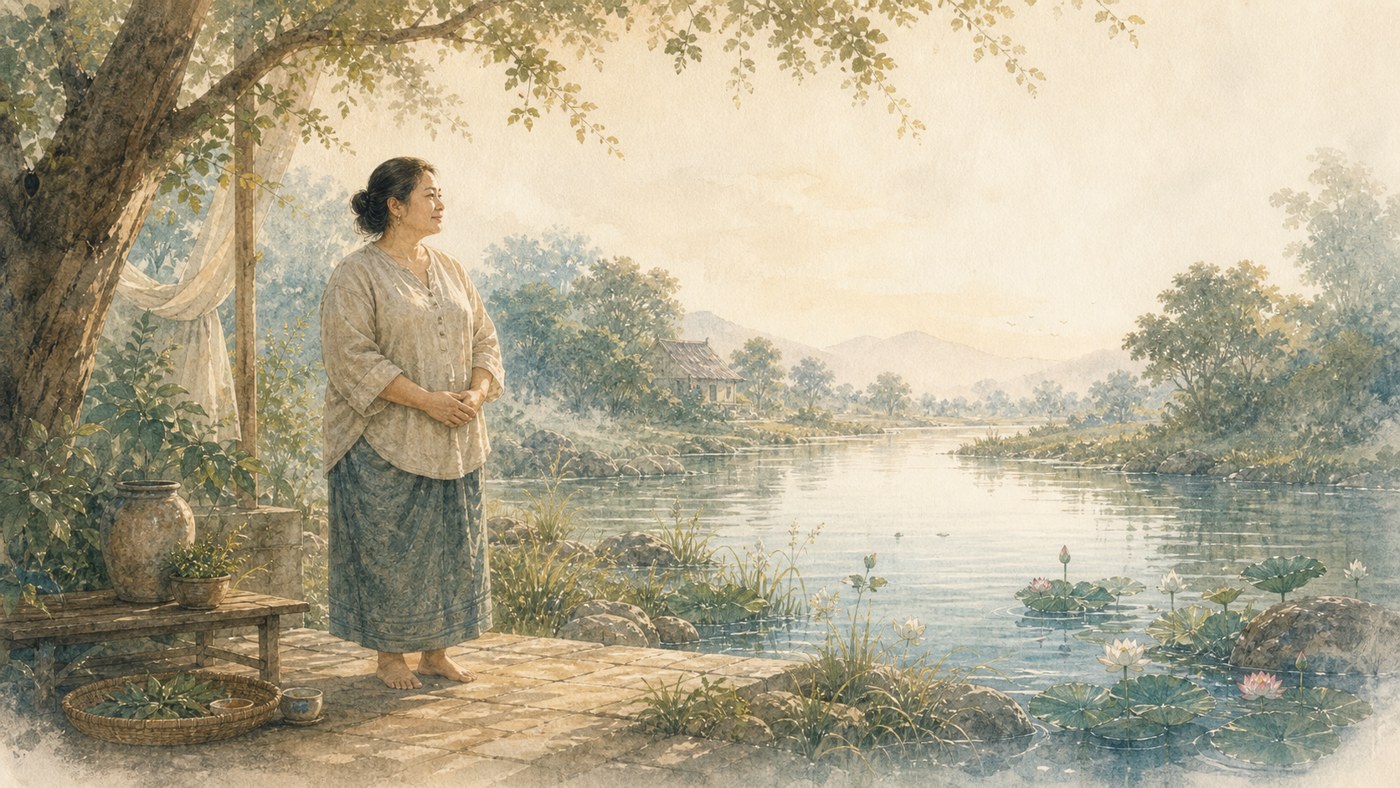
In the Water image, these include continuity, patience, warmth and the capacity to stay engaged. They are possibilities to recognise in our own experience, not virtues automatically granted by a type. We do not need to possess all of them to belong in this book.
Physical steadiness
Some of us enjoy sustained activity more than sudden bursts. We may like walking at a comfortable pace, gardening, making things or practising a skill through repetition. The satisfaction comes partly from remaining with the task.
We may call this endurance, while distinguishing persistence from measured physical fitness. No constitution guarantees exceptional stamina, safe fasting or superior recovery during sleep. Those capacities depend on the actual person and circumstances.
We can value persistence without treating exhaustion as proof of commitment. Caring for someone through several difficult nights may show devotion, but sleep loss still has consequences. Rest is not the opposite of reliability; it helps make reliability sustainable.
Likewise, tolerating a missed meal is not a competition or a treatment plan. We do not have to demonstrate that our body can endure deprivation. Strength includes knowing when our body needs support.
Calm that gives others room
Perhaps we are the person who can listen while others hurry to reply. We may be able to hold a conversation without immediately fixing, interrupting or judging. A steady presence can make it easier for another person to think clearly.
This is not the same as never becoming upset. Calmness that allows feeling differs from calmness maintained by hiding everything. We can be reassuring and still say, “This is difficult for me,” or, “I need a little time.”
Gentleness, loyalty and willingness to forgive can support relationships. None requires accepting repeated harm. Forgiveness is a personal choice; it does not remove the need for boundaries or make reconciliation safe in every situation.
The work of continuity
In a family, continuity may look like remembering an appointment, preparing a familiar meal or checking whether an older relative has company. At work, it may mean finishing an unglamorous task, maintaining records or noticing a problem before it disrupts everyone else. In a community, it may mean passing on a practice or keeping a relationship alive across generations.
These contributions are valuable. They should also be visible. Being good at care does not mean we should perform it without limits, compensation or shared responsibility. An elemental description should never assign unpaid work to a person because they seem naturally patient.
We can ask what we enjoy giving, what we have simply inherited as a duty and what now needs to be shared. Those questions protect the very qualities we value.
When a strength needs a boundary
A useful tendency can become difficult when it has no flexibility. Steadiness can become rigidity. Patience can become postponement. Loyalty can keep us in a situation that needs to change. Looking after everyone can leave us absent from our own life.
The answer is not to reject the strength. It is to give it room to move.
| A strength we value | A sign that it needs attention | A way to preserve it |
|---|---|---|
| Patience | We repeatedly postpone a necessary conversation. | Name one concern and agree a time to discuss it. |
| Reliability | Others assume we are always available. | State what we can do and what needs another person's help. |
| Loyalty | We excuse repeated disrespect or harm. | Seek support and consider boundaries and safety. |
| Love of routine | Familiarity crowds out interest or choice. | Introduce one manageable variation. |
| Care for others | Our meals, appointments or rest disappear. | Include our needs in the care plan. |
A small boundary can preserve a long relationship. A little novelty can refresh a dependable routine. Movement does not have to mean abandoning who we are.
Try noticing three strengths
Choose three qualities we recognise in ourselves. For each, name one real example, one cost when we overuse it and one form of support that would help. We are looking for a sustainable expression of strength, not a perfect personality.
The next part turns toward the mind. We begin with what a good day feels like, so that our idea of balance is based on living experience rather than an ideal we can never meet.
WATER TYPE
Chapter 4 — Our Mind in Balance
The language of water can describe an emotional rhythm
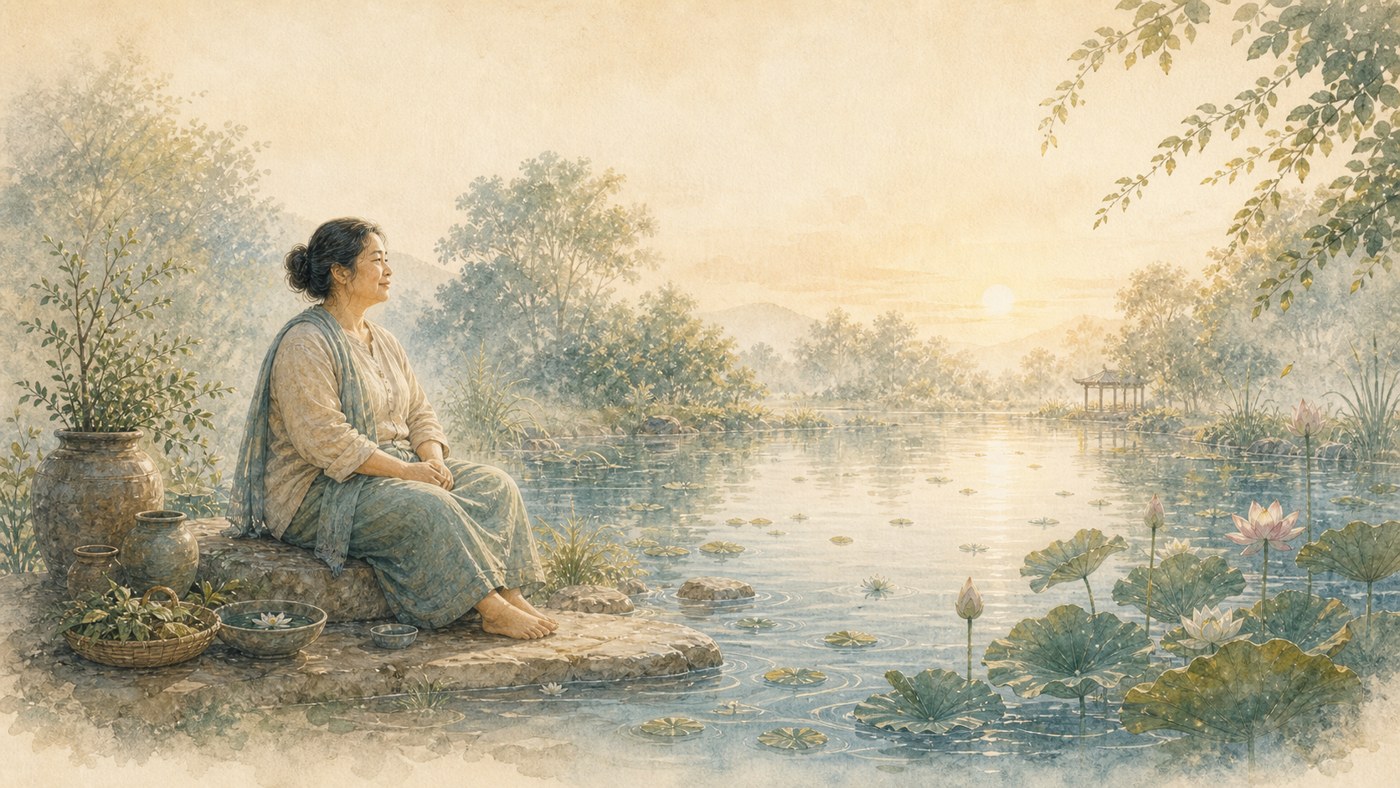
The elemental traditions discussed in this series attend to body and mind together. In Plearnprai's interpretation, Water evokes depth, steadiness and the wish to nourish. These images can help us describe experience. They do not establish a biological personality type or tell us what another person must feel.
Before exploring difficulty, it is useful to remember how we are when life feels reasonably manageable. Balance need not mean constant happiness. It may mean being able to feel, respond, rest and reconnect without becoming trapped in one way of coping.
Calm with life still moving through it
A balanced Water-style day may include an unhurried beginning, satisfaction in familiar work and pleasure in a conversation that has room to unfold. We can concentrate on one thing without needing everything to be exciting. We notice small comforts and remain interested in the people around us.
The distinction is between stillness that nourishes and withdrawal that narrows life. We do not have to be busy to be well. Yet quietness can remain alive with curiosity, choice and connection. A lake can look still while supporting a whole living world.
When we are doing reasonably well, helping another person does not require us to disappear. We can listen and also mention our own concerns. We can keep a promise and renegotiate when circumstances change. We can enjoy familiarity while allowing someone else to grow.
Qualities we may recognise
Calmness, dependability, empathy, loyalty and patience are qualities we may recognise in ourselves. Consider them as invitations to reflect rather than a description we have to perform.
Calmness can mean pausing before reacting. Dependability can mean making promises we can actually keep. Empathy can mean listening without assuming that we already understand. Loyalty can mean remaining honest when a relationship needs a difficult conversation. Patience can mean allowing time for a process without ignoring a problem.
Each quality has an active side. A peaceful person can say no. A gentle person can protect a boundary. A patient person can decide that something has continued long enough. Balance includes these capacities too.
What matters to us underneath the routine?
For some readers, caring and preserving are important sources of meaning. We may want home to feel welcoming, relationships to endure and the people we love to feel secure. Familiar objects, meals or rituals may carry a history that matters.
There is nothing inferior about these values. A culture that praises novelty can overlook the work of maintaining what is already good. We do not need a dramatic ambition to have a meaningful life.
At the same time, our worth is not limited to usefulness. If caring has become the only way we know how to belong, rest may feel undeserved. We can practise receiving company or affection without first earning it through a task. A relationship can hold us as a person, not only as its source of stability.
A good day is a clue, not an instruction
Imagine a day when we felt steady and engaged. Perhaps the workload was shared. Perhaps we had slept adequately, spent time outside or spoken honestly with someone. Perhaps nothing special happened, but we had enough time to do ordinary things without constant pressure.
We cannot always reproduce that day. Illness, money, work and caregiving may limit our choices. We can still identify one condition worth protecting: a pause before the next task, a dependable meal, a short conversation or a place where we are not responsible for everyone.
Remember a day that felt like home
What were we doing? Who was with us? Did we have something to look forward to? What made giving feel voluntary rather than compulsory? Choose one small part of that day that might be possible again.
Our aim is not permanent serenity. It is a life in which steadiness and movement can coexist. The next chapter looks at the quieter signs that this balance has become difficult.
WATER TYPE
Chapter 5 — When Our Mind Feels Heavy
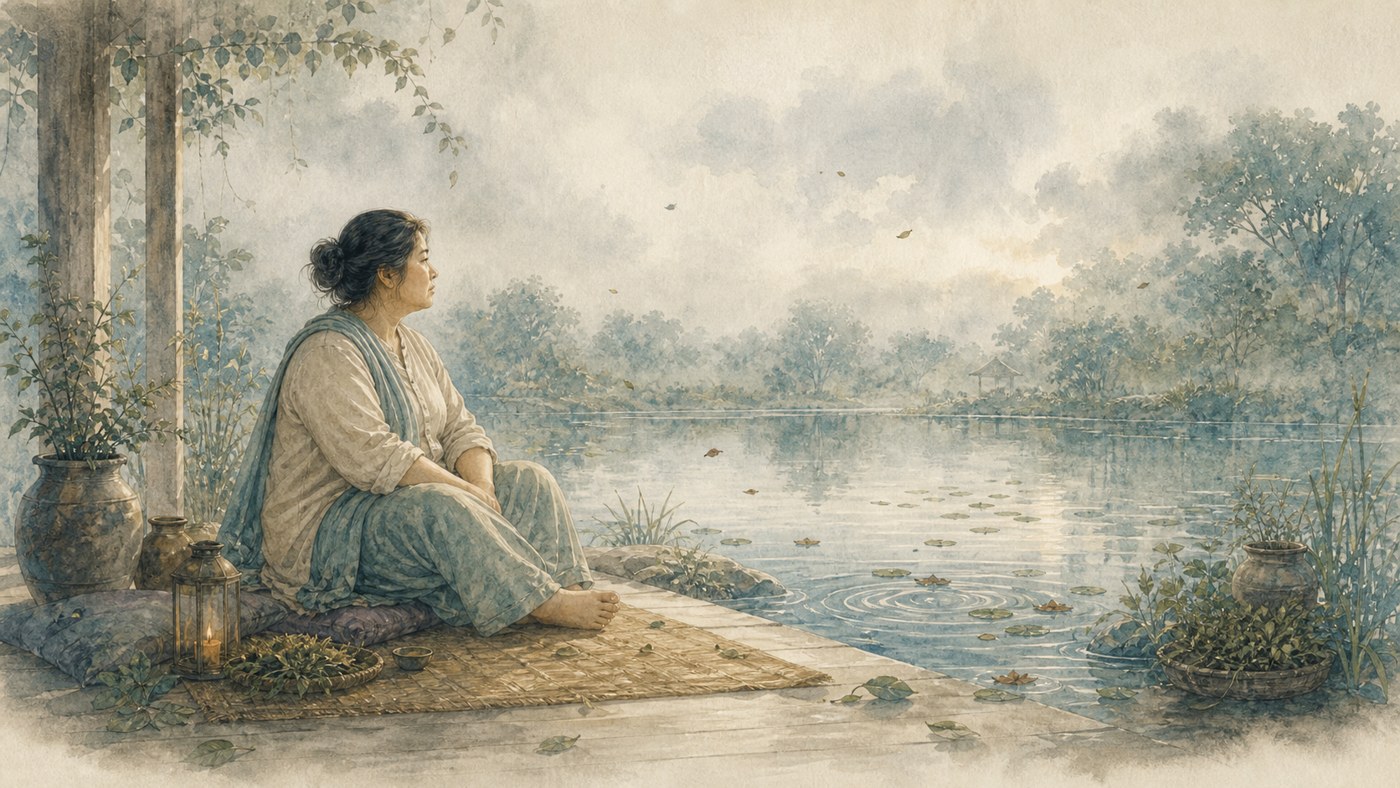
Difficulty does not always make a noise
The series uses different images for strain: Wind becomes scattered, Fire flares and Water grows heavy or still. People do not always follow these patterns, but the Water image brings attention to distress that may be easy to miss.
We may continue doing what is expected while gradually losing interest, energy or hope. Others may assume we are fine because we are not complaining. We may assume the same thing ourselves. Quiet distress is still distress; it does not need to become dramatic before it deserves care.
Noticing what has changed
Perhaps starting an ordinary task now feels unusually difficult. Things we used to enjoy no longer draw us. We spend more time remembering what has been lost or wishing that life would stop changing. Feelings remain unspoken because we do not want to burden anyone.
Sometimes the experience is less like sadness and more like a grey absence: nothing feels particularly worth doing. We may seek more sleep, familiar food or solitude. These responses can be attempts to find comfort, not evidence of weakness.
They also have different possible meanings. Grief, sleep problems, physical illness, medicines, stress and depression can overlap in everyday experience. “Water becoming still” is a metaphor, not an explanation that rules out those possibilities.
Circumstances that can make life feel heavier
Loss and change can unsettle anyone. For someone who values continuity, a move, retirement, a change of work or a child leaving home may disturb the routines through which life previously made sense. We can acknowledge that loss without claiming that one type suffers more than everyone else.
Unrecognised work can also weigh on us. If care is always expected but rarely acknowledged, affection may become entangled with resentment or invisibility. The answer may include a practical redistribution of responsibility, not simply a better attitude.
Repetition without choice can narrow life. A familiar routine may once have been comforting but now offer little contact, interest or purpose. Long periods of dull weather may affect some people's mood; we should notice our own pattern rather than assume an elemental sensitivity.
Continuous caregiving can leave little room to recover. Someone may appear endlessly patient because no alternative seems available. In that situation, support has to include the circumstances, not only the person's coping skills.
A loop we can learn to recognise
A low mood may make activity or contact harder. Less contact can mean fewer moments of encouragement or enjoyment. Tasks accumulate, the day feels more burdensome and starting becomes harder again. Food or sleep may become the most immediately available comfort, followed by self-criticism that adds another layer of distress.
This is one possible loop, not a universal pathway. We should not infer that a person's weight, illness or emotions result from failing to interrupt it. The point of noticing a loop is to find a workable place for support.
Instead of trying to change everything, we might send one message, ask someone to accompany us to an appointment or choose a manageable activity. A small action can be worthwhile even when it does not immediately change how we feel.
When this needs more than a self-care experiment
Persistent loss of interest, low mood or changes in sleep and appetite may warrant professional assessment, especially when daily functioning is affected. Depression can look different in different people. We do not need every possible symptom to seek help. [1]
Do not wait for a time threshold if distress is severe. Thoughts of self-harm or not wanting to live call for immediate support; imminent danger requires emergency help. An elemental description should never make such experiences seem like an ordinary personality trait. Chapter 9 sets out the boundaries more fully.
Speaking without blaming ourselves
We can say, “I have been withdrawing more than usual,” instead of, “I am lazy.” We can say, “I need help with this responsibility,” instead of waiting until we cannot continue. Naming the difficulty accurately creates more options than a judgement does.
A gentle check-in
What has become harder recently? What are we keeping to ourselves? Is there a loss, burden or change that needs to be acknowledged? Choose one trusted person or professional with whom we could share a specific observation.
We are not required to solve distress alone. The next chapter explores several places where care can enter the conversation between body, mind and daily life.
WATER TYPE
Chapter 6 — The Conversation Between Body and Mind

One life, several ways of understanding it
Body and mind can be imagined as one stream of water. The image expresses an important experience: a difficult night can change the next day's mood; an unresolved worry can affect appetite or concentration; physical discomfort can make an ordinary task feel larger.
This image does not imply a literal fluid connecting every symptom. Modern accounts of body–mind interaction involve many processes and circumstances. They do not establish a single Water-specific mechanism.
How emotional strain can enter bodily life
When something weighs on us, routines may change. We may eat at different times, spend longer in bed, move less, tense our muscles or find it harder to attend appointments. Stress can also be accompanied by bodily sensations.
Stress, cortisol, metabolism, weight and inflammation can be discussed together, but they do not form a simple sequence that explains each person's experience. We cannot infer hormone levels from a feeling, or explain weight change by a mood alone. If a bodily change is new or persistent, it deserves its own assessment.
This distinction protects us from blame. Illness is not evidence that we failed to express an emotion. Looking after our emotional life can matter without making it responsible for every physical outcome.
How bodily experience can affect our emotional world
Pain, breathlessness, poor sleep or fatigue can reduce the space available for enjoyment and connection. It can be harder to answer a message when simply getting through the day already uses our energy. A long period of inactivity may also remove activities through which we previously felt capable or connected.
For some people, suitable movement offers a helpful change of pace or a moment of contact with the world. It is not a guaranteed antidepressant, and sweating is not proof that it is working. Someone living with illness or disability may need an adapted activity, pacing or professional advice.
Sometimes the most useful bodily intervention is not exercise. It may be assessment of a symptom, relief of pain, support with sleep or help obtaining adequate food. “Start with the body” should remain a broad invitation.
Recognising a pattern without claiming one cause
Imagine that we feel low, stop taking a familiar walk and then see fewer people. With less contact, the day becomes more repetitive and starting again feels difficult. This is a practical pattern we can describe.
It does not prove that low mood has caused a metabolic disorder, or that several diagnoses are all expressions of the same disease. Comparing “stagnant water” with research on depression and metabolic health remains an analogy. Co-occurring conditions still need appropriate assessment and treatment.
We gain more from a specific description than from a grand explanation. “I have stopped going outside since my sleep became difficult” gives us a clearer place to begin than “everything in me is blocked.”
Choosing an accessible starting point
If talking feels too difficult today, an ordinary bodily task may be manageable: opening the curtains, sitting somewhere comfortable outside or walking a short distance with support. If movement is limited, we may begin with a conversation, music, a practical request or an appointment.
If the environment is the difficulty, an individual coping exercise may not be enough. We may need someone to share care, change a schedule, address conflict or help us obtain services. Support can enter through relationships and surroundings as well as through personal habits.
We do not have to wait until every part of life is ready. We can choose a step small enough to repeat and useful enough to matter. We then observe rather than promise an outcome.
| An accessible place to begin | A possible small step | What to notice |
|---|---|---|
| Body | Try a comfortable, appropriate movement or attend to a basic need. | Comfort, recovery and whether the step is sustainable. |
| Mind | Name a feeling in writing or aloud. | Whether it becomes easier to understand or communicate. |
| Connection | Contact someone safe or ask for specific help. | Whether responsibility or isolation becomes more manageable. |
| Surroundings | Make one task or space easier to use. | Whether the next action becomes less demanding. |
| Professional care | Arrange assessment for a persistent concern. | Whether the plan answers the question that brought us there. |
Choose one doorway
Which doorway is most accessible today? Choose one action, decide when it will happen and identify who could help. If it does not help, that is information—not a failure of character or proof that we chose the wrong element.
The next part considers health concerns and the limits of the elemental map. Knowing those limits is part of using the map responsibly.
WATER TYPE
Chapter 7 — Health Concerns and the Limits of a Type
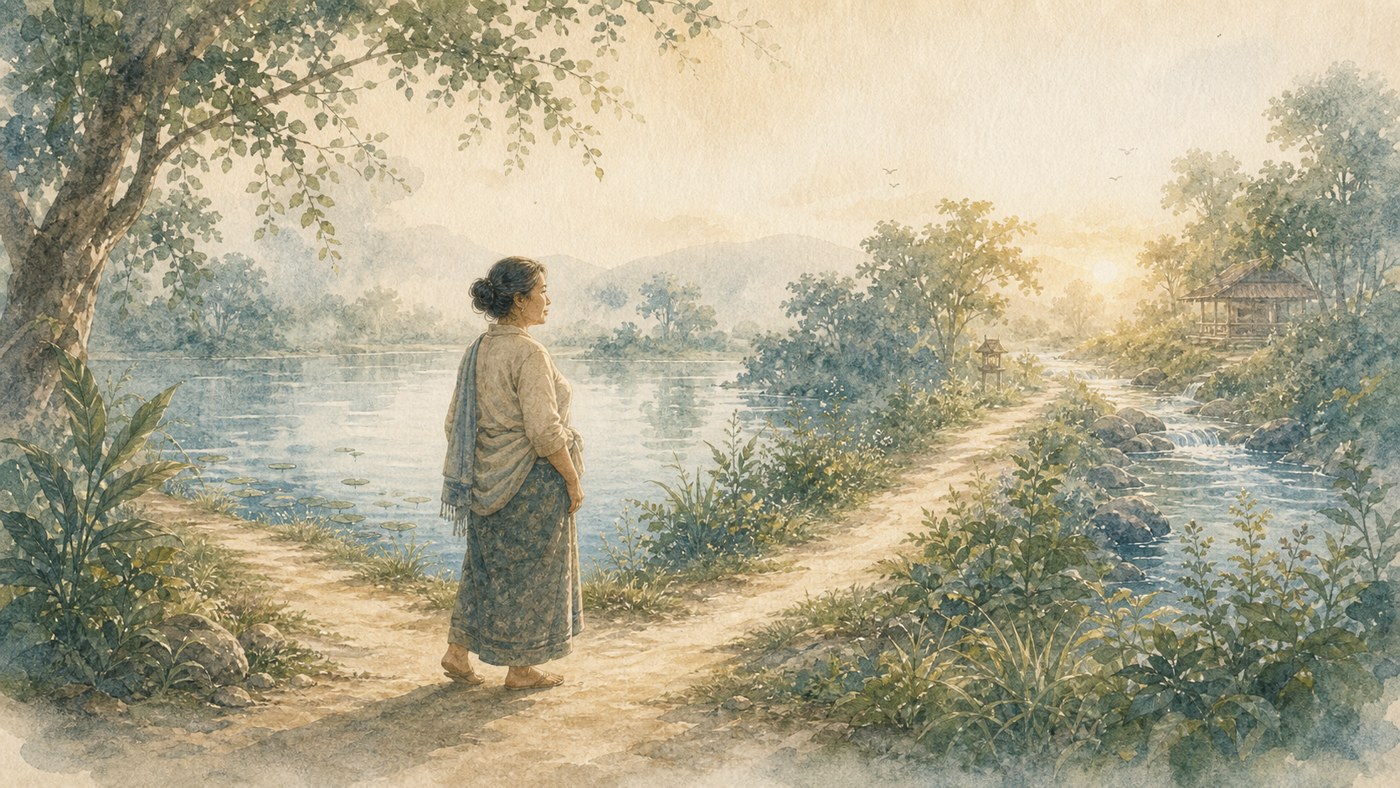
Learning without predicting illness
The traditional image of Water becoming stagnant can remind us to pay attention before difficulties grow. Alongside that practical intention, we need an essential distinction: Water Type is not an established biomedical risk category.
We cannot infer a person's likelihood of diabetes, thyroid disease, cardiovascular disease, allergy, sleep apnoea or depression from this label. The conditions discussed below have different causes, assessments and treatments. Familiarity with their names can help us ask useful questions; it cannot diagnose us.
Why a single explanation can be tempting
When several problems occur together, it is understandable to want one explanation. A unifying image can help us remember that we live one life rather than a collection of disconnected organs. It may encourage us to consider sleep, food, activity, emotions and circumstances together.
But an image is not a demonstrated cause. “Storing without using,” “evolutionary mismatch” and “stagnant water” should not be used to explain every illness or imply that a person brought it on themselves. Nor do they show that one routine can treat all the conditions at once.
Good care can be coordinated without reducing different diagnoses to the same disease. We can ask clinicians to help us understand how treatments fit together and how everyday care can support the overall plan.
Metabolic concerns
Metabolic concerns include obesity, insulin resistance, type 2 diabetes, abnormal blood lipids and metabolic syndrome. These are clinical subjects, not features that can be confirmed by recognising oneself in a constitutional description.
Prediabetes and insulin resistance may have no noticeable symptoms. Assessment and testing depend on individual risk and clinical guidance. We should not assume that feeling comfortable rules them out, or that a larger body proves they are present. [2]
If we already have a diagnosis, food and activity plans should fit that diagnosis, medicines and practical circumstances. We do not stop treatment because we begin following an elemental routine.
Heart and blood-vessel concerns
Blood pressure and cholesterol-related risk require more than a description of temperament. Family history, age, smoking, existing illness and other clinical factors may matter. We can discuss appropriate screening rather than purchasing the same test package simply because of our type.
A useful appointment question is, “What should we monitor, how often, and what change should prompt a call?” Clear answers are more useful than a general instruction to “get the water moving.” Sudden chest pain or severe breathlessness requires urgent action, not a lifestyle experiment.
Thyroid concerns
An underactive thyroid can cause symptoms such as fatigue, weight gain, cold intolerance or constipation, but these symptoms are not specific to it. Diagnosis involves clinical assessment and blood testing; a Water profile cannot establish thyroid function. [3]
If a familiar pattern becomes markedly worse, avoid assuming it is simply our constitution. A label should make us more attentive, not less curious about a treatable problem.
Respiratory concerns
Respiratory concerns include allergies, chronic sinus symptoms and asthma. These should not be treated as one mucus-based disease. If breathing symptoms persist, change or interfere with sleep or activity, seek assessment. Use prescribed treatment as directed.
When discussing symptoms, describe what happens: blocked nose, cough, wheeze, breathlessness, duration and possible triggers. That account helps more than saying only that our Water is excessive.
Sleep concerns
Loud snoring, gasping or pauses in breathing during sleep, together with daytime tiredness, can be reasons to discuss sleep apnoea with a clinician. A sleep study may be needed. Longer time in bed does not rule it out. [4]
Do not interpret dangerous sleepiness as an ordinary Water trait. If we cannot stay alert, avoid driving or other hazardous tasks and arrange assessment.
Emotional concerns
Depression may include increased sleep or appetite, heaviness and sensitivity to rejection. These experiences deserve attention without being turned into an elemental subtype. A clinician considers the broader pattern, duration, effect on life and alternative explanations. [1]
Self-care may support recovery, but it is not a substitute for indicated treatment. No one needs to prove sufficient willpower, activity or optimism before asking for help.
A whole-person plan can still be specific
A person living with several conditions may benefit from a shared medication list, clear priorities and coordinated follow-up. The first useful change may be making the plan easier to follow rather than adding more tasks.
Prepare a practical conversation
List any diagnosed conditions, regular medicines, new symptoms and relevant family history. Write the two questions that matter most. Ask which everyday changes are appropriate and which symptoms should lead to earlier contact. Let the clinical plan—not the elemental label—guide testing and treatment.
Knowing our health situation can widen our choices. The next chapter introduces a four-part map as a reflective aid, with clear limits on what it can tell us.
WATER TYPE
Chapter 8 — A Four-Part Map for Noticing Strain
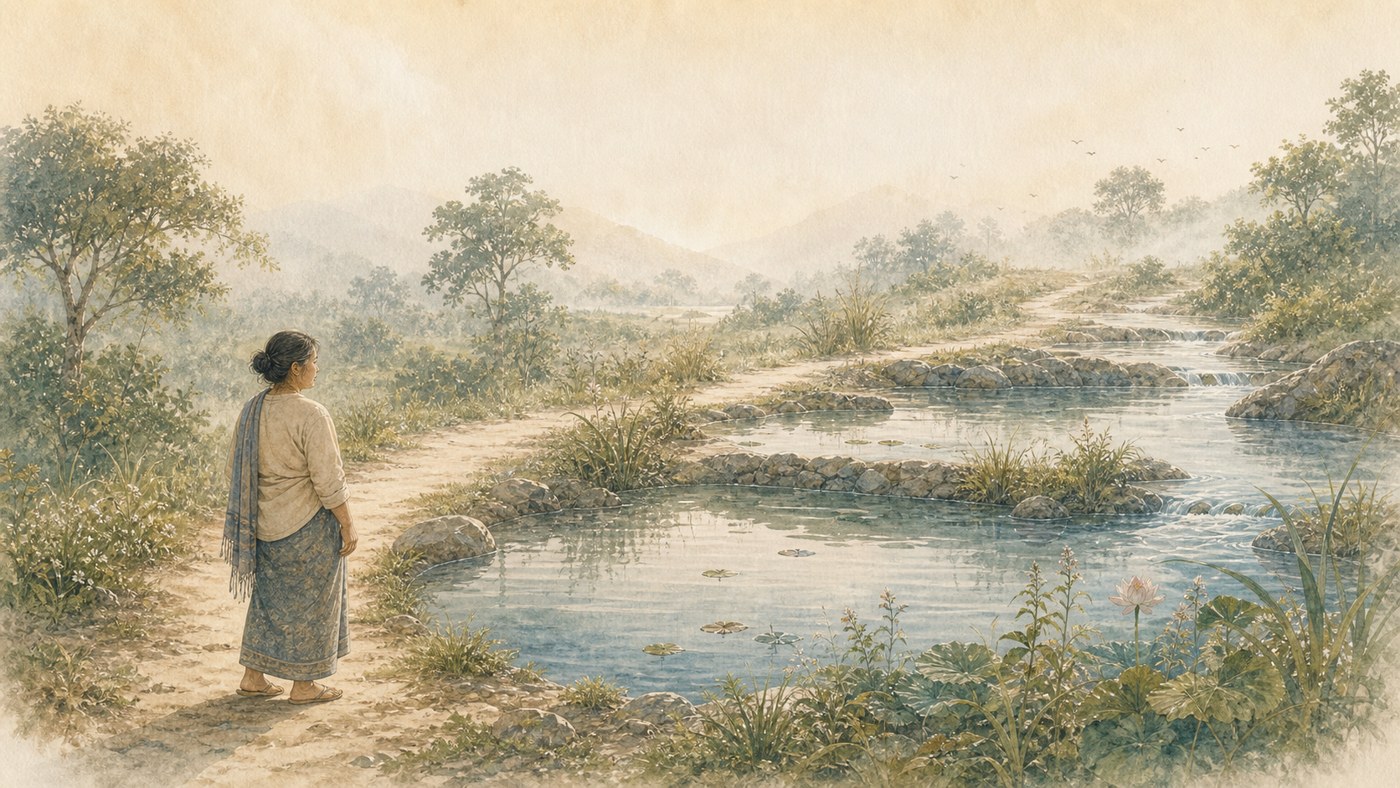
A map for attention, not medical staging
One reflective map describes four perspectives: emotional heaviness, bodily accumulation, a clearly identified illness and difficulties across several systems. It uses the image of a staircase to show that care remains possible.
The four perspectives can help us organise observations. They are not a validated sequence through which disease develops. Illness does not always begin in the mind, and some conditions appear suddenly or remain silent. A person can need urgent help without passing through any earlier “stage.”
We also cannot infer that all conditions can be reversed by moving down the staircase. Recovery, adaptation, symptom relief and prevention of complications are different goals. A useful plan depends on the actual condition.
Perspective one: our emotional life needs attention
Perhaps daily life feels heavier, familiar interests have faded or we are spending more time withdrawn. There may be an identifiable burden, or the reason may not be clear.
These observations invite care. We might speak to someone safe, examine what has changed or seek professional support. They do not prove that the body is medically well, and they do not need to be severe before we take them seriously.
A small supportive action may be possible now. Persistent or disabling symptoms require more than an assumption that they will pass with movement or novelty.
Perspective two: bodily patterns are changing
We may notice altered weight, swelling, congestion, more difficult waking or a change in activity tolerance. Traditional imagery might describe these as accumulation. Clinically, they have many possible explanations.
Describe the change rather than assign it a stage. How quickly did it develop? Is it affecting function? What else has changed? New swelling or unusual fatigue may need assessment before a new exercise or dietary routine.
The opportunity here is timely attention, not a promise that the problem is easily reversible. We can support ordinary routines while checking whether something else needs treatment.
Perspective three: a condition has been identified
A diagnosis can bring worry, relief or both. It may give a name to something we have struggled with for a long time. It is not evidence that we failed at earlier self-care.
The next step is a clear plan: what treatment is recommended, what we can do at home, what to monitor and when to return. If instructions are difficult to follow, that is worth discussing. A plan that ignores our resources or responsibilities may need adjustment.
Everyday care can accompany treatment. It should not compete with it or encourage us to stop medicines because we feel more “balanced.”
Perspective four: several needs overlap
When physical illness, sleep difficulty, emotional strain and practical burdens coexist, the work of managing care can become demanding. It is easy to interpret tiredness or withdrawal as giving up. That interpretation may miss pain, treatment burden, depression or a lack of support.
We may need a clinician to help set priorities, someone to accompany us to appointments or a family conversation about shared responsibilities. Some goals may be modest but important: less discomfort, safer mobility, dependable meals or one activity that matters to us.
Care is still worthwhile when cure is not possible. Hope can include adaptation and companionship, not only a return to an earlier state.
Using the staircase without blaming ourselves
No one should feel abandoned. Care remains possible without assuming that everyone follows the same staircase or can reverse it through effort alone.
| What we notice | A useful next question |
|---|---|
| Emotional heaviness | What support, assessment or change in circumstances is needed? |
| A new bodily pattern | Does this require clinical assessment before self-care? |
| A diagnosed condition | Is the treatment plan clear and workable? |
| Several overlapping needs | Who can help coordinate care and reduce the burden? |
These questions can apply at the same time. There is no score and no rank of personal success.
Find the next workable step
Name one present concern and one next action. Is that action a small routine, a request for help or a healthcare appointment? If there is a warning sign, set the reflective exercise aside and seek appropriate care.
The next chapter makes those warning signs explicit. Knowing when to stop self-care is part of caring well.
WATER TYPE
Chapter 9 — Signals We Should Not Ignore

Patience should not silence a symptom
If we are accustomed to managing quietly, we may wait a long time before mentioning discomfort. Other people may also underestimate it because we do not appear distressed. This chapter gives us a clearer boundary: a new, severe or persistent symptom takes priority over an elemental explanation.
We do not need to identify the disease before asking for help. Our task is to notice when a situation exceeds the limits of home care.
Changes worth describing
A gradual change in energy, sleep, appetite, weight, congestion or mood can be useful to record. Note when it began, whether it is getting worse, what it prevents us from doing and any associated symptoms.
These may be described as early Water signals, but that does not establish that they are harmless or easy to reverse. Swelling, unrefreshing sleep and unusual tiredness can have causes that need assessment. We should not wait for them to fit a four-stage pattern.
For mild, familiar discomfort without warning signs, an appropriate everyday adjustment may be reasonable. If it persists, worsens or remains unexplained, seek advice rather than repeatedly adding new remedies.
When to obtain prompt assessment
Arrange medical assessment promptly for rapid unexplained weight change, new or increasing swelling, a marked change in exercise tolerance or persistent symptoms that affect daily life. A swollen, painful or warm leg—especially on one side—needs prompt assessment. Do not massage it or try to “move the fluid” ourselves.
Persistent breathlessness when lying flat or repeated waking with gasping also needs prompt assessment. If breathing difficulty is sudden, severe or rapidly worsening, seek emergency care.
Loud snoring with breathing pauses and marked daytime sleepiness should be discussed with a clinician. Avoid driving when too sleepy to remain alert. Excessive thirst and urination with unexplained weight loss also warrant prompt evaluation. A clinician can decide which tests are relevant; a fixed annual panel is not required merely because of Water Type.
Unintended weight loss, a new lump, an unexplained persistent cough, unusual bleeding, difficulty swallowing or a lasting change in bowel habits also deserve assessment. An elemental routine should not delay it.
Emergency signals: stop the self-care plan
Seek emergency care for:
- Sudden chest pressure or pain, particularly with breathlessness, sweating, faintness or pain spreading to the arm, jaw or back.
- Sudden or severe breathing difficulty, blue-grey colour, or new or rapidly worsening breathlessness at rest.
- Sudden facial droop, one-sided weakness or numbness, new difficulty speaking, sudden visual disturbance or a severe abrupt headache.
- Collapse, unexplained fainting, seizure, new confusion or difficulty waking someone.
- Sudden severe pain, major injury or bleeding that will not stop.
- Vomiting blood, black or bloody stools, or coughing blood.
- Very high fever or a rapidly worsening condition. Plearnprai's conservative hand-off policy treats fever above 39°C in an adult as requiring emergency assessment; this is not a universal diagnostic threshold.
If one-sided leg swelling is accompanied by chest pain or breathlessness, treat the situation as an emergency. Do not continue exercise, steaming, massage or an elemental assessment while deciding what to do.
Emotional safety matters equally
If we are thinking about harming ourselves or no longer wanting to live, tell a trusted person and obtain immediate professional or crisis support. If there is immediate danger, contact local emergency services or go to an emergency department. Seek company rather than remaining alone while help is arranged.
Loss of contact with reality, dangerous behaviour towards others or an inability to maintain basic safety also requires urgent help. Persistent depression or anxiety that interferes with daily life—particularly around two weeks or longer—needs professional assessment. Do not wait two weeks when symptoms are severe. Unusually elevated or agitated mood with very little need for sleep and risky behaviour also warrants prompt assessment.
These are health concerns, not failures of maturity or signs that someone has the wrong element. A caregiver who feels close to abandoning essential care needs immediate practical and professional support too.
A lower threshold for vulnerable people
Seek advice earlier for infants, older adults, pregnancy or breastfeeding, immunocompromised people and people with chronic illness. A young child with fever or an older person after a fall needs particular attention. The recommendations in this adult self-care book should not be transferred automatically to those situations.
What to bring to a consultation
A brief record can help: when the problem began, what changed, medicines and supplements, known diagnoses and what makes the symptom better or worse. If someone has observed breathing pauses or a change in behaviour, their description may also be useful.
We can ask what to do next, what to monitor and when to seek earlier help. If the explanation is unclear, it is reasonable to ask again.
Make help easier to reach
Identify a local healthcare service and someone we could contact for support. Keep an up-to-date medicine list accessible. We do not need to memorise every warning sign; we need permission to act when something is concerning.
The book supports ordinary care alongside appropriate treatment. With those boundaries in place, we can turn to food, movement and rest with greater confidence.
WATER TYPE
Chapter 10 — Food That Supports Us

Begin with nourishment, not punishment
Food is one of the most familiar ways we care for ourselves. It also carries pleasure, culture, company and practical constraints. A useful approach must fit all of these, not only a theory about the body.
Traditional Water food guidance favours food that is light, warm and gently stimulating. These are traditional qualities, not measurements of calories, blood glucose or treatment effectiveness. We can use them to explore comfort and preference without assuming that a food literally adds or removes an element.
This chapter does not prescribe hunger as a remedy. Adequate nourishment matters, including when weight is a concern. A plan that leaves us persistently weak, anxious about eating or unable to participate in ordinary life deserves reconsideration.
Four traditional ideas, used with flexibility
Lightness can mean choosing a meal that feels comfortable rather than uncomfortably large or rich. It does not mean removing essential nutrients or making every meal small. What is comfortable depends on appetite, activity, health and access to food.
Gentle stimulation refers in traditional guidance to mildly pungent, bitter and astringent tastes. These can add variety, but taste is not a prescription. Strong chilli may be unpleasant for someone with reflux or mouth irritation. We can use flavour without trying to make ourselves sweat or treating discomfort as evidence of benefit.
Warmth may be comforting. A warm soup or drink can suit a preference and a season. Water temperature does not establish a drink's health value, and cold water is not known to slow metabolism or cause Water to accumulate. Choose a temperature that is safe and comfortable.
Meal rhythm can make eating easier to organise. One suggestion is a substantial lunch and a lighter, earlier evening meal. That is one possible routine, not a universal rule. Shift work, medicines, family meals and hunger may require another pattern. Eating at night does not automatically mean that every calorie becomes stored fat.
Foods to build meals around
Vegetables, fruit, whole grains, legumes and suitable protein foods can form a varied pattern. Include fats rather than treating all fat as an enemy; the type and overall pattern matter. AHA guidance emphasises a range of plant foods, appropriate protein sources and unsaturated fats, while limiting added sugars and excess sodium. [6]
Leafy greens, guava, apples, beans and whole grains offer possibilities. These are useful examples, not a complete list. We can use locally available alternatives and adapt texture or portions to individual needs. Whole grains and beans do not guarantee a flat blood-glucose response; people managing diabetes may need an individual plan.
Ginger, turmeric, garlic, pepper and chilli can be used in ordinary cooking if tolerated. They add flavour and may help us enjoy a meal. Small studies of ingredients do not make them dependable metabolic treatments. Culinary use is different from concentrated capsules, extracts or medicinal doses.
Water or an unsweetened drink can be a practical alternative to a frequent sweetened drink. Warm ginger water is an option for those who enjoy it, not a medicine everyone needs. If a clinician has advised fluid restriction, follow that plan rather than a generic drinking recommendation.
What might we reduce, and why?
Reducing frequent sweets, refined starches and fried or very rich foods can be one starting point. In practice, we can focus on the overall pattern and choose one manageable substitution. Food does not need a moral label. An occasional sweet or shared celebration does not undo care.
Milk and yoghurt are not automatically unsuitable because someone identifies as Water. Allergy, intolerance, personal preference and the nutritional role of the food are more useful considerations. If removing a food group, consider how its nutrients will be replaced. We do not present dairy as a universal cause of excess mucus.
Similarly, whole fruit is not equivalent to a sugary drink, and unsaturated fats are not equivalent to every “heavy” food. A traditional quality can help describe an experience, but it should not flatten nutritional differences.
About time-restricted eating
An eight-to-ten-hour eating window is one suggested option. Constitution does not establish that fasting is safe or more effective. It is optional, not a necessary expression of good care.
If considering a restricted eating schedule, discuss suitability when there are medical conditions or regular medicines. Fasting can require careful management in diabetes, including medication-related risks; do not change doses independently. [7] Pregnancy, breastfeeding, childhood, frailty and a history of disordered eating need particular caution. A restricted schedule should not displace adequate nutrition or needed treatment.
We can improve meal organisation without fasting. A dependable meal, fewer distracted snacks or replacing a habitual sweetened drink may be a more suitable starting point. There is no need to recreate an imagined ancestral season of scarcity.
One change that can last
Choose an action specific enough to try: add a vegetable to a familiar meal; prepare beans in a way we enjoy; replace one sweetened drink; or plan an evening meal that fits our schedule. Notice comfort, satisfaction and feasibility—not only weight.
Try one adjustment
Select one food-related change for the coming week or two. Decide what we need to make it possible and what would tell us it is not working. If eating becomes more restrictive, distressing or physically difficult, seek appropriate advice rather than tightening the rules.
Food supports life. It should leave us with more capacity to live, not less. The next chapter considers movement in the same practical spirit.
WATER TYPE
Chapter 11 — Moving with Room to Recover

Let movement become part of life
Water flowing again is a useful image for movement. Movement deserves a central place in everyday care without becoming a treatment for every concern or a demand that one type must always work harder than another.
The most useful activity is appropriate to our current health, abilities and circumstances. It is something we can approach safely, repeat and adapt. A constitutional label does not establish exercise capacity.
Enough challenge, without dismissing gentleness
Elemental guidance may contrast a stimulating approach for Water with gentler movement for Wind. In practice, people of any type may benefit from gentle, moderate or more vigorous activity at different times. Slow walking, seated movement and rehabilitation exercises are not worthless because they produce little sweat.
Sweating depends on many things, including temperature, and is not a measure of exercise quality. Nor should reluctance automatically be dismissed as elemental inertia. Pain, illness, sleep loss, medication effects or a difficult environment may be making movement genuinely hard.
We can distinguish a manageable hesitation from symptoms that need attention. If beginning feels emotionally difficult but the activity is physically appropriate, making the first step smaller may help. If movement causes concerning symptoms or prolonged worsening, reassess rather than pushing through.
Several forms can belong in the same week
Walking, cycling, dancing, swimming, gardening and adapted exercise offer different possibilities. Resistance work can include bands, suitable weights or body-weight movements. Balance practice may matter too, particularly as circumstances change with age.
WHO guidance for adults includes at least 150 minutes of moderate activity a week, or an equivalent vigorous combination, alongside muscle-strengthening activity. This is a general public-health reference, not a starting demand or a Water-specific prescription. Some activity is better than none, and plans should fit health and ability. [5]
We can start below a longer-term target. A short, repeatable session is a real beginning. Someone recovering from illness may need an individually agreed plan rather than a public-health target applied literally.
Alternating a little effort with recovery
One option is interval walking: a somewhat faster minute followed by a couple of easier minutes. This can be an example of varying pace, not a requirement to do high-intensity training. A Water Type description alone does not establish that interval training will be more effective for us than another suitable activity.
If suitable for us, we might alternate a comfortable pace with a slightly more purposeful one, keeping the change modest. We can also vary movement through rest breaks. The purpose is to find a manageable challenge, not to test how much discomfort we can tolerate.
Seek guidance before substantially increasing intensity if we have relevant medical concerns, symptoms, significant limitations or uncertainty about safety. Chest pain, faintness or serious breathlessness means stopping and obtaining appropriate help.
Timing and consistency
Morning movement may provide a useful anchor for some people. Others have more energy later or live with shifts and caregiving schedules. The best time is one that works in our actual life and allows suitable recovery.
Consistency can help an activity become familiar. It does not require a perfect streak. We can plan a usual version, a smaller version for difficult days and a rest or recovery option when needed. Missing a day is information about the plan, not a verdict on our motivation.
Patience can be a strength. We can use that quality to build gradually while remembering that no type owns persistence. Habits are supported by accessibility, enjoyment, reminders and company—not only character.
Movement outside an exercise session
A day contains many opportunities to change position or move. We might stand or stretch during a suitable break, walk to speak to a colleague, do a household task or take a short route outdoors. Stairs are an option only when safe and appropriate; a lift is not a failure.
For someone with limited mobility, changing position or using an adapted movement may be the relevant action. The aim is to reduce unnecessary stillness where possible, without turning every quiet moment into something to correct.
Make the first step easier
Set out comfortable clothing, choose a safe route or arrange company. If the proposed session feels too large, shrink it. A few minutes can help us learn what is manageable. Notice not only the immediate feeling but also how we recover later that day and the next.
A small movement experiment
Choose a suitable activity and a realistic time. Try a short version, perhaps around ten minutes if that fits our capacity, or less if needed. Repeat only as appropriate. Notice comfort, mood and recovery. Adjust the plan rather than demanding that the body prove a theory.
Movement and rest belong together. The next chapter explores sleep without assuming that a Water Type needs less of it.
WATER TYPE
Chapter 12 — Rest and Sleep
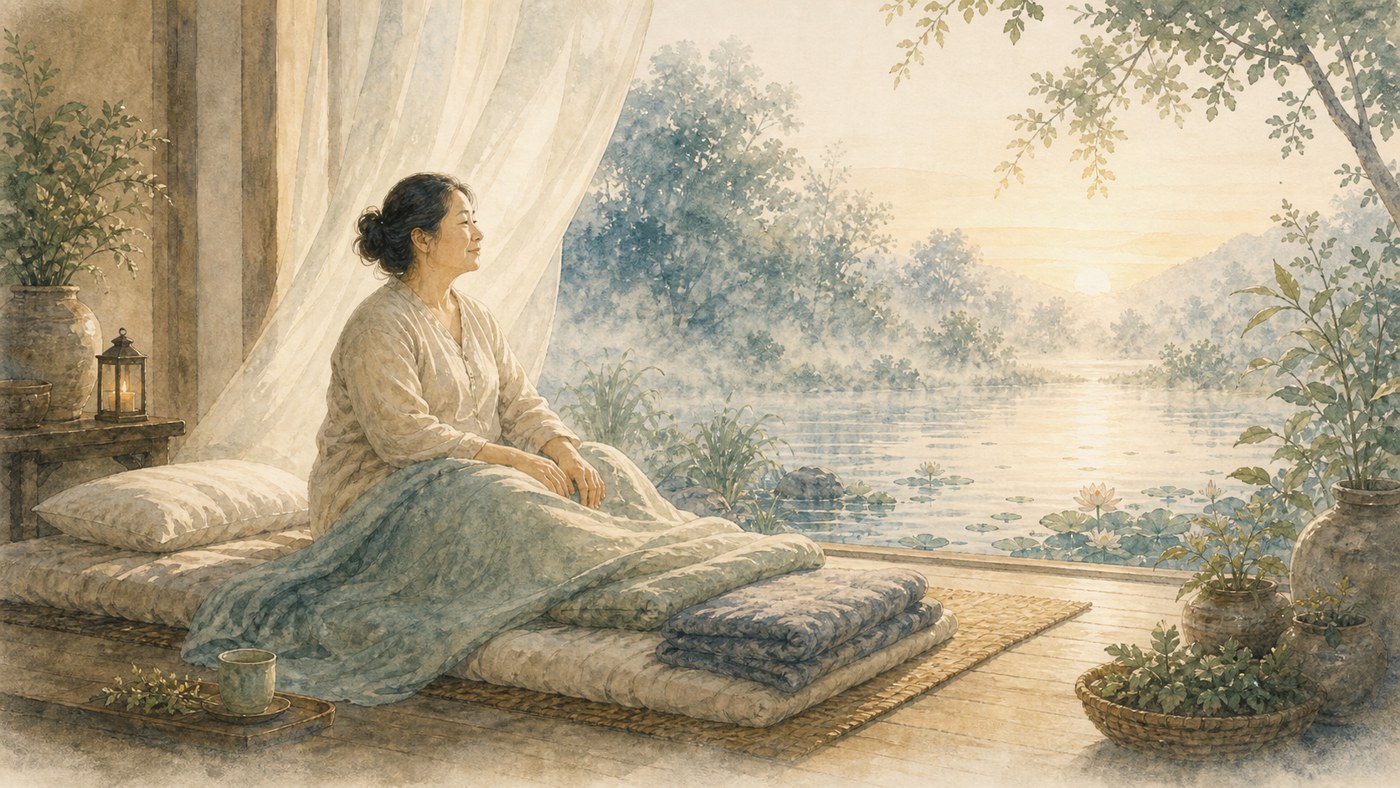
Rest that actually supports us
Traditional descriptions associate Water with long, deep sleep. Some readers recognise that experience; others do not. A type cannot tell us how much restorative sleep we obtain, and a long night in bed does not necessarily mean that our sleep needs have been met.
This chapter asks a practical question: what helps us recover and function? The answer may include more sleep, a steadier schedule, assessment of a sleep problem, relief from a burden or a different kind of daytime rest.
Waking slowly is an observation, not a diagnosis
We may take time to feel alert after waking. We may use several alarms or wish to remain in bed. Before treating this as a habit to overcome, consider how much sleep we have actually had, whether it was interrupted and how sleepy we are during the day.
Morning heaviness may be described as stagnation in elemental language, but this does not explain its cause or show that more sleep will worsen it. Extra sleep does not automatically lower metabolism, and waking difficulties should not be dismissed as an elemental preference for comfort.
A sleep diary can distinguish time in bed from time asleep and record interruptions, medicines, shift work and daytime symptoms. It can support a consultation when the pattern remains troublesome.
When long sleep does not leave us refreshed
Snoring with pauses or gasping, morning headaches and marked daytime sleepiness can warrant assessment for a sleep disorder. [4] Other physical or emotional concerns may also affect sleep and energy. We should not respond automatically by setting an earlier alarm.
Do not drive or perform hazardous tasks when too sleepy to remain alert. If sleepiness is unusual or persistent, arrange assessment. A plan to “activate Water” is not a substitute.
A dependable rhythm, with enough sleep opportunity
For adults, public-health guidance generally recommends at least seven hours of sleep, with needs varying by age and individual circumstances. [8] We do not impose a seven-to-eight-hour ceiling because of Water Type.
A fairly consistent waking time can be a useful anchor, provided we also allow enough opportunity for sleep. There is no universal requirement to wake before six or be asleep by ten. A shift worker, new parent, person recovering from illness or someone with a different schedule needs a workable plan.
If changing the schedule, move gradually and observe the result. Waking earlier without bringing bedtime or other demands into alignment can simply reduce sleep.
Getting out of bed without turning it into a battle
For someone whose sleep is adequate and whose main difficulty is an unhelpful morning routine, preparing an easy first action may help. Put comfortable clothing nearby, arrange a reason to get up or open curtains when appropriate.
An alarm placed away from the bed may suit some people, but it should not create a fall risk or force a person with dizziness to stand quickly. Rise safely. The goal is a supportive environment, not a contest of willpower.
Natural daylight and ordinary morning activity can help mark the beginning of a day. We need not stare at the sun, seek intense exposure or treat light as a prescription for every mood problem.
Naps and daytime recovery
Naps need individual consideration rather than a rule based on type. A nap may be useful in some circumstances and may interfere with night-time sleep in others. Notice its timing, length and effect, and seek advice if daytime sleepiness is substantial.
A brief walk, gentle stretch, music or a conversation may refresh us when we need a change of activity rather than sleep. At other times, lying down is appropriate. Disability, illness and recovery can alter what rest needs to look like.
No one has unlimited energy merely because a traditional description associates Water with storage. Rest does not need to be earned by exhaustion.
Before bed
A quieter transition can help us leave the day behind: finish an ordinary task, prepare what is needed for tomorrow and choose a calming activity. Consider whether a late, uncomfortable meal or stimulating drink affects our own sleep. Warm water is optional, not a requirement; avoid making hydration a rule that conflicts with medical advice.
If insomnia persists, ask about appropriate assessment and treatment rather than adding more and more rituals. The aim is restful sleep, not perfect performance of a bedtime routine.
Try one sleep-supporting change
Choose a realistic waking time that still allows enough sleep, or simplify one part of the evening. Observe for several days. If an earlier alarm makes us sleepier or less safe, revise it. Bring persistent unrefreshing sleep to a healthcare professional.
We now turn to emotional practices. As with sleep, the useful approach is the one that fits the person and the present situation.
WATER TYPE
Chapter 13 — Helping Our Inner Life Move

More than one way to care for the mind
When we hear advice about emotional care, we may imagine sitting quietly or slowing the breath. Those can be useful practices, but they are not the only possibilities. If we feel withdrawn or heavy, movement, interest and connection offer additional possibilities.
This does not mean that Water Types are always too calm or that quiet practices are unsuitable. Some experience anxiety, agitation or trauma. We choose according to what is happening now, not what a label says should happen.
First doorway: begin with the body
A small physical action can sometimes make the next action easier. We might wash our face, change clothes, step outside or move in a comfortable way. The action need not produce sweat or an immediate improvement in mood.
If exercise is appropriate, it can be part of a broader care plan. It is not a guaranteed way to remove sadness and should not replace needed mental-health treatment. We do not tell someone to work harder when illness or fatigue makes movement difficult.
The useful principle is modest: we can sometimes begin with an accessible action before motivation arrives. If the action feels too large, reduce it or ask for company.
Second doorway: notice the beginning of the day
Opening curtains, spending a little time in an accessible outdoor space or having breakfast near daylight can help us feel connected to the day. Protect skin and eyes, and adapt to weather and personal health needs.
This is ordinary contact with the environment, not prescribed bright-light therapy. If seasonal mood changes are substantial or recurrent, professional advice may be more useful than assuming that sunlight alone will resolve them.
A morning anchor can also be nonvisual: familiar music, a planned conversation or a small task. We are designing a beginning that is possible for us.
Third doorway: choose a small, visible action
A large goal can feel remote when energy is low. A small action offers a clearer starting point: water one plant, clear part of a table, prepare a simple meal or answer one message.
The goal should be meaningful enough to matter and small enough to attempt. Completion is not a measure of worth. If we cannot do it today, consider what made it difficult and whether the task or support needs to change.
Repeated manageable actions can create structure. We can notice effort as well as completion, especially during illness or grief. There is no need to turn a day into a productivity competition.
Fourth doorway: safe connection
Solitude can nourish us. It can also become the only place we feel able to stay when distress is growing. Notice the difference between chosen quiet and unwanted isolation.
Connection does not require a large gathering. A brief call, a meal with a trusted person, a community activity or sitting alongside someone may be enough to begin. Spiritual or religious activities may matter to some readers; others will find belonging elsewhere.
Choose people and settings that feel respectful. More contact is not automatically better if the relationship is harmful or exhausting. A professional can help when finding safe support is difficult.
Fifth doorway: give feelings a form
We can give feelings a form rather than keeping everything inside. This can mean speaking, writing, making something, crying when tears come or asking for counselling. We do not have to disclose everything at once or relive painful experiences to prove that we are expressing ourselves.
Writing three honest lines may be enough: what happened, what we felt and what we need. If writing intensifies distress or leaves us overwhelmed, pause and seek support. Expression should help us relate to experience, not force it open without care.
A conversation can begin simply: “I have been carrying this quietly, and I would like someone to listen.” We can ask whether the other person has time and state whether we want listening, practical help or advice.
The person who gives also needs to receive
If we are usually the dependable one, asking for care may feel unfamiliar. Yet a relationship can include reciprocity without keeping a strict account. We can say that a task is too much, ask someone else to take a turn or admit that we need company.
Boundaries support care. They also make room for feelings other than gratitude or patience. Irritation, sadness and disappointment can carry information; they do not disqualify us from being kind.
Choose one practice for this week
Select one doorway: a manageable action, a daylight routine, a small goal, safe contact or a form of expression. Decide when and how to try it. Notice whether it creates a little more choice. If distress persists or safety is uncertain, seek professional help rather than adding more self-care tasks.
The next chapter brings these possibilities into one flexible day. We will build a rhythm that can support us without becoming another source of pressure.
WATER TYPE
Chapter 14 — A Daily Rhythm We Can Live With

Bring the pieces into one ordinary day
Food, movement, rest and emotional care do not happen in separate compartments. They meet in the day we actually live. A routine can make supportive actions easier to remember and reduce the number of decisions we face when tired.
Ayurveda uses the term dinacharya for daily practices. Here we borrow the invitation to think about rhythm, while adapting it to present circumstances. There is no single timetable that proves we are caring for Water correctly.
A useful routine is a support, not another authority to disappoint. It needs room for illness, work, caregiving, changes in energy and ordinary pleasure.
Morning: give the day an accessible beginning
Morning can offer a useful starting point. The success of a whole day does not depend on rising before six.
After enough sleep, begin at a time that fits our schedule. Rise safely, attend to basic needs and choose a small action that marks the transition into the day. Daylight, suitable movement, a wash or a familiar piece of music may serve as an anchor.
Breakfast should fit appetite, nutritional needs and medicines. We do not skip it automatically because of our type. Someone with an agreed medical plan should follow that plan. The question is whether the morning supports us, not whether it meets a theoretical ideal.
If mornings are consistently difficult despite adequate sleep, investigate the difficulty rather than escalating self-discipline.
Daytime: nourishment, useful activity and pauses
Some readers enjoy making lunch a substantial meal. Others need a different arrangement. Choose meals that are adequate, satisfying and manageable within the day.
After eating, a comfortable short walk or change of activity may be pleasant if appropriate. It is not compulsory, and a person with significant sleepiness may need assessment rather than repeated attempts to push through it.
During work or household tasks, look for opportunities to change position and pause. We might stand briefly, stretch within our range or step away from a screen. A break can also mean releasing responsibility for a few minutes, especially if the day is already physically demanding.
A routine should include what gives life meaning. Productive activity is only one part. Conversation, creativity, spirituality and enjoyment can belong in the plan without needing a health justification.
Evening: reconnect and gradually settle
Evening can offer time for people, hobbies and a lighter pace. That can help distinguish the end of work from the beginning of rest. Yet some people need solitude after a demanding day, and that is legitimate too.
Choose connection that is nourishing rather than obligatory. A brief shared meal or honest check-in may matter more than a large activity. If the household depends on us for everything, the evening may need a conversation about shared tasks before it can become restful.
A meal that feels comfortable and a quieter transition towards bed may support the night. The exact time depends on the schedule. Avoid setting an early alarm that leaves too little sleep opportunity.
Three anchors, revised for real life
Three flexible anchors can support our day:
- A dependable beginning after adequate sleep. Keep a workable rhythm and take persistent waking difficulties seriously.
- Appropriate movement and recovery. Include activity suited to current capacity rather than intensity prescribed by type.
- A rhythm of engagement and rest. Notice whether quiet time restores us or whether unwanted withdrawal needs support. Naps are considered individually.
These anchors can guide choices without making illness, disability or shift work look like failures of discipline.
An example, not a timetable to obey
| Part of the day | A possible anchor | An adaptation when life is difficult |
|---|---|---|
| Beginning | Get up safely, eat or drink as appropriate, notice daylight. | Keep only the essential first action; protect needed sleep. |
| Active period | Work or useful activity with suitable movement breaks. | Use smaller tasks, pacing or assistance. |
| Meal | Sit down for adequate nourishment. | Use an easy prepared option or ask for help. |
| Connection | A conversation, message or shared activity. | Choose brief contact with someone safe. |
| Settling | Prepare for tomorrow and allow a quieter transition. | Remove nonessential tasks rather than shortening sleep. |
For shift work, these parts may occur at different clock times. For a caregiver, the plan may depend on another person taking a turn. For someone recovering from illness, a rest period may be the most important anchor.
Start with one change
Trying to redesign the whole day can make care feel impossible. Choose one anchor, connect it to something already familiar and observe whether it helps. If it repeatedly fails, consider the circumstances before blaming ourselves.
A seven-day experiment
Choose one small routine for the coming week. Write its usual version and an easier version for a difficult day. At the end, ask: did it support us, was it realistic, and what help would make it easier? Keep, adjust or replace it accordingly.
We do not become a better person by maintaining a perfect streak. We become better acquainted with what helps us live. The final main chapter adds a careful look at complementary approaches.
WATER TYPE
Chapter 15 — Choosing Complementary Approaches

A wider set of possibilities
Plearnprai's collection of 37 complementary practices is organised through five dimensions of care. That collection is a way of organising options from different traditions. It is not evidence that every practice is effective, or that all five dimensions are separate anatomical layers.
We use the five groups here as practical doorways: movement and circulation; structure and touch; the senses; emotional life and connection; and nourishment. They overlap in real life. A dance can involve movement, music, expression and company at once.
Everyday foundations remain important, but they are not sufficient treatment for every illness. Complementary approaches may sit alongside clinical care; they should not replace it when assessment or treatment is needed.
Choose by purpose and suitability
A traditional guiding phrase is “move, stimulate, warm, express.” As an image, it can encourage someone who feels stuck to consider new options. It does not mean that stronger stimulation or more heat is always better for Water Type.
Before choosing, ask what we hope to achieve, what evidence supports the practice for that purpose and whether it is appropriate for our health and circumstances. Cost, accessibility, consent and the practitioner's training matter too.
How we feel afterwards is useful information, but not the only safety check. Something can feel pleasant while interacting with a medicine or delaying needed treatment. Conversely, a legitimate treatment may take time and need professional monitoring.
Movement and circulation
Flowing yoga can offer a sequence of movement, attention and breathing. It should be adapted to experience, balance, joints and health. A gentler or chair-based practice may be more suitable than an energetic class. Avoid forcing positions or using the elemental label to justify intensity. [9]
Tai chi and qigong offer other forms of patterned movement. Continuous movement is one option; pace and range should fit the person. A qualified teacher can help with adaptation. We do not need to reject a slow practice because it appears insufficiently stimulating.
Cupping is a practitioner-delivered procedure, not an everyday home exercise. Evidence for benefit is limited, and adverse effects can include burns, infection and skin damage. It should not be presented as a proven way to drain elemental stagnation. Discuss suitability and practitioner hygiene; do not attempt wet cupping at home. [10]
Structure and touch
Herbal steaming and steam rooms are warming practices. Water Type does not provide protection from heat illness, dehydration, faintness or burns. Heat is not a method for removing toxins or treating unexplained swelling. People with relevant heart conditions, unstable health, pregnancy, reduced heat sensation or other concerns should obtain advice before use. Stop if unwell; do not try to endure discomfort to make a treatment work.
Massage may be enjoyable or useful for some symptoms, but more force is not necessarily better. Choose an appropriately trained practitioner, explain health conditions and medicines, and agree the pressure. Avoid massage over acute injury, inflamed or broken skin, a suspected clot or other contraindicated areas. Anticoagulant use and fragile bones require particular care. [11]
The local Plearnprai procedure guidance also calls for caution with pregnancy, neuropathy, uncontrolled blood pressure and implanted devices. Recent serious illness or unexplained swelling should be assessed before bodywork. A practitioner should not dismiss a warning sign as an elemental blockage.
Dry brushing is sometimes used as a morning ritual. We do not present it as a treatment for metabolism, lymphatic disease or fluid retention. If someone enjoys gentle skin care, avoid damaged or irritated skin and stop if it causes pain or irritation. It is optional; a soft washcloth or ordinary bathing may be preferable.
The senses
Natural daylight can be part of an everyday routine. It differs from prescribed light therapy, which may require clinical guidance. Use ordinary eye and skin protection and do not stare directly at the sun.
Aroma can make a space pleasant for some people and unpleasant for others. Citrus or herbal scents may feel refreshing. Preference is personal; an essential oil is not a treatment for a constitution. Do not ingest essential oils or apply them undiluted. Use particular caution around children, pregnancy, asthma and sensitive skin, and respect everyone sharing the space.
Music and dance can bring enjoyment and movement together. A familiar song may be enough to begin. Dance can be seated, supported, slow or energetic according to capacity. Listening or moving to music at home is not the same as professional music or dance therapy; both can have a place, but they should be named accurately.
Emotional life and connection
Walking meditation combines movement and attention. It may suit someone who finds sitting difficult, but seated meditation is not inherently wrong for Water. Begin with a manageable duration and keep eyes open if that feels safer. Meditation can be uncomfortable or destabilising for some people; stop or seek qualified support if distress increases. [12]
Journalling can help give an experience words. A few lines may be enough. There is no obligation to write about traumatic memories alone or keep going when the practice becomes overwhelming.
Group activities and volunteering may offer meaning and company. They are not automatically restorative for a person already exhausted by caring for others. Choose something that includes support and enjoyment, not another duty we feel unable to refuse.
Attentive listening matters in both directions. We may need someone to hear us without immediately advising. Counselling or other professional care may be appropriate when distress is persistent, severe or difficult to manage. A friendly conversation can support that care without replacing it.
Nourishment and herbal traditions
Food-based care returns us to Chapter 10: adequate, varied meals that fit individual needs. Fibre-containing foods may be useful within an appropriate diet. Fermented foods are optional and vary in salt, ingredients and tolerance; they are not a universal treatment for a “slow Water gut.”
Ginger, long pepper and black pepper appear in traditional warming formulations. Ordinary culinary use differs from medicinal preparations. Do not prescribe concentrated herbs to ourselves on the basis of a type. A qualified practitioner or pharmacist should review medicines, pregnancy or breastfeeding, kidney or liver disease and other relevant factors.
Keep a list of supplements and herbal products and tell the treating team about them. “Natural” does not mean free of interactions. We do not adjust prescribed medicines independently when adding an herbal preparation.
A safe way to try something new
Begin with a low-burden option that fits an ordinary routine: suitable movement to music, a short period outdoors, a few lines of writing or a safe social activity. Introduce one change at a time so that its effects are easier to notice.
Practitioner procedures require an appropriate professional. Cupping, acupuncture, specialised massage and medicinal herbal treatment are not interchangeable with an everyday hobby. Steam and heat also need an individual safety judgement; they are not universally safe for home use.
Choose one complementary practice
Write the purpose, the simplest suitable version, any reason to seek advice first and what would make us stop. Try it only within those limits. Notice comfort and function as well as enjoyment. If it does not fit, we can change course without deciding that our body has failed.
The point of having many options is choice. We do not need to collect practices or complete all five groups. We need a form of care that makes sense in our life.
WATER TYPE
Closing — Our Care Can Change
Looking back at the journey
We began with a person who feels heavy or slow, who is often relied upon and may rarely say how much they are carrying. Perhaps parts of that story felt familiar. Perhaps other parts did not. Either way, the aim has been to make room for a more attentive and compassionate relationship with ourselves.
We explored the keeper as a metaphor for continuity and care. We considered the body without assuming that appearance or temperament reveals its physiology. We recognised strengths and the boundaries that help them remain sustainable.
We looked at quiet distress, the interaction of body and mind, and several health concerns that require their own assessment. We used a four-part reflective map without treating it as a medical sequence. We made the limits of self-care explicit.
Then we considered food, movement, sleep, emotional practices and daily rhythm. Finally, we explored complementary approaches as choices that need purpose, evidence and individual suitability.
An enduring constitution is not a fixed fate
Our care and current state can change. In Plearnprai's framework, we distinguish our enduring constitution from our changing current state. We can work with the latter without promising that a routine will change the former.
This is a framework distinction, not a claim that a type has been established by genetic testing. It allows us to use the language consistently while remembering its limits.
We may become more able to ask for help, organise a day or respond to a difficult feeling. A symptom may improve with appropriate care, or we may learn to live with a condition more safely and comfortably. These are meaningful changes. They do not require becoming a different elemental person.
We do not need to dry the water away
The image of Water has held patience, warmth, steadiness and nourishment. Care does not ask us to discard those qualities or become permanently restless. It asks whether our way of living gives them room to remain alive.
We can be dependable without being endlessly available. We can enjoy familiarity without refusing every change. We can rest without shame and move without punishment. We can care for someone while acknowledging that our own needs matter too.
The aim is not a perfect balance we achieve once and keep forever. It is a more flexible relationship with the changing demands of life.
Three things to take with us
Offer ourselves the kindness we readily offer others. A difficult day is not evidence that we have failed the book. Illness, grief, exhaustion and limited resources are real. We can respond to them with care rather than a harsher timetable.
Begin with a step that is possible. One useful action is enough to start: a meal, a conversation, an appointment, a suitable movement or a request to share responsibility. A smaller plan can be more respectful of reality than a grand reform.
Return and revise. If a routine stops working, we can adjust it. Returning does not mean that every illness is reversible or that effort guarantees recovery. It means that care can still be worthwhile, including comfort, support and adaptation.
If we want to explore further
The other books in the series offer different perspectives on Wind, Fire, mixed patterns, relationships and emotional life. We can read across them without treating each as a separate identity to pass or fail.
Plearnprai's reflective assessments may help organise observations. They are optional tools, not diagnostic tests or replacements for clinical care. A result should open a conversation and be considered alongside our longstanding experience and current circumstances.
We need not purchase another service or complete another assessment before practising kindness towards ourselves. Nor should a book make us feel that we ought to manage everything alone.
A final invitation
Perhaps the most useful change is that we no longer hear the word “slow” as a complete account of ourselves. There may be steadiness, fatigue, tenderness, grief, skill and responsibility in the same person. Each deserves to be understood on its own terms.
If the keeper image speaks to us, let it include a keeper who can receive care. Someone else can tend the fire for a while. The community does not become stronger by asking one person never to rest.
One thing to carry forward
Finish this sentence: “The next way I will care for myself is…” Keep the answer specific and kind. If the next step is asking for professional help, it belongs here as fully as any everyday practice.
Thank you for travelling through these pages with us. May Water remain a language for understanding, never a judgement that closes a life.
WATER TYPE
Sources and Further Reading
How to read this section
This English edition adapts the Plearnprai Thai book คนธาตุน้ำ (Water Type). Its traditional and reflective material is distinguished from clinical information. References support the specific topic indicated; they do not validate the whole elemental model or establish a Water-specific disease risk.
The Thai bibliography contains broad source categories and several incomplete entries. They are retained below as provenance, not silently converted into verified edition-level citations. Page numbers, editions and study details that were not supplied have not been invented.
Traditional sources named in the Thai edition
- Tamra Wetthasat Chabap Luang, Rama V — the royal medical collection associated with King Rama V, cited in the source for Water-related material. Edition and pages were not specified.
- Khamphi That Wiphang — named for traditional accounts of the Water element, including the twelve fluid categories. These categories belong to a traditional framework and are not a modern classification of bodily fluids.
- Khamphi Rok Nithan — named in the source's discussion of phlegm-related patterns. Exact passages and the source's psychological interpretation need specialist verification before scholarly citation.
- Traditional Thai medicine texts associated with the Department of Thai Traditional and Alternative Medicine, Ministry of Public Health; the Thai bibliography does not identify individual editions.
- Teaching materials from Thai traditional medicine colleges and universities; institutions and documents were not individually specified.
- Ayurvedic descriptions of Kapha, used comparatively. Kapha and Plearnprai Water Type are not treated as interchangeable diagnoses.
General works and research topics in the Thai bibliography
The source names Brené Brown's Daring Greatly and writing on vulnerability; general literature on caregiver stress, compassion fatigue and recovery; Mayo Clinic material on metabolic syndrome; and CDC material on chronic disease. These are background reading categories rather than complete citations in the supplied text.
It also points towards research on obstructive sleep apnoea, atypical depression, metabolic health, mindfulness and complementary approaches. References to Stewart, Quitkin and colleagues are incomplete; no specific study is claimed as verified here.
Govindaraj, P., and colleagues (2015), Genome-wide analysis correlates Ayurveda Prakriti, Scientific Reports, 5, 15786, is named in the source. It is discussed as preliminary research concerning Ayurvedic groupings, not confirmation of Plearnprai types. Publisher record.
The evolutionary ideas attributed to James Neel and Bergmann are retained as historical concepts mentioned in the source. They are not used to classify readers or ethnic populations. Complete historical bibliographic verification remains an editorial task if those discussions are expanded in a scholarly edition.
Clinical and safety references consulted for this edition
R1 · Depression
National Institute of Mental Health, Depression. Used for the distinction between a reflective elemental description and symptoms warranting mental-health assessment. Read the source.
R2 · Insulin resistance and prediabetes
National Institute of Diabetes and Digestive and Kidney Diseases, Insulin Resistance & Prediabetes. Used for clinical assessment boundaries, not a type-based risk prediction. Read the source.
R3 · Thyroid function
NIDDK, Hypothyroidism (Underactive Thyroid). Used to distinguish nonspecific symptoms from a diagnosis that requires assessment. Read the source.
R4 · Sleep apnoea
National Heart, Lung, and Blood Institute, Sleep Apnea: Symptoms. Used for breathing pauses, snoring and daytime symptoms that may warrant evaluation. Read the source.
R5 · Physical activity
World Health Organization, Physical activity. Used for general adult activity guidance and the value of activity adapted to ability. Read the source.
R6 · An overall dietary pattern
American Heart Association, Suggested Servings From Each Food Group. Used for broad food-pattern guidance rather than elemental food prescriptions. Read the source.
R7 · Fasting and diabetes
NIDDK, Fasting Safely with Diabetes. Used to explain why fasting requires individual consideration and why medication changes need professional guidance. Read the source.
R8 · Sleep needs
Centers for Disease Control and Prevention, About Sleep. Used for general sleep-duration context and the importance of sleep quality. Read the source.
R9 · Yoga
National Center for Complementary and Integrative Health, Yoga: Effectiveness and Safety. Used for adaptation and safety considerations, not Water-specific selection. Read the source.
R10 · Cupping
NCCIH, Cupping. Used for evidence limitations and procedural risks. Read the source.
R11 · Massage
NCCIH, Massage Therapy: What You Need To Know. Used for the need to consider health, technique and practitioner suitability. Read the source.
R12 · Meditation and mindfulness
NCCIH, Meditation and Mindfulness: Effectiveness and Safety. Used for the distinction between a potentially useful practice and a universally safe or sufficient treatment. Read the source.
Plearnprai framework and editorial records
The current constitution/current-state distinction follows Canon 0, Card 01, ธาตุประจำตัว. Referral wording follows Plearnprai's shared red-flag source, version 1.1, with local conservative policy identified where relevant. Procedural cautions are cross-checked against the shared procedure-safety file. English type names follow the author-approved naming record of 12 October 2026.
Companion editorial notes record substantive changes from the Thai source. Source manifests retain file hashes for traceability. This is an English edition, not independent clinical certification or a substitute for professional care.
Words that leave room
“Water Type” is a concise name for a perspective. It is not the whole person. We can use the language when it helps, question it when it does not and keep our attention on the life in front of us.
Caring for one another.